



AMD has reportedly passed Intel in data center revenue for the first time, marking a major moment for the company’s EPYC server business.
The shift happened in the first quarter of 2026, according to DigiTimes. AMD had already been gaining ground in data centers since late 2025, but this is the first quarter where its data center revenue moved ahead of Intel’s.
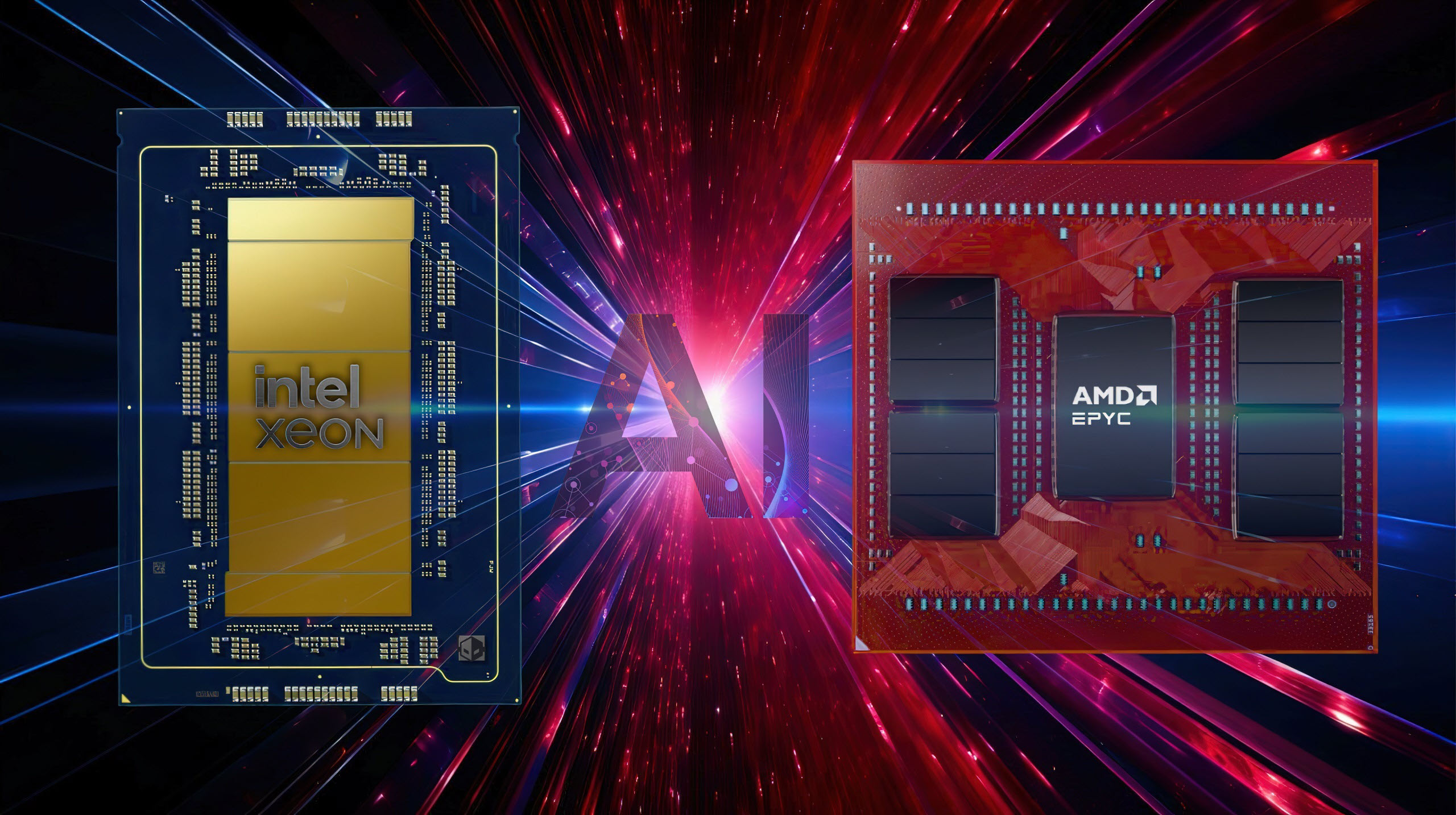
The timing is important because AI infrastructure is changing how companies buy hardware. GPUs still matter, but large AI systems also need more CPUs to manage workloads, feed accelerators, run inference, and handle orchestration across huge clusters.
That demand is rising quickly. The CPU to GPU ratio in AI servers has reportedly moved from around 1 CPU for every 8 GPUs to 1 CPU for every 4 GPUs, and some future designs may move closer to a 1 to 1 setup. That means hyperscalers need many more server CPUs than before.
AMD has benefited from that shift with its EPYC processors. Intel is also seeing stronger demand, but AMD appears to have captured enough momentum to move ahead in data center revenue.
| Area | What is happening |
|---|---|
| AMD position | Passed Intel in Q1 data center revenue |
| Main driver | Strong EPYC demand |
| Market force | Agentic AI and inference need more CPUs |
| CPU to GPU ratio | Moving from 1:8 to 1:4, with 1:1 expected in some future systems |
| Main bottleneck | Chip supply and foundry capacity |
| Future AMD products | Venice and AI focused Verano |
| Future Intel products | Diamond Rapids and Coral Rapids |
The biggest limit now is supply. Demand for server CPUs is strong, but chipmakers still depend on advanced manufacturing capacity. AMD relies heavily on TSMC, which is facing its own supply constraints. That is one reason AMD has reportedly explored Samsung as another possible manufacturing source for future chips.
Intel has a different challenge and opportunity. Its own fabs and foundry plans could help it control supply better over time, especially if its upcoming 18A based server products arrive on schedule.
The CPU market is also getting more crowded. NVIDIA is preparing its Vera CPU for Rubin based AI platforms, while Arm’s AGI CPU has drawn interest from companies working on agentic AI systems. That means Intel and AMD are not only competing with each other. They also have to defend x86 against new Arm based server designs.
Still, AMD passing Intel in data center revenue is a major milestone. It shows how far EPYC has come and how AI is changing the server market. GPUs may get most of the attention, but CPUs are becoming just as important to the next phase of AI infrastructure.


Discussion (0)
Be the first to comment.