



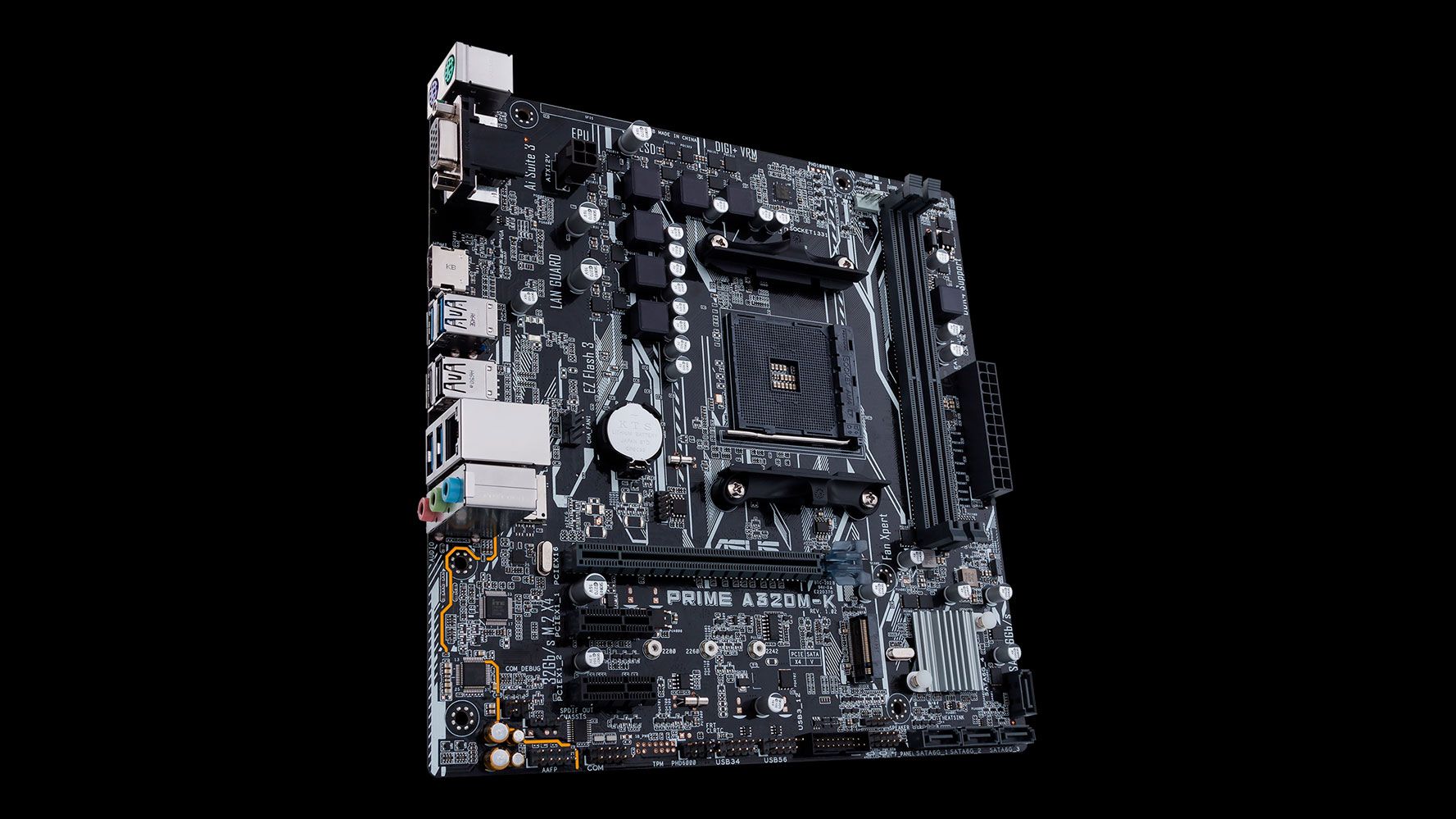
AMD's AM4 platform is continuing to receive meaningful support nearly nine years after its introduction, with older A320 motherboards now getting fresh BIOS updates built around newer AGESA firmware.
One of the latest examples is the ASUS Prime A320M A, an entry level AM4 motherboard from the early days of the platform. ASUS recently released BIOS version 6265 for the board, adding AMD AGESA ComboV2 PI 1.2.0.12 and fixes for recently disclosed fTPM vulnerabilities.
The update is notable because A320 sits at the low end of the AM4 ecosystem. These boards generally offer fewer expansion options, limited chipset features and no traditional CPU overclocking support compared with more expensive AM4 models.
Old A320 boards are still receiving security and firmware updates
The ASUS Prime A320M A is not the only older motherboard receiving new firmware.
Several A320 boards from other manufacturers have also been updated with the same AGESA release.
GIGABYTE's GA A320M S2H, for example, recently received a BIOS update carrying AGESA ComboV2 1.2.0.12.
| Motherboard detail | Current information |
|---|---|
| Platform | AMD AM4 |
| Chipset | A320 |
| ASUS BIOS version | 6265 |
| AGESA version | ComboV2 PI 1.2.0.12 |
| ASUS update date | August 27, 2026 |
| GIGABYTE example | GA A320M S2H |
| Security focus | fTPM vulnerability mitigation |
| Platform age | Nearly 9 years |
The ASUS update specifically mentions mitigation for fTPM vulnerabilities identified as CVE 2026 6726 and CVE 2026 6727.
That continued security maintenance is important for owners who have kept older AM4 systems in service rather than replacing the entire platform.
AM4 remains attractive as DDR5 platform costs rise
AM4's longevity is becoming more relevant as the cost of newer PC platforms continues to rise.
AM5 systems require DDR5 memory, and higher memory prices can make even entry level builds significantly more expensive.
For budget conscious PC builders, retaining an AM4 motherboard while upgrading only the processor can still be a practical way to control costs.
The platform also offers a large supply of older and newer Ryzen processors, along with widely available DDR4 memory.
That combination keeps AM4 relevant even though AMD's newer AM5 platform offers a more modern feature set.
AMD is still adding processors to the AM4 lineup
Firmware support is only part of the story.
AMD has continued expanding its AM4 processor range with lower cost CPUs such as the Ryzen 5 5500F.
The availability of newer budget processors gives owners of older boards another reason to keep existing systems running.
Depending on motherboard support and BIOS compatibility, some users can move from an early Ryzen processor to a substantially newer chip without replacing the motherboard and memory.
That can offer a much cheaper upgrade path than moving to a new socket.
A320 remains basic but useful
A320 motherboards were never intended to compete with higher end X370, X470 or B series models.
They typically offer fewer PCIe lanes, simpler power delivery and less flexibility for enthusiasts.
However, those limitations matter less in basic home, office and entry level gaming systems.
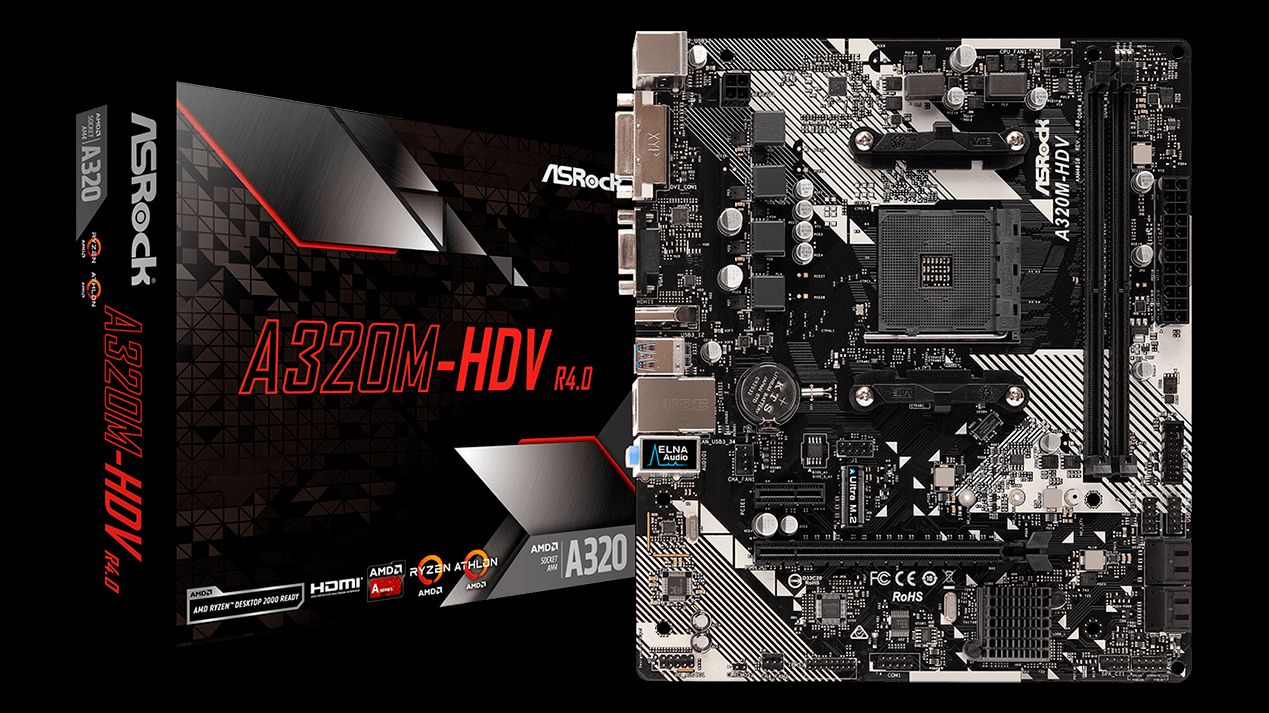
For a budget build, spending less on the motherboard can make sense if the savings are redirected toward a better processor, graphics card or storage device.
Continued BIOS support also reduces the risk that older boards become unusable purely because firmware stops being maintained.
AM4's lifespan continues to exceed normal expectations
AMD launched AM4 in 2017, and the platform has now remained active across multiple Ryzen generations.
The arrival of fresh AGESA updates in 2026 shows that even some of the oldest compatible motherboards are still receiving attention.
It does not mean every A320 board will support every AM4 processor, and compatibility still depends on individual motherboard vendors and BIOS releases.
Even so, the continued updates underline how unusually long lived the platform has become.
With DDR5 costs remaining a concern for budget builders and newer AM4 processors still appearing, the socket is likely to remain useful for low cost PCs and upgrades well beyond the lifespan normally expected from a consumer desktop platform.
Discussion (0)
Be the first to comment.