



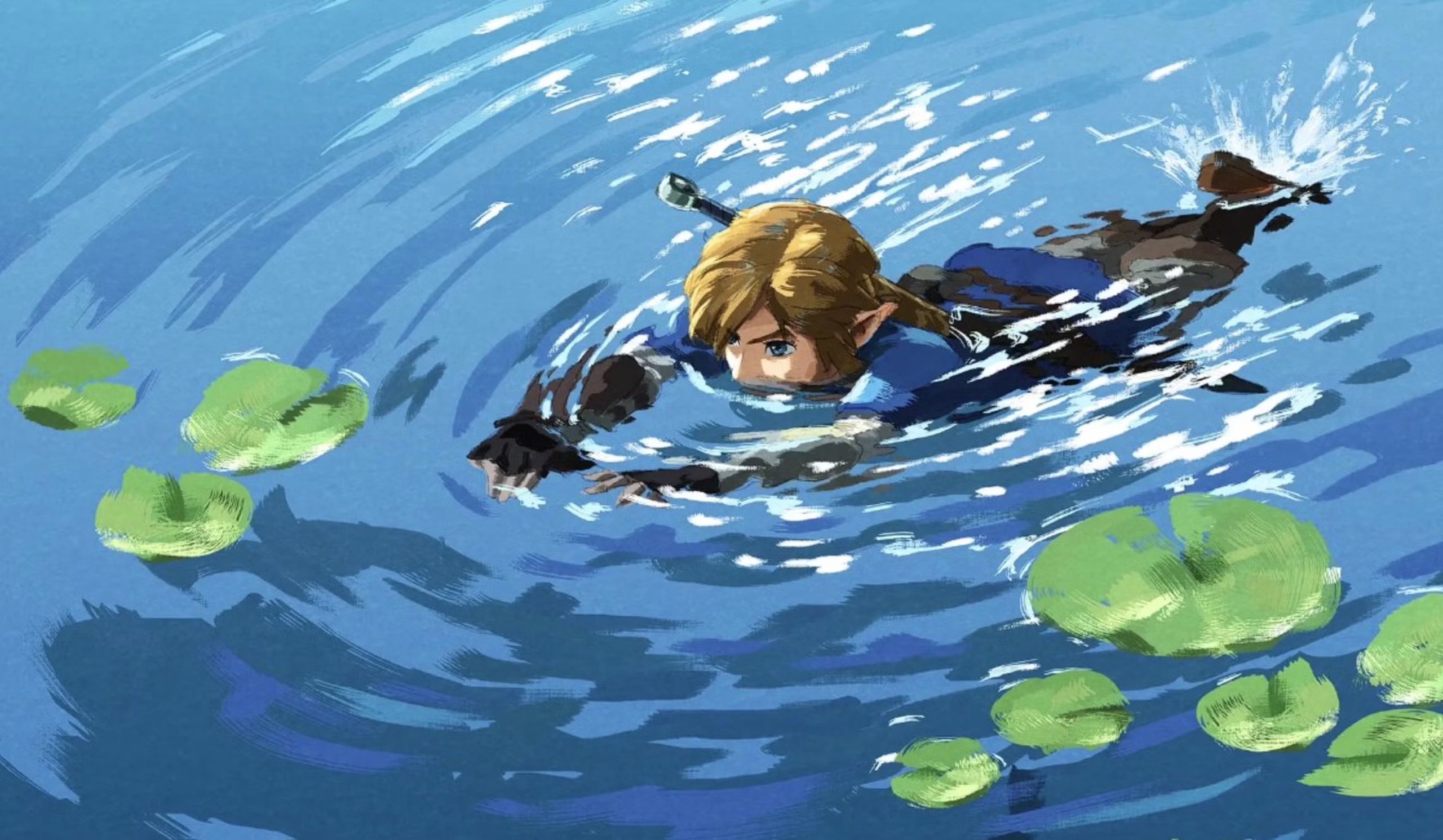
The Legend of Zelda producer Eiji Aonuma once said he felt responsible for The Wind Waker leaving some players with the impression that it was unfinished. The comment came in a 2005 Edge interview before Twilight Princess launched, where Aonuma admitted that Nintendo had originally imagined something bigger for The Wind Waker but had to scale it down to finish the game on time.
The Wind Waker is now widely loved, but its original launch was not free from criticism. Many players were already upset by its cartoon style because they expected a darker, more realistic Zelda after the Nintendo 64 era. Over time, that art direction became one of the game’s strongest qualities, but another criticism stayed around longer: the feeling that some parts of the adventure had been cut or compressed.
The Wind Waker’s missing scale later became part of its complicated legacy
Aonuma said the team had planned a larger game at first, but development time forced them to make it more compact. He still believed Nintendo tried to make the final version entertaining enough, but he accepted responsibility if players felt the game lacked the size or completeness they expected.
That concern makes sense when looking at one of The Wind Waker’s most discussed issues: its late game Triforce quest. Many fans have long felt that this section was used to stretch the game after planned dungeon content was removed. The quest asks players to search the Great Sea for Triforce charts and pieces, which slowed down the pacing for many people.
| Zelda game | Why it matters in this discussion |
|---|---|
| The Wind Waker | Loved today, but criticized for cut content and the Triforce quest |
| Twilight Princess | Followed with a bigger, darker, more traditional Zelda style |
| The Wind Waker HD | Improved pacing and helped more players appreciate the game |
| Breath of the Wild | Later changed Zelda again with a much larger open world |
The Wii U version helped repair some of those problems. The Wind Waker HD improved several parts of the experience, including some of the late game pacing. That version brought the game to a new audience and helped strengthen its reputation as one of the most visually timeless Zelda entries.
Aonuma’s old comment is interesting because it shows how seriously Nintendo took the criticism before Twilight Princess. He said he did not want the next Zelda to leave players with the same impression. Twilight Princess clearly responded to some of that feedback, offering a larger feeling adventure, a darker tone, more realistic visuals, and a style closer to what many fans had wanted after Ocarina of Time and Majora’s Mask.
Still, history has been kind to The Wind Waker. Its cel shaded look aged better than many realistic games from the same period, and its sense of ocean travel, music, humor, and expression helped it stand apart. What once looked like a risky break from tradition later became part of its charm.
The debate around its missing dungeons has never fully disappeared, but the game’s reputation has changed dramatically. Today, many fans place it among the best Zelda games, even while admitting that its pacing is not perfect.
Aonuma’s comment adds a human side to that legacy. The Wind Waker was not simply a game that missed some content. It was a project where Nintendo had bigger ambitions, made hard production choices, and later carried those lessons into Twilight Princess. That makes The Wind Waker both a beloved classic and a reminder that even great games can come from compromise.



Discussion (0)
Be the first to comment.