



China’s YMTC has moved into third place in the global NAND flash market after reaching a 14 percent shipment share in the second quarter of 2026.
The company moved ahead of Kioxia in shipment volume while continuing to expand production capacity and advance its 3D NAND technology. Samsung remained the market leader with a 25 percent shipment share, followed by SK hynix at 22 percent.
YMTC’s rise has been driven by strong growth in domestic demand, shortages across the memory market and wider adoption among Chinese device makers.
Global NAND shipment share in Q2 2026
| Company | Shipment share | Position |
|---|---|---|
| Samsung | 25% | 1 |
| SK hynix | 22% | 2 |
| YMTC | 14% | 3 |
| Kioxia | Below YMTC | 4 or lower |
| Others | Remaining share | Various |
YMTC recorded shipment growth of 22 percent year over year and 5 percent quarter over quarter.
The company is also mass producing 267 layer 3D NAND while developing products with more than 300 layers using its Xtacking architecture.
Enterprise SSD demand is reshaping the NAND market
Enterprise SSDs accounted for 48 percent of total NAND bit shipments during the second quarter.
That share is expected to rise above 50 percent by the end of 2026 as server and data center demand continues to absorb a larger portion of global NAND output.
This shift matters because enterprise SSDs generally command higher prices and margins than consumer storage products.
Samsung’s NAND output was limited in part by its focus on higher margin DRAM production, while SK hynix benefited from Solidigm, which increased its bit shipments by 40 percent from the previous quarter.
YMTC, meanwhile, has grown rapidly through consumer focused products and domestic supply relationships.
YMTC still trails rivals in NAND revenue
Despite ranking third by shipment share, YMTC reportedly ranked fifth by NAND revenue.
That difference reflects its product mix.
A large share of YMTC’s current business remains concentrated in consumer products, where prices are generally lower than in enterprise SSDs used by data centers and servers.
Micron and Kioxia therefore remained ahead of YMTC in revenue even though YMTC shipped more NAND bits than Kioxia during the quarter.
This distinction is becoming increasingly important as server storage takes a larger share of global NAND production.
Future profitability may depend less on total shipment volume and more on how much of that volume is sold into higher margin enterprise products.
Production capacity could reach 400,000 wafers per month
YMTC currently operates two fabrication facilities in Wuhan with a combined production capacity of around 200,000 wafers per month.
The company is also developing another plant designed for approximately 100,000 wafers per month, with completion expected in 2026.
Two additional fabs are reportedly being considered, each with capacity of about 50,000 wafers per month.
If all of those projects are completed, YMTC’s total NAND production capacity could reach roughly 400,000 wafers per month.
| YMTC capacity plan | Estimated monthly capacity |
|---|---|
| Existing Wuhan fabs | 200,000 wafers |
| New fab | 100,000 wafers |
| Additional fab 1 | 50,000 wafers |
| Additional fab 2 | 50,000 wafers |
| Potential total | 400,000 wafers |
That would place YMTC’s manufacturing scale close to Samsung’s estimated global NAND capacity.
Samsung currently operates at similar NAND scale
Samsung’s total NAND production capacity in 2026 is estimated at roughly 390,000 to 450,000 wafers per month.
Around 140,000 to 150,000 wafers per month are attributed to its Xi’an operations in China, while facilities in Pyeongtaek and Hwaseong in South Korea account for another 250,000 to 300,000 wafers.
If YMTC reaches its planned 400,000 wafer monthly capacity, its manufacturing footprint would therefore approach Samsung’s current global NAND scale.
Production capacity alone does not determine market leadership, however.
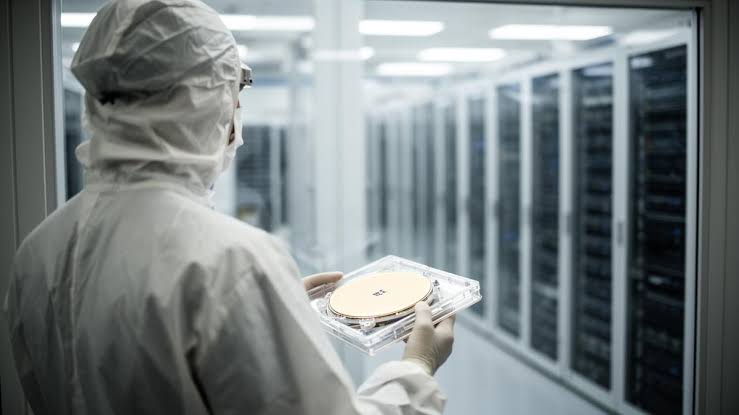
Yield, technology maturity, product mix, pricing and enterprise SSD exposure will remain important factors.
YMTC is becoming a larger force in global NAND
YMTC’s move into third place marks a significant change in the competitive structure of the NAND market.
Its 14 percent shipment share now puts it directly behind Samsung and SK hynix, while continued fab expansion could give the company substantially more production capacity over the next several years.
The main challenge will be converting that scale into higher revenue and stronger margins.
For now, YMTC is shipping enough NAND to rank among the world’s three largest suppliers, but its lower exposure to premium enterprise SSDs means shipment leadership has not yet translated into equivalent revenue performance.



Discussion (0)
Be the first to comment.