



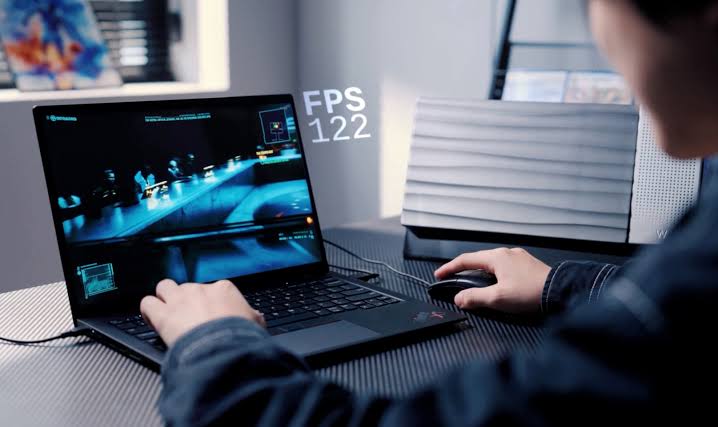
WiCi is preparing what it describes as the first commercial wireless external GPU, with the WiCi One connecting an Nvidia GeForce RTX 5060 Ti to laptops, tablets, and other devices over Wi-Fi 7 instead of Thunderbolt or OCuLink.
The system places the GPU inside a separate enclosure and uses a virtual driver that presents it to the host as a local graphics device. According to the company, the design is not simply streaming a game from another PC.
The entry model is expected to start at $1,999 for early signups, with a regular price of $2,599.
| Feature | WiCi One RTX 5060 Ti model |
|---|---|
| GPU | GeForce RTX 5060 Ti 16GB |
| Processor | Intel Core 3 100U |
| Storage | 1TB NVMe 4 |
| Wireless standard | Wi-Fi 7 |
| Radio setup | 4x4 MIMO |
| Channel width | 320MHz |
| Estimated theoretical link rate | Around 11.5Gbps |
| Early signup price | $1,999 |
| Regular price | $2,599 |
| Planned shipping | Q4 2026 |
Wi-Fi 7 replaces the usual eGPU cable
Traditional external GPUs depend on a high bandwidth physical connection such as Thunderbolt or OCuLink.
WiCi One removes that cable entirely.
The company says its virtual driver allows the RTX 5060 Ti to appear as a graphics device available to the connected laptop or tablet.
That makes the concept different from remote gaming, where another computer renders the game and simply streams finished video frames to a client device.
WiCi instead claims that its protocol manages GPU related data over the wireless link using techniques such as caching, compression, deduplication, streaming, and pipelining.
The goal is to reduce how much information needs to cross the Wi-Fi connection.
Wireless bandwidth is much lower than Thunderbolt or OCuLink
The biggest technical challenge is bandwidth.
Wi-Fi 7 is often advertised with a theoretical maximum of about 46.1Gbps, but that figure assumes far more spatial streams than the WiCi One actually uses.
The product has a 4x4 Wi-Fi 7 configuration.
At 320MHz and 4096-QAM, that translates to a theoretical PHY rate of roughly 11.52Gbps.
That is considerably lower than common wired eGPU interfaces.
| Interface | Theoretical bandwidth |
|---|---|
| Thunderbolt 3 or 4 PCIe | 32Gbps |
| Thunderbolt 5 PCIe | 64Gbps |
| OCuLink PCIe 4.0 x4 | 64Gbps |
| Wi-Fi 7 4x4 | Around 11.5Gbps |
Even before accounting for real world Wi-Fi overhead, interference, distance, and latency, the wireless connection provides far less raw bandwidth than Thunderbolt 5 or OCuLink.
That means WiCi's software techniques will be critical to the product's usefulness.
Cyberpunk 2077 demo claims 80 FPS at 4K Ultra
WiCi has demonstrated the RTX 5060 Ti version running demanding games.
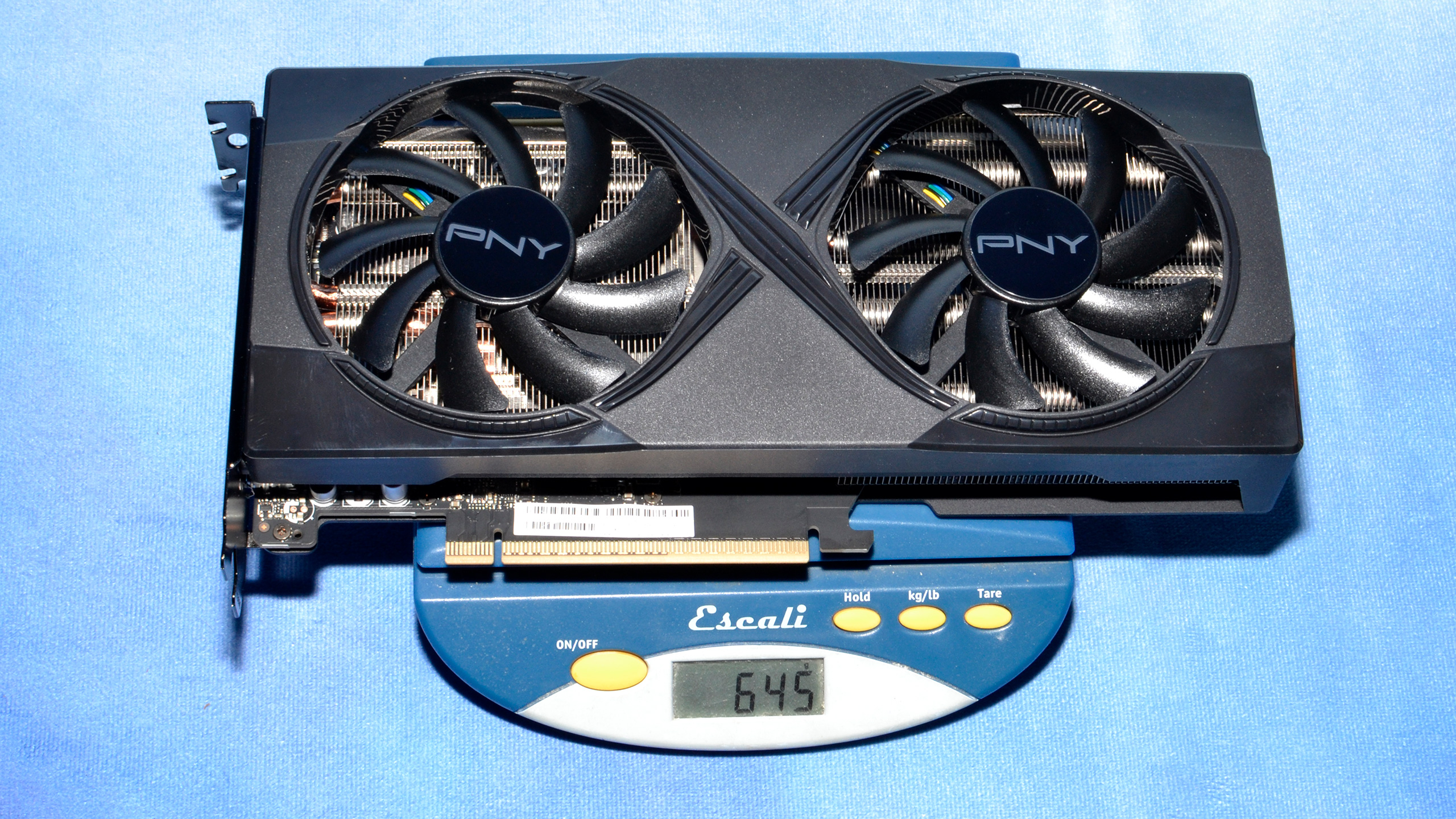
The company claims Cyberpunk 2077 can reach 80 FPS at 4K Ultra with DLSS 4 enabled.
It also claims Black Myth: Wukong can reach 60 FPS at 4K Cinematic settings.
These figures come from the company itself and have not yet been independently verified.
That distinction matters because wireless performance can change significantly depending on distance, walls, nearby networks, and other devices using the same spectrum.
The demonstration reportedly placed the WiCi One only about 50cm away from the laptop.
Real world testing will be needed to show whether the system can maintain similar performance in less ideal conditions.
RTX 5090 version is also planned
WiCi is not limiting the concept to the RTX 5060 Ti.
A higher end version is planned with an RTX 5090 carrying 32GB of GDDR7 memory.
That model is also expected to include an Intel Core Ultra 7 255H processor and 4TB of NVMe 5 storage.
The inclusion of processors and local storage shows that the WiCi One is more complex than a conventional GPU enclosure.
However, pricing for the RTX 5090 version has not been provided in the supplied material.
Gaming may not be the best use case
The limited wireless bandwidth and added latency could make competitive or latency sensitive gaming difficult.
Thunderbolt or OCuLink remain more straightforward options when maximum gaming performance is the priority.
The wireless approach may be more interesting for workloads such as rendering or AI, where mobility and access to external GPU compute can matter more than immediate response times.
Those workloads may also benefit more from WiCi's caching and data management approach.
The actual usefulness will depend heavily on how efficiently the software reduces traffic between the host and external GPU.
Shipping is planned for late 2026
WiCi says the WiCi One should begin shipping in the fourth quarter of 2026.
A public product demonstration is planned in New York on October 5 and 6.
Until independent testing becomes available, the concept remains difficult to judge.
A wireless RTX 5060 Ti that behaves like a local GPU could be useful in certain environments, but its approximately 11.5Gbps theoretical Wi-Fi 7 connection is far below the bandwidth offered by modern wired eGPU interfaces.
WiCi's ability to overcome that limitation through software will likely determine whether the WiCi One becomes a practical alternative or remains a specialized product.


Discussion (0)
Be the first to comment.