



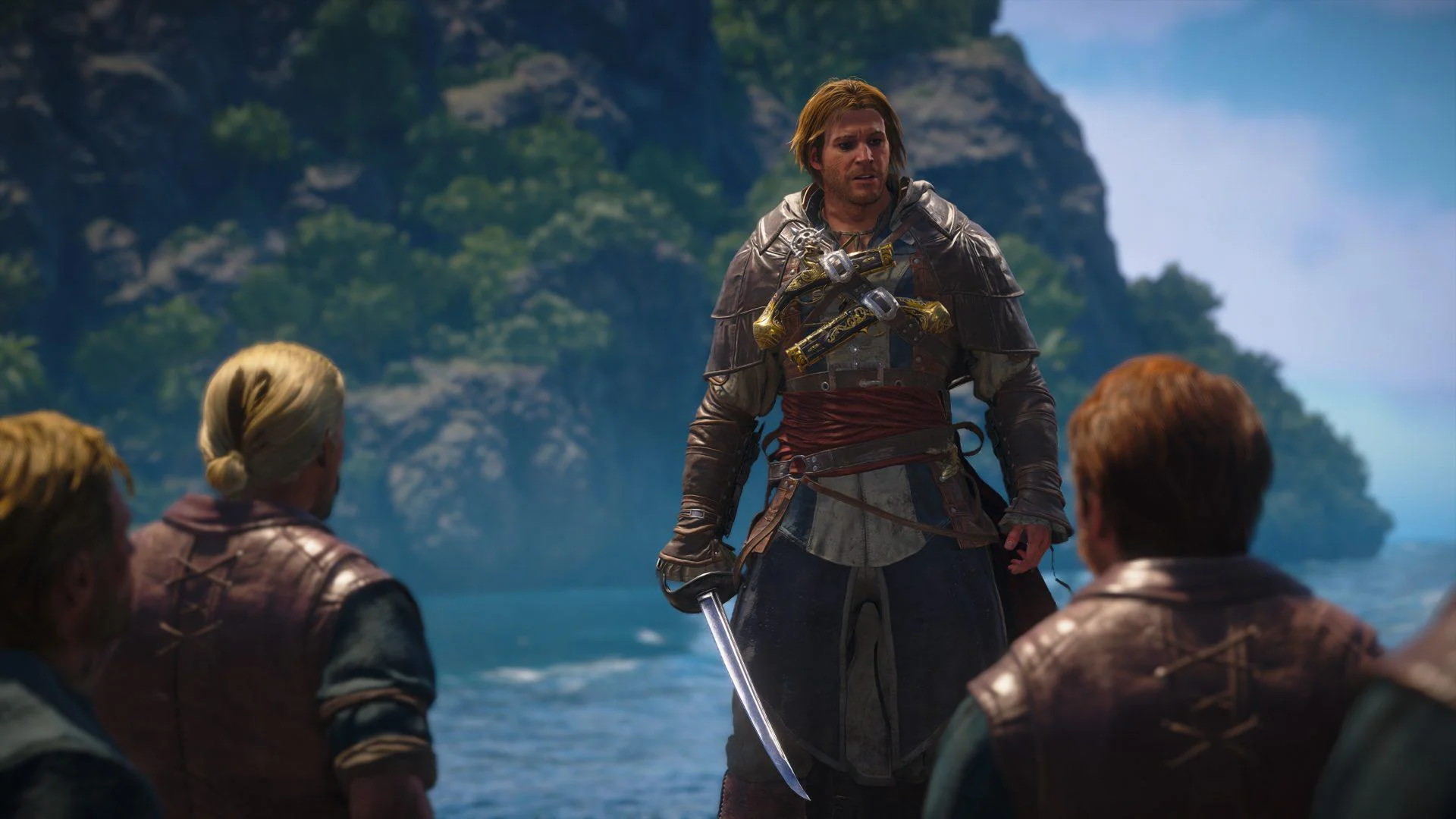
Ubisoft Barcelona is facing 51 layoffs shortly after contributing to Assassin’s Creed Black Flag Resynced, which reportedly sold 2 million copies on its launch day.
The Spanish studio was responsible for the game’s underwater sections, one of the remake’s most praised additions. Its work expanded the exploration systems from the original Assassin’s Creed IV: Black Flag and helped give the new version a stronger technical and visual identity.
The layoffs have raised further concerns about job security in the games industry, particularly when employees can deliver successful work on a commercially strong project and still lose their positions soon afterward.
A developer from Ubisoft Barcelona said the team created all of the underwater levels and criticized the company’s decision to reduce staff. Employees also organized a demonstration to draw attention to the situation at Ubisoft and the wider employment problems affecting game development.
The Barcelona team created one of the remake’s most praised features
Assassin’s Creed Black Flag Resynced updates the 2013 pirate adventure with improved visuals, revised combat, smoother parkour, and additional story content focused on Edward Kenway.
The underwater areas received particular attention. These sections allow players to explore submerged ruins, caves, shipwrecks, and dangerous marine environments while searching for resources and secrets.
Creating underwater gameplay requires work across several disciplines. Teams must handle movement, animation, lighting, visual effects, level design, enemy behavior, sound, and performance in environments that operate differently from normal land based areas.
| Black Flag Resynced detail | Information |
|---|---|
| Reported launch day sales | 2 million copies |
| Ubisoft Barcelona contribution | Underwater levels |
| Reported layoffs | 51 employees |
| Main character | Edward Kenway |
| Key improvements | Visuals, combat, parkour, and new content |
| Employee response | Public demonstration |
| Current studio impact | Reduced workforce |
The contribution shows how modern game production often depends on several studios rather than one central team. Support studios may build complete gameplay systems or major parts of a game while receiving less public attention than the lead developer.
When layoffs follow a successful release, the employees responsible for those features may have little protection from broader corporate cost reductions.
Commercial success did not prevent the job cuts
Black Flag Resynced reportedly reached 2 million sales on its first day, giving Ubisoft a strong launch for the remake.
That performance might normally suggest stability for the teams involved. However, the layoffs indicate that individual project results are not always the main factor behind staffing decisions.
Large publishers often make cuts based on company wide budgets, future production plans, restructuring goals, or pressure to improve profitability. A team may complete successful work but still lose positions if the publisher decides it needs fewer employees across a particular office or department.
This separation between performance and employment has become a major concern across the industry. Developers can spend years completing a project, meet production targets, and receive positive feedback without gaining long term security.
The timing is especially difficult for Ubisoft Barcelona because the team’s contribution became publicly known while the layoffs were already taking place.
Employees demonstrated against the wider industry trend
Ubisoft Barcelona workers reportedly held a demonstration to raise awareness about the cuts.
Their protest was not limited to the situation at one studio. Developers also highlighted the growing number of layoffs across the games business, where thousands of employees have lost their jobs despite strong game sales and continued demand for major franchises.
The industry has experienced repeated rounds of restructuring involving publishers, independent developers, support teams, contractors, and technology groups.

Many of these cuts affect employees whose names may never appear prominently in marketing materials. Support studios often work under confidentiality agreements or receive limited recognition, even when they build important parts of a game.
This can make it harder for affected employees to explain the scale of their contribution when applying for new positions.
Support studios remain essential to large game development
Major releases frequently rely on distributed production across several countries.
One studio may lead creative direction while other teams handle environments, animation, user interface work, platform optimization, cinematics, quality assurance, or specific gameplay systems.
Ubisoft has used this structure for many of its largest franchises. Assassin’s Creed games regularly involve multiple internal studios working together, with each office responsible for different parts of production.
The model allows publishers to build large games more efficiently, but it can also make employees vulnerable when a company changes its development plans.
A support team may lose work if a project is cancelled, delayed, scaled down, or moved to another studio. Even successful releases may not lead directly to another assignment.
The 51 layoffs therefore affect more than the workers losing their jobs. They also remove experience from a team that has demonstrated its ability to create complex gameplay content.
The cuts add to pressure surrounding Ubisoft’s restructuring
Ubisoft has spent several years reviewing costs, cancelling projects, delaying games, and reorganizing its studios.
The company continues to depend heavily on Assassin’s Creed, one of its most valuable franchises. Black Flag Resynced’s early sales suggest that demand remains strong when Ubisoft releases a well received entry connected to a popular part of the series.
Reducing the team that helped build one of the game’s most notable features creates questions about how Ubisoft plans to support future projects.
The company may reassign similar work to another internal studio, rely on external partners, or operate with a smaller team. Each option can affect production speed and continuity.
Experienced developers carry knowledge about tools, workflows, and technical problems that cannot be replaced immediately. Losing them may reduce costs in the near term while making future development more difficult.
Black Flag Resynced’s success and the Barcelona layoffs present two very different outcomes from the same project. The game reached a large audience, while 51 employees at one of its contributing studios faced the loss of their jobs.
The situation reflects a wider problem in modern game development. Strong sales and respected work do not always protect the people responsible for delivering them.



Discussion (0)
Be the first to comment.