



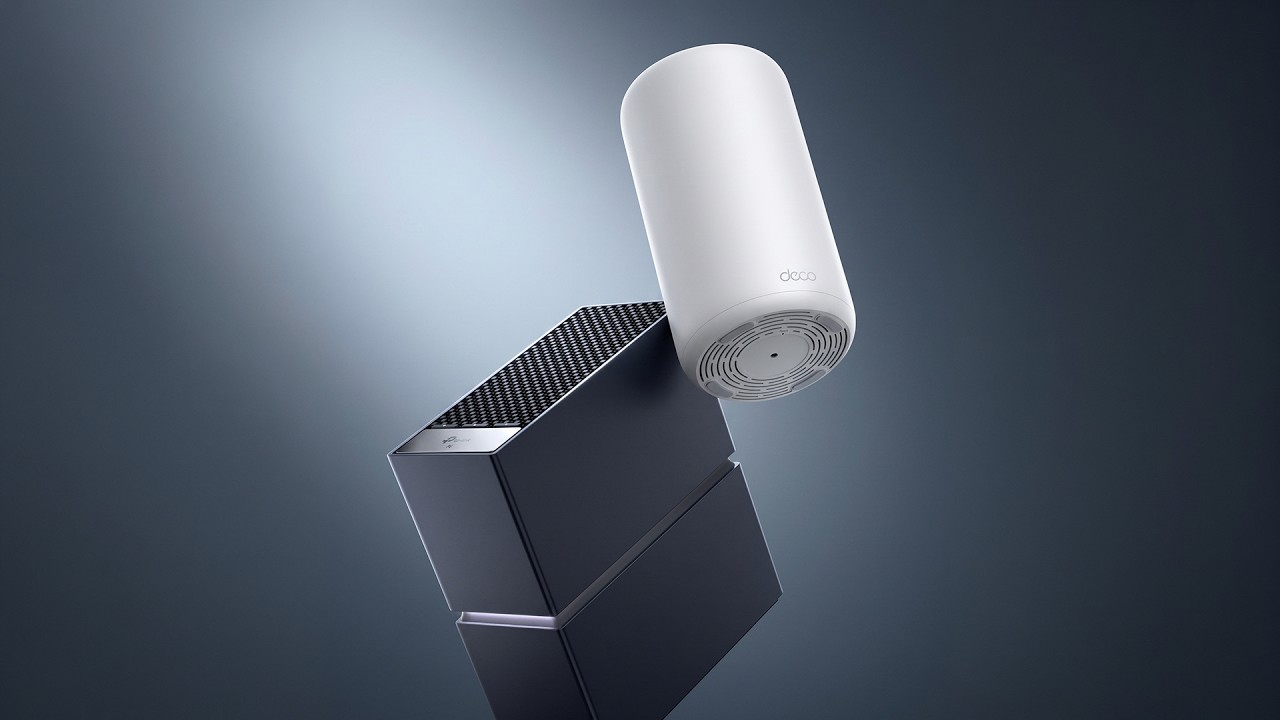
TP-Link has opened preorders for the Archer 8 Ultra, which it describes as the first consumer router based on the upcoming Wi-Fi 8 standard.
The tri-band router uses Broadcom Wi-Fi 8 hardware and offers up to 19Gbps of combined wireless bandwidth across the 2.4GHz, 5GHz, and 6GHz bands.
However, the launch comes with several limitations. Wi-Fi 8 has not yet been formally ratified, compatible client devices are still rare, the router is not currently available in the United States, and early pricing reaches nearly £670 in the UK.
| Feature | TP-Link Archer 8 Ultra |
|---|---|
| Wireless standard | Wi-Fi 8, IEEE 802.11bn |
| Combined bandwidth | Up to 19Gbps |
| Bands | 2.4GHz, 5GHz, 6GHz |
| Chipset | Broadcom Wi-Fi 8 |
| Internal antennas | 18 |
| 10Gbps ports | Two auto-sensing WAN/LAN |
| 2.5Gbps LAN ports | Four |
| USB | USB 3.0 |
| NFC | Yes |
| AI assistant | Aireal |
| UK price | £669.98 |
| U.S. availability | Not currently available |
Wi-Fi 8 focuses more on stability
Wi-Fi 8 is not being positioned purely as another large jump in headline transfer speeds.
The new wireless generation places greater emphasis on maintaining consistent connections, improving coverage through walls, and making networks more reliable over longer distances and in crowded environments.
TP-Link is promoting its Wi-Fi 8 StabilityEngine as one of the Archer 8 Ultra's main features.
The system uses technologies including UEQM modulation and distributed resource allocation to improve connection stability when many devices and competing wireless signals are present.
That focus could make Wi-Fi 8 more useful in real homes and offices where signal quality often matters more than maximum theoretical bandwidth.
Eighteen antennas can adjust coverage
The Archer 8 Ultra contains 18 internal antennas.
TP-Link has also developed a Multi-Floor feature that can change how those antennas direct the wireless signal depending on where connected devices are located.
In a multi-story building, the system can steer coverage toward different floors.
When devices are concentrated on a single floor, the signal pattern can instead be adjusted to provide wider horizontal coverage.
TP-Link combines the antenna hardware with AI based optimization intended to automatically improve network behavior.
Wired networking includes dual 10Gbps ports
The router also has substantial wired connectivity.
Two auto-sensing 10Gbps ports can operate as WAN or LAN connections.
Four additional LAN ports support speeds of up to 2.5Gbps.
There is also a USB 3.0 connection that can be used with network storage.
This gives the Archer 8 Ultra enough wired bandwidth for high speed internet connections, local servers, NAS hardware, and other devices that can take advantage of multi-gigabit networking.
NFC makes joining the network easier
TP-Link has included NFC connectivity as another convenience feature.
Compatible smartphone users can tap their devices against the router to connect to the Wi-Fi network instead of manually entering a password.
The same feature can be used for guests, potentially making temporary network access easier in homes and offices.
Aireal AI assistant can help manage the router
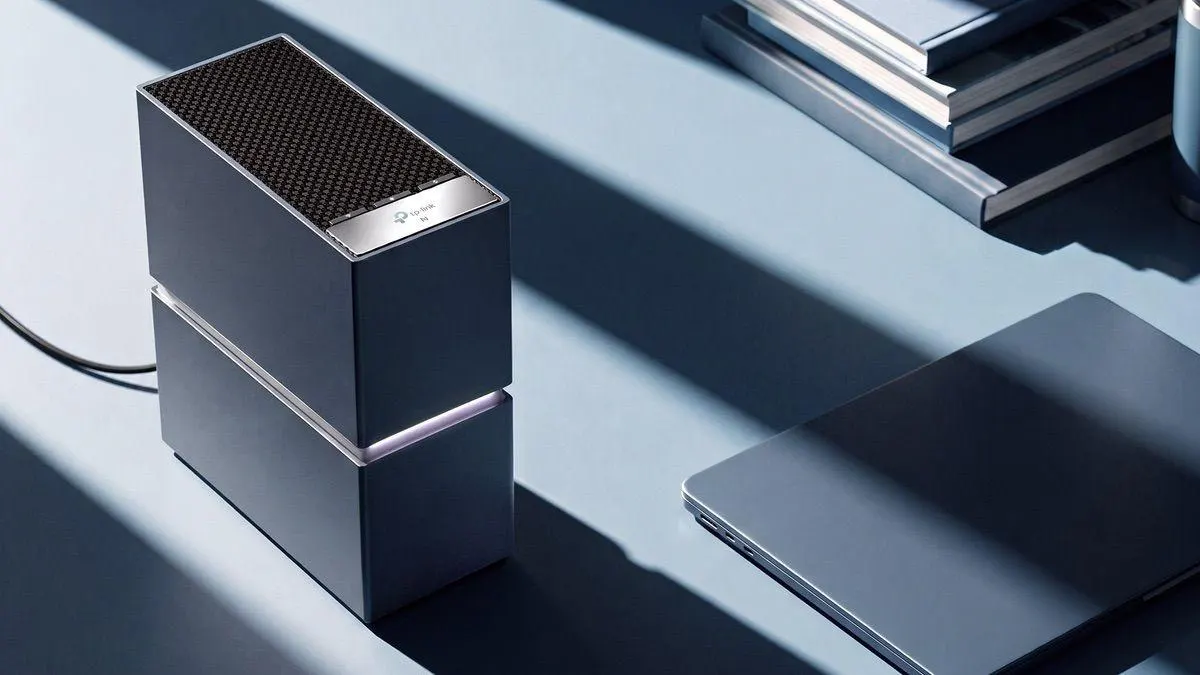
The Archer 8 Ultra also includes TP-Link's Aireal AI assistant.
The assistant is designed to answer questions about the network and help owners manage their Wi-Fi configuration.
The supplied material does not explain the full range of supported commands or whether all Aireal features require an internet connection.
Its inclusion reflects the broader trend of router makers adding automated troubleshooting and configuration tools to simplify network management.
Wi-Fi 8 devices are still extremely rare
One of the biggest problems for early buyers is client support.
Wi-Fi 6 and Wi-Fi 6E are only now widely available across consumer hardware, while Wi-Fi 7 remains less common.
Wi-Fi 8 devices are even further away from mainstream adoption.
The Archer 8 Ultra is backwards compatible with older Wi-Fi standards, so existing phones, laptops, and other wireless devices can still connect.
However, those products will not receive the Wi-Fi 8 specific improvements unless they contain compatible hardware.
That means buyers could spend a considerable amount on the router without being able to use its newest capabilities immediately.
U.S. launch is blocked by regulatory hurdles
The Archer 8 Ultra is currently available for preorder in selected markets including the United Kingdom, Germany, and Australia.
The United States is not included.
According to the supplied report, the issue is connected to regulatory approval from the Federal Communications Commission.
New wireless products from TP-Link are facing additional scrutiny over national security concerns.
Existing TP-Link routers already being sold in the United States are not affected, but new models need to clear the required approval process before they can enter the market.
Other router makers including ASUS, Netgear, and Amazon's Eero have reportedly received conditional approvals for some products.
Early pricing is close to $900
Price is another major barrier.
One UK listing puts the Archer 8 Ultra at £669.98.
That converts to roughly $900, although this should not be treated as confirmed U.S. pricing because the product is not currently approved for sale there.
The high price reflects its position as an early next-generation networking product with 10Gbps Ethernet, multiple 2.5Gbps ports, 18 antennas, and Wi-Fi 8 hardware.
TP-Link says broader availability details for both the Archer 8 Ultra and the upcoming Deco 8 Ultra will be announced in the coming months.
For now, the Archer 8 Ultra offers an early look at where consumer Wi-Fi is heading, with greater emphasis on reliable coverage and network stability, but limited device support and high pricing mean its benefits will initially be aimed at early adopters.



Discussion (0)
Be the first to comment.