



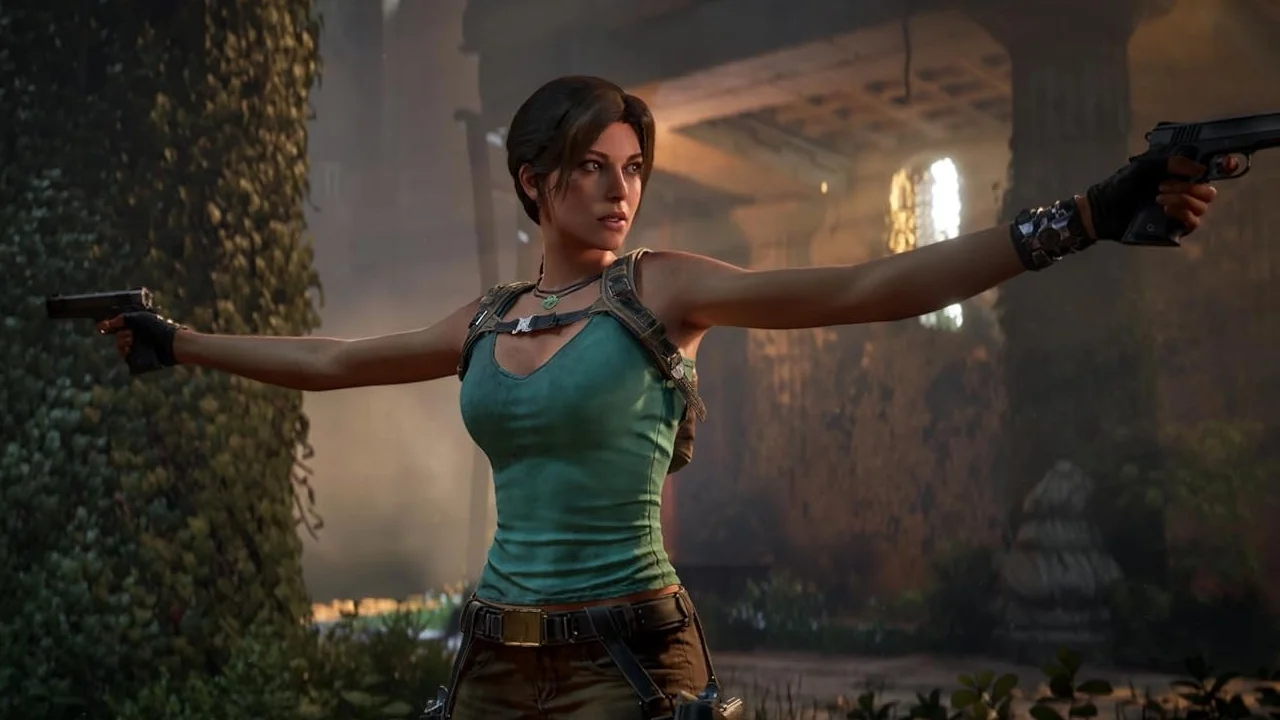
Crystal Dynamics says Tomb Raider: Legacy of Atlantis uses generative AI tools during development, but the studio says final in game content is still made through its traditional human led pipeline. The clarification comes after players noticed a generative AI disclosure on the game’s Steam page and started asking how the technology is being used.
Experience director Jeff Adams described AI as a tool that helps the team reach answers faster during early development. His example focused on level design, where developers may want to test whether an object works in a scene before committing full production time to it.
In that case, the team can use a generative AI tool to quickly visualize the idea in the game world. If the idea works, it then moves into the normal production process, where artists and developers concept, build, and finish the asset themselves.
Crystal Dynamics says final content is human crafted
The studio’s main message is that generative AI is being used for exploration, not as a replacement for finished game development. Adams said the final content that appears in the game is human crafted.
That distinction is important because many players are concerned about AI generated assets appearing directly in games, especially when they replace human art, writing, or design work. Crystal Dynamics appears to be framing its use of AI as a way to test ideas more quickly before the real asset creation begins.
| Area | Crystal Dynamics’ stated approach |
|---|---|
| AI use | Early visualization and idea testing |
| Example | Previewing an object in a level before building it |
| Final assets | Said to be human crafted |
| Main goal | Faster decision making during development |
| Player concern | Whether AI material remains in final content |
| Studio response | Limited explanation so far |
The explanation may reassure some players, but it also leaves questions open.
The studio did not fully explain how much AI remains in the pipeline
The interview became more limited when the follow up question asked how much of an AI generated asset remains after the team decides to use the idea. A studio representative stepped in and ended that part of the conversation, saying the team had said what it wanted to say for now.
That moment is likely to keep the debate alive. The concern is not only whether AI is used at all, but how far it reaches into the pipeline. Players may want to know whether AI outputs are discarded completely, heavily redrawn, used as reference, or partially carried forward.
Crystal Dynamics has said the finished content is human crafted, but the lack of deeper detail means some fans may remain skeptical until they see more of the game or receive a clearer policy.
Generative AI remains a sensitive issue in gaming
Generative AI is one of the most divisive subjects in game development. Some studios see it as a production tool that can speed up early ideas, help with iteration, or reduce wasted work. Many players and creators worry that it could weaken artistic jobs, introduce low quality assets, or blur credit for human work.
The Tomb Raider case shows how careful studios now need to be. Even a Steam disclosure can trigger questions, especially for a major franchise with a long history and a strong fan base.
For a series like Tomb Raider, presentation matters. Players expect detailed environments, strong art direction, and a sense of discovery. If they feel AI is being used carelessly, it could damage trust before launch.
Legacy of Atlantis is already under close watch
Tomb Raider: Legacy of Atlantis has drawn attention since its State of Play reveal. The game is expected to be a major return for Lara Croft, and fans are watching everything from its visuals to its system requirements.

The AI disclosure adds another layer to that scrutiny. Instead of focusing only on gameplay and performance, some players will now be watching for signs of AI generated art, awkward assets, or content that feels out of place.
That may be unfair if Crystal Dynamics is only using AI in early prototyping, but perception matters. The studio will likely need to communicate clearly if it wants to avoid confusion.
Crystal Dynamics wants AI to support development, not define the game
Based on the studio’s explanation, the goal is to use generative AI as a speed tool during early production. The team wants to test ideas quickly, decide what works, and then move successful concepts into traditional development.
That approach may become more common across AAA games, especially as development costs rise and teams look for ways to avoid wasting time on assets that never make it into the final game.
Still, the question for players is simple. They want to know whether the final game feels carefully made by people, not assembled from AI shortcuts.
For now, Crystal Dynamics is saying the finished content in Tomb Raider: Legacy of Atlantis will remain human crafted. The studio’s challenge is to prove that through the final game’s quality, not only through an explanation before launch.



Discussion (0)
Be the first to comment.