



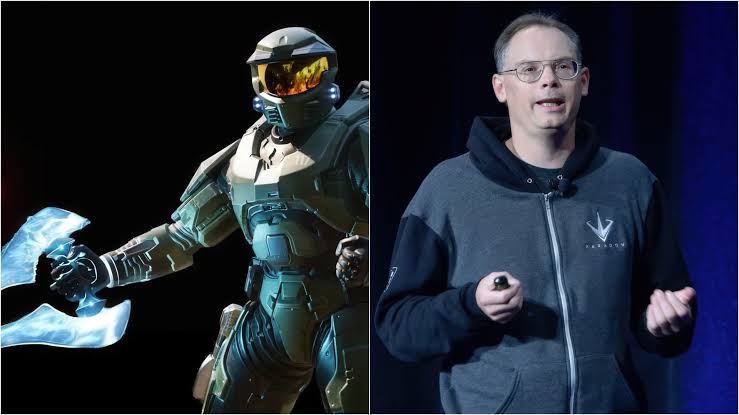
Epic Games CEO Tim Sweeney has backed Microsoft's decision to reorganize several Xbox studios and place major franchises such as Halo under teams with stronger recent commercial records.
His comments come after Microsoft announced another major Xbox restructuring that will eliminate 268 roles across Halo Studios, other first party development teams and management functions.
The changes will also shift responsibility for the next mainline Halo game to a newly created Activision team, while the remaining Halo Studios staff will focus primarily on existing games and community support.
Sweeney argued that giving high potential projects to studios with strong performance records can improve their chances of succeeding.
Activision will lead the next mainline Halo
The most significant change involves Halo.
Microsoft is moving development of the next mainline entry to a purpose built team inside Activision.
The group will reportedly operate separately from the Call of Duty teams, meaning the change does not necessarily involve turning Halo into another annualized Call of Duty style franchise.
Halo Studios, previously known as 343 Industries, is being reduced to a smaller organization responsible for supporting existing Halo releases and maintaining its community.
| Xbox restructuring change | Reported outcome |
|---|---|
| Jobs eliminated | 268 roles |
| Halo development | New Activision team takes lead |
| Halo Studios | Smaller support focused team |
| World's Edge | Workforce reportedly reduced significantly |
| World's Edge project | Upcoming project canceled |
| Rare | Moved under Activision structure |
| Obsidian | Moved under Bethesda |
| Major priorities | Halo, Fallout, The Elder Scrolls and other established franchises |
The changes form part of a broader reset across Microsoft's gaming organization.
Sweeney supports putting major projects with proven teams
Responding to criticism of the restructuring, Sweeney said it makes sense to give projects with the greatest potential to the best performing studios.
His argument focuses on Activision's history of managing large scale releases.
Call of Duty has remained one of the industry's largest commercial franchises for many years, with Activision maintaining a regular release schedule across several development teams.
That history does not guarantee success with Halo, but it explains Microsoft's reasoning for putting Activision in charge of the franchise.
Activision has experience coordinating large development organizations, releasing games across several platforms and supporting multiplayer titles over long periods.
Those capabilities could become important as Microsoft attempts to rebuild Halo.
Halo has faced an uneven period under 343 Industries
Halo's development history since Bungie's departure has included several successful releases alongside significant problems.
Halo 4 and Halo 5 received generally positive reviews, although elements of both games divided longtime fans.
Halo 5 in particular faced criticism over its campaign direction.

Halo: The Master Chief Collection had serious technical problems when it launched and required years of updates before reaching the state players originally expected.
Halo Infinite received praise for parts of its campaign and core multiplayer gameplay, but its multiplayer service struggled with a lack of regular content during its early period.
Microsoft eventually renamed 343 Industries as Halo Studios in 2024 and moved future development away from the proprietary Slipspace Engine to Unreal Engine 5.
The restructuring now goes significantly further by moving responsibility for the next mainline game outside Halo Studios entirely.
World's Edge is also affected
Halo is not the only Xbox organization facing significant change.
World's Edge, the studio closely associated with the Age of Empires franchise, has reportedly had its workforce reduced substantially.
An upcoming project at the studio has also been canceled.
Rare is similarly being moved under Activision as part of the new structure.
These changes show that Microsoft's restructuring extends beyond one struggling project or studio.
The company appears to be reorganizing development around larger publishing groups that can oversee multiple franchises.
Obsidian is moving under Bethesda
Obsidian Entertainment is also being repositioned, although under a different part of Microsoft's organization.
The studio is now moving directly under Bethesda.
That change is notable because Obsidian has reportedly been assigned work on a new Fallout project.
Obsidian previously developed Fallout: New Vegas, which remains one of the franchise's best known entries.
Placing the studio directly within Bethesda could simplify coordination around Fallout and other related projects.
Microsoft is also continuing to prioritize major franchises including Fallout and The Elder Scrolls as part of its revised gaming strategy.
Activision faces a different challenge with Halo
Developing Call of Duty and developing Halo require different creative approaches.
Activision's production experience may help with scheduling, technology and project management, but Halo also has its own gameplay identity, audience expectations and long established design principles.
That means the success of Microsoft's strategy will depend on more than production efficiency.
The new team will need to determine how much of traditional Halo should remain unchanged and where the franchise needs to evolve.
Microsoft has not yet revealed the next mainline project's release date or detailed design direction.
The restructuring carries a significant human cost
The organizational changes also involve another substantial reduction in Microsoft's gaming workforce.
A total of 268 roles are being eliminated across studios and management functions in this latest phase.
That number is important context for any discussion about the potential business benefits of restructuring.
Moving major franchises between organizations may create a clearer management structure, but it also means teams are being reduced, projects are being canceled and employees are losing their positions.
Sweeney's comments address Microsoft's strategic logic rather than the consequences for affected workers.
Whether that logic produces stronger games will only become clear once the newly reorganized teams begin shipping projects.
For Halo, the change represents one of the most significant shifts since Microsoft transferred responsibility for the franchise away from Bungie. Activision now has the opportunity to reshape the series under a new development structure, while the much smaller Halo Studios moves into a supporting role.


Discussion (0)
Be the first to comment.