



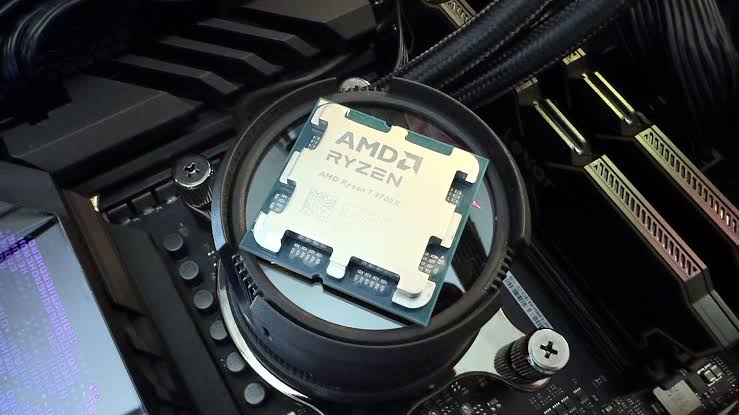
The desktop processor market has changed dramatically since the mid 1990s. Early competition focused on clock speeds measured in megahertz, while modern processors contain billions of transistors, several types of cores, advanced cache designs, and chiplets built with multiple manufacturing processes.
Across those three decades, Intel and AMD repeatedly exchanged positions. Intel often led during periods when its manufacturing process and architecture moved together successfully. AMD gained ground when it offered more cores, better value, longer platform support, or a major design change that Intel could not quickly match.
Several processors stand out because they changed what buyers expected from a desktop computer. The AMD Athlon proved that Intel could face serious competition. Intel’s Core 2 Duo restored its performance advantage after the difficult Pentium 4 period. AMD’s Ryzen family later brought strong competition back to a market that had become predictable.
| Processor era | Important development | Wider effect |
|---|---|---|
| Pentium II and AMD K6 | Stronger competition in the late 1990s | AMD became a credible alternative |
| Athlon and Pentium III | Race to 1GHz | Clock speed became a major marketing focus |
| Pentium 4 and Athlon XP | Different designs produced different work per clock | Model names became less connected to raw frequency |
| Athlon 64 and Core 2 | 64 bit computing and multiple cores reached desktops | Performance shifted beyond clock speed |
| Nehalem and Phenom II | More cores and simultaneous threads | Multitasking and professional workloads improved |
| Bulldozer and Sandy Bridge | AMD struggled while Intel delivered strong efficiency | Intel gained a long period of leadership |
| Ryzen and Coffee Lake | Competition returned across price levels | Core counts increased rapidly |
| Ryzen X3D and hybrid Intel CPUs | Cache and mixed core designs became important | Gaming performance followed new paths |
AMD Challenged Intel With K6 and Athlon
Intel’s Pentium II was one of the most important desktop processors of the late 1990s, but AMD’s K6 showed that competitive performance did not require an Intel chip.
The K6 was generally cheaper and performed well enough to attract buyers who wanted greater value. AMD strengthened that position with the original Athlon in 1999.
Athlon introduced an architecture that could process instructions efficiently and compete directly with Intel’s Pentium III. The rivalry quickly became a race to release the first consumer processor running at 1GHz.
AMD reached the milestone first with the Athlon 1000 in March 2000. Intel followed with its own 1GHz Pentium III, but an attempt to move quickly to 1.13GHz caused stability problems. Intel recalled that processor shortly after release.
This period showed that higher frequency could create technical risks when a design was pushed beyond comfortable limits.
Pentium 4 Made Clock Speed the Main Selling Point
Intel introduced the Pentium 4 with the NetBurst architecture and designed it to reach much higher frequencies. The company passed 2GHz in 2001 and released a 3.06GHz model with Hyper Threading in 2002.
AMD could not match those clock speeds directly, so it changed its naming system. An Athlon XP 1800 Plus did not run at 1.8GHz, but its name suggested performance comparable to a faster clocked competing processor.
That approach reflected a real architectural difference. Two processors running at the same frequency could deliver very different results because each design completed a different amount of work during every clock cycle.
Intel eventually pushed Pentium 4 beyond 3GHz, but rising power use and heat made further frequency growth difficult. The industry began looking toward additional cores as a more practical way to improve performance.
Dual Core Processors Changed Desktop Computing
AMD introduced the Athlon 64 architecture in 2003 and brought its AMD64 instruction set to mainstream desktop systems. That technology helped establish the 64 bit computing standard still used by modern personal computers.
The next major transition arrived in 2005. Intel released the dual core Pentium D, while AMD launched the Athlon 64 X2.
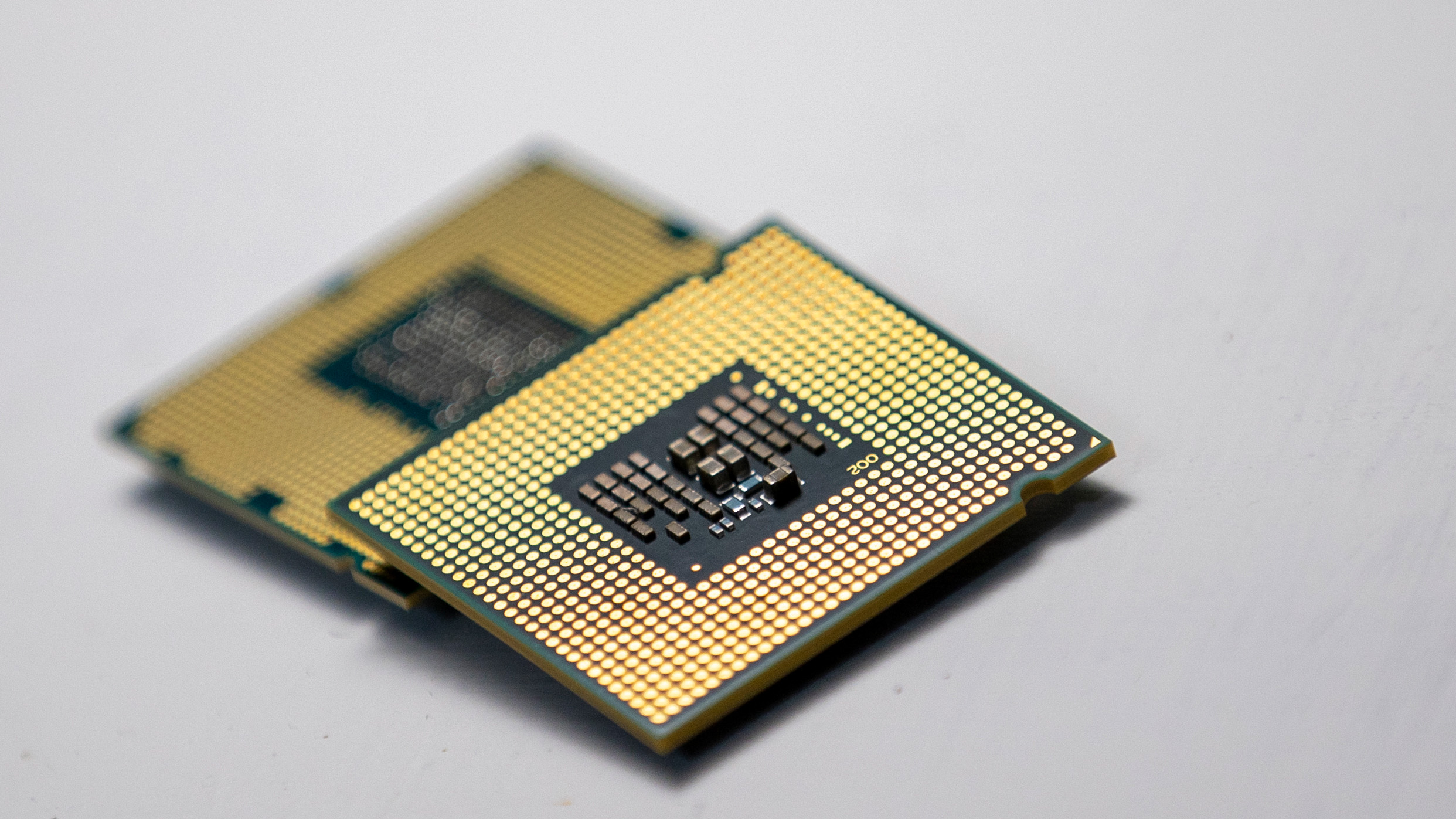
AMD’s design generally provided a better balance of performance, power use, and compatibility with existing software. Intel’s Pentium D placed two processor dies inside one package, while the Athlon 64 X2 offered a more integrated solution.
Intel responded with the Core architecture in 2006. Core 2 Duo delivered strong performance without relying on the high power consumption associated with Pentium 4.
The Core 2 Extreme X6800 established Intel as the performance leader again. Intel also introduced the first consumer quad core processor with the Core 2 Extreme QX6700, which combined two dual core dies in one package.
Nehalem Extended Intel’s Advantage
Intel followed Core 2 with Nehalem in 2008. The architecture brought an integrated memory controller, a new platform, DDR3 support, and the return of Hyper Threading.
A four core Nehalem processor could handle eight software threads, giving Intel a substantial advantage in demanding applications. AMD answered with Phenom II, which provided competitive value but could not match Intel’s fastest processors.
Intel’s six core Core i7 980X extended the lead in 2010. AMD introduced affordable six core Phenom II X6 processors, but they mainly appealed to buyers who wanted more cores without paying Intel’s premium prices.
During this period, Intel benefited from controlling both processor design and manufacturing. Its ability to move to smaller production processes helped it maintain stronger efficiency and performance.
Bulldozer Failed to Deliver AMD’s Expected Recovery
AMD attempted a major architectural change with Bulldozer in 2011. The company promoted the FX 8150 as an eight core processor, but its design shared important resources between pairs of integer units.
The architecture was built for heavily threaded software that was not common enough at the time. It sacrificed single core performance, which remained essential for games and many desktop applications.
Bulldozer could also consume considerable power and produce substantial heat. Later revisions improved performance, but they could not solve the design’s main weaknesses.
AMD eventually released the FX 9590, which reached 5GHz from the factory but carried a 220 watt thermal rating. The processor demonstrated that high frequency alone could not compensate for weak architectural efficiency.
Intel’s Sandy Bridge arrived during the same period and became one of the company’s most respected desktop designs. It offered strong single core performance, good efficiency, practical overclocking, and useful integrated media features.
Intel’s Long Lead Reduced the Pace of Desktop Progress
AMD released few major desktop processors between the later FX models and the arrival of Ryzen. Intel therefore faced limited pressure in the high performance market.
Haswell, Broadwell, Skylake, and Kaby Lake provided steady improvements, but mainstream desktop core counts changed slowly. Four core processors remained common at the upper end of Intel’s consumer range for several years.
Intel also remained on its 14nm manufacturing process much longer than originally expected. The lack of strong competition allowed the company to rely on small architectural changes, higher frequencies, and refreshed products.
AMD was working on a completely new design during this period. That architecture became Zen.
Ryzen Restored Competition in 2017
AMD launched the Ryzen 7 1800X in 2017 with eight cores and 16 threads at a price far below comparable Intel enthusiast processors.
The first Ryzen generation did not lead in every area. Intel remained stronger in many games, and early Ryzen systems faced memory and firmware problems. However, AMD had returned with a competitive architecture and a clear upgrade path.
Ryzen 5 and Ryzen 3 extended the new design into lower price ranges. Threadripper brought very high core counts to enthusiast and professional desktops.
Intel responded by adding more cores to its mainstream products. Coffee Lake moved the Core i7 range to six cores, while later models increased core counts again.
AMD improved Ryzen through Zen Plus, Zen 2, and Zen 3. Zen 2 used a chiplet design and moved its main processor cores to a 7nm process. The Ryzen 9 3950X delivered 16 cores on a mainstream desktop platform, challenging expensive high end desktop processors.
Zen 3 completed AMD’s recovery by delivering leading performance in games, single thread work, and heavily threaded applications.
3D V Cache Created a New Gaming CPU Category
Intel returned with Alder Lake in 2021. The architecture combined high performance cores with smaller efficiency cores and finally moved the company beyond its long running 14nm process.
Alder Lake delivered a major improvement over Intel’s previous generation and restored competition across several workload types.
AMD answered with the Ryzen 7 5800X3D. The processor placed additional cache above the existing Zen 3 chip using advanced packaging.
Its larger cache produced a major improvement in many games, allowing an older architecture to compete with and often beat newer Intel processors. AMD later expanded the technology to Ryzen 7000 and Ryzen 9000 products.
The Ryzen 9 7950X3D combined strong application performance with excellent gaming results, while the Ryzen 7 7800X3D became a popular choice for gaming focused systems.
Intel has continued developing its hybrid design, while AMD has relied on chiplets, large cache, and steady architectural improvements.
Modern CPU Development Faces New Limits
Recent processor generations show that large performance gains are becoming harder to achieve.
Intel’s Arrow Lake architecture made major design changes, including the removal of Hyper Threading and greater reliance on external manufacturing. However, its gaming results were often weaker than the previous generation.
AMD’s Zen 5 also delivered a smaller improvement than some earlier Ryzen generations. New X3D products strengthened gaming performance, but the underlying architectural gain was more modest.
The current market is also affected by factors beyond processor design. High memory prices, manufacturing capacity, and rising demand for artificial intelligence hardware can influence which products receive priority.
Consumer processors now compete for production resources with server chips and accelerators that can generate greater revenue.
The history of desktop CPUs shows that progress is rarely consistent. Strong competition produces faster development, better prices, and more choices. When one company holds a comfortable advantage, improvements often become smaller.
Intel and AMD are now preparing future architectures that will continue this cycle. Their next products will need to balance performance, power use, manufacturing cost, memory support, and the growing importance of artificial intelligence workloads.



Discussion (0)
Be the first to comment.