



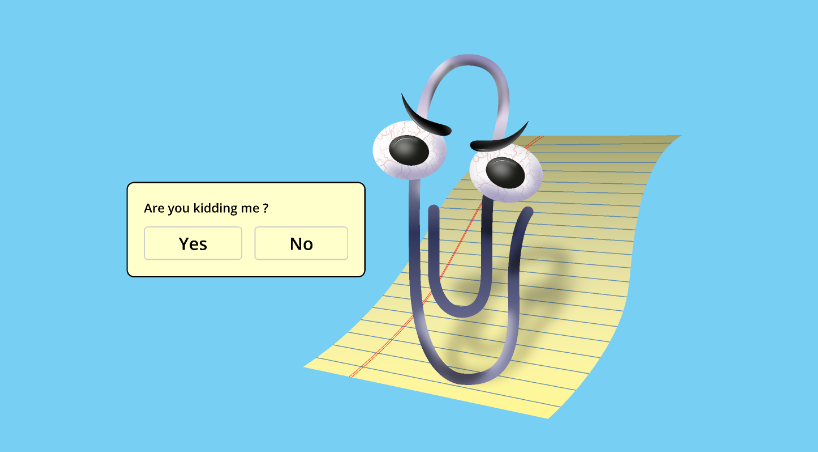
For most people, Clippy is just a joke. A relic from a different era of computing. That slightly annoying assistant that popped up at the wrong time and somehow became one of Microsoft’s most recognizable characters.
But every now and then, something surfaces that makes you look at it differently.
A recently rediscovered easter egg from Microsoft Office 97 does exactly that. It doesn’t just bring back nostalgia. It reveals that Clippy wasn’t just a quirky feature. rather It was part of something much more intentional.
The Clippy Everyone Remembers
Clippy, officially known as the Office Assistant, was introduced to:
- Help users navigate software
- Suggest actions based on what you were doing
- Make complex tools feel approachable
In theory, it was ahead of its time.
In practice, it often felt:
- Intrusive
- Misaligned with what users actually needed
- Slightly out of place
So it became a meme long before memes were a thing.
The Easter Egg That Changes the Perspective
The rediscovered easter egg from Office 97 shows something subtle but important:
Clippy wasn’t just designed as a helper. It was part of a larger experimental interface idea.
Behind the scenes, Microsoft was exploring:
- Personality-driven interfaces
- Context-aware assistance
- Software that reacts to user intent
Clippy wasn’t the final product. It was an early attempt.
And the easter egg hints at that deeper layer, something users were never meant to fully see.
What This Actually Reveals
When you look at it from today’s perspective, this changes how Clippy feels.
It wasn’t just:
- A bad design choice
- A failed feature
It was:
- An early prototype of intelligent assistance
- A step toward something much bigger
In many ways, Clippy was trying to do what modern AI tools do now.
It just didn’t have the technology to do it well.
Why It Didn’t Work Back Then
The idea was ambitious, but the timing was wrong.
In the late 90s:
- Computing power was limited
- Software couldn’t truly understand context
- User expectations were different
So instead of feeling helpful, Clippy often felt:
- Random
- Repetitive
- Disconnected from actual intent
The vision was ahead of its time. The execution couldn’t keep up.
The Strange Parallel With Today
This is where things get interesting.
What Clippy tried to do:
- Understand what you’re doing
- Offer relevant help
- Reduce friction in software
What modern tools do:
- AI copilots
- Context-aware suggestions
- Natural interaction with software
The idea didn’t fail. It just evolved.
Clippy wasn’t the wrong idea. It was the first draft.
Why This Easter Egg Matters
On the surface, it’s just a fun discovery.
But it highlights something deeper:
- Software design is iterative
- Ideas often fail before they succeed
- What feels outdated now can be foundational later
Clippy is a perfect example of that.
Real-World Insight
Most people remember Clippy as a mistake.
But looking at it now, it feels more like:
- An experiment that didn’t fully land
- A concept that needed better technology
- A stepping stone toward modern UX and AI
It’s easy to laugh at it. It’s harder to recognize what it was trying to become.
The Bigger Picture
Microsoft Office 97 wasn’t just a productivity suite. It was a place where Microsoft experimented with how humans interact with software.
Clippy was part of that experiment.
And this rediscovered easter egg is a reminder that:
- Even “failed” features can influence the future
- The line between innovation and annoyance is often timing
Final Thoughts
Clippy didn’t fail because the idea was wrong.
It failed because the world wasn’t ready for it yet.
Looking back now, it feels less like a mistake and more like an early glimpse of something we use every day.
And that’s what makes this rediscovered piece of Office 97 so interesting.
It doesn’t just bring back Clippy.
It reframes it.

Discussion (0)
Be the first to comment.