



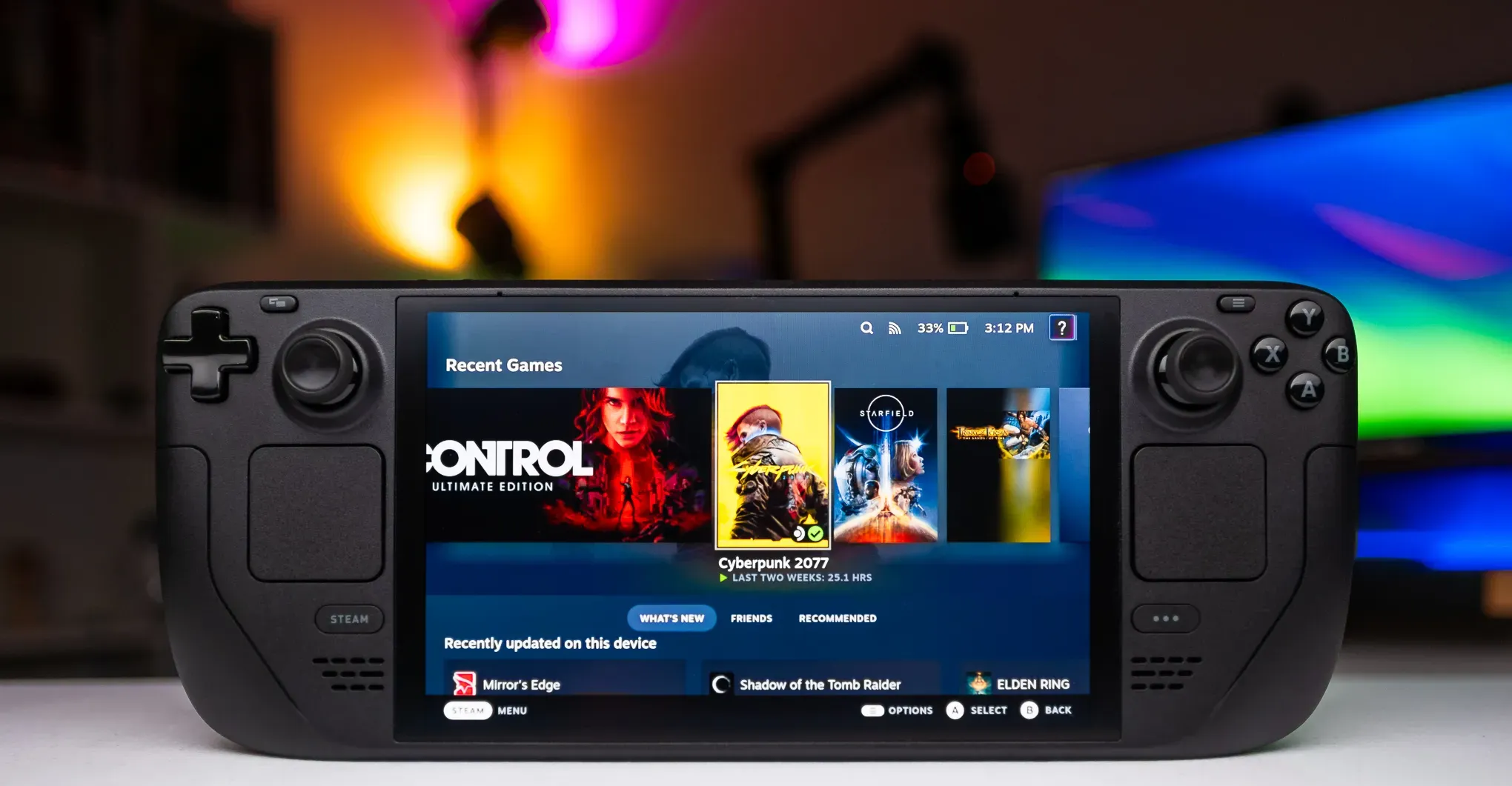
Valve’s big Steam Deck OLED price increase has changed the handheld PC conversation almost overnight. The 512GB Steam Deck OLED now costs $789, while the standard Xbox ROG Ally is still listed at $599.99 in the US. That price gap makes Microsoft and ASUS’s handheld look much more attractive for players who want a portable PC gaming device without paying close to premium laptop money.
The Steam Deck has long been the easiest handheld PC to recommend because of SteamOS, its simple console like interface, and Valve’s strong software support. But the latest price jump, blamed on rising component costs, makes that recommendation harder. The Steam Deck OLED is still a great device, but it no longer feels like the obvious value pick.
The Xbox ROG Ally now sits in a stronger position because it offers similar entry level handheld performance for much less money. It uses AMD’s Ryzen Z2 A chip, has 16GB of LPDDR5X memory, 512GB of SSD storage, a 7 inch 1080p display, a 120Hz refresh rate, VRR support, and a 60Wh battery. It also runs Windows 11, which gives players native access to Steam, Xbox PC games, Game Pass, Epic Games Store, GOG, and EA Play.
The Steam Deck still has software polish, but Xbox Ally wins harder on price
The Steam Deck OLED still has major advantages. Its OLED screen is better for contrast and color, SteamOS is easier to use on a handheld, and the built in touchpads are useful for games that need mouse like control. Those are real strengths.
But the Xbox Ally fights back with a sharper 1080p screen, a higher 120Hz refresh rate, VRR, two USB C ports, Wi Fi 6E, Bluetooth 5.4, and a more Xbox controller like grip design. For players who care about Windows game compatibility and Game Pass, it also avoids many of the workarounds needed on Steam Deck.
| Handheld | Current price | Display | Refresh rate | VRR | Storage |
|---|---|---|---|---|---|
| Xbox ROG Ally | $599.99 | 7 inch 1080p IPS | 120Hz | Yes | 512GB SSD |
| Steam Deck OLED 512GB | $789 | 7.4 inch OLED, 1280 x 800 | 90Hz | No | 512GB SSD |
The biggest issue with the Xbox Ally is still Windows. Windows 11 can feel clumsy on a small screen, especially without the Steam Deck’s touchpads. Microsoft’s Xbox Full Screen Experience helps, but it does not completely erase the fact that Windows was not originally designed for handheld gaming.
Still, that problem has become easier to work around. Valve now supports installing SteamOS on third party AMD handhelds, and many players also use Bazzite to create a Steam Deck like interface while keeping stronger ASUS hardware support. That means the Xbox Ally can be used as a Windows handheld, a Steam focused handheld, or a dual boot device.

That flexibility matters more now because the Steam Deck’s old value advantage has weakened. Before the price hike, the decision between Steam Deck and Xbox Ally depended heavily on software preference, screen quality, and game library. Now, price is harder to ignore.
For players who mostly play indie games, older titles, Game Pass releases, and lighter PC games, the Xbox Ally makes a lot of sense. It is cheaper, widely available, comfortable to hold, and more open to multiple storefronts from day one.
The Steam Deck OLED remains the cleaner out of the box experience, especially for players who live inside Steam. But at $789 for the 512GB model, it is asking buyers to pay a large premium for that convenience.
Right now, the Xbox ROG Ally looks like the better value handheld. That may change if ASUS and Microsoft also raise prices later, but for the moment, Valve’s price hike has handed Xbox a rare advantage in the portable PC gaming market.



Discussion (0)
Be the first to comment.