



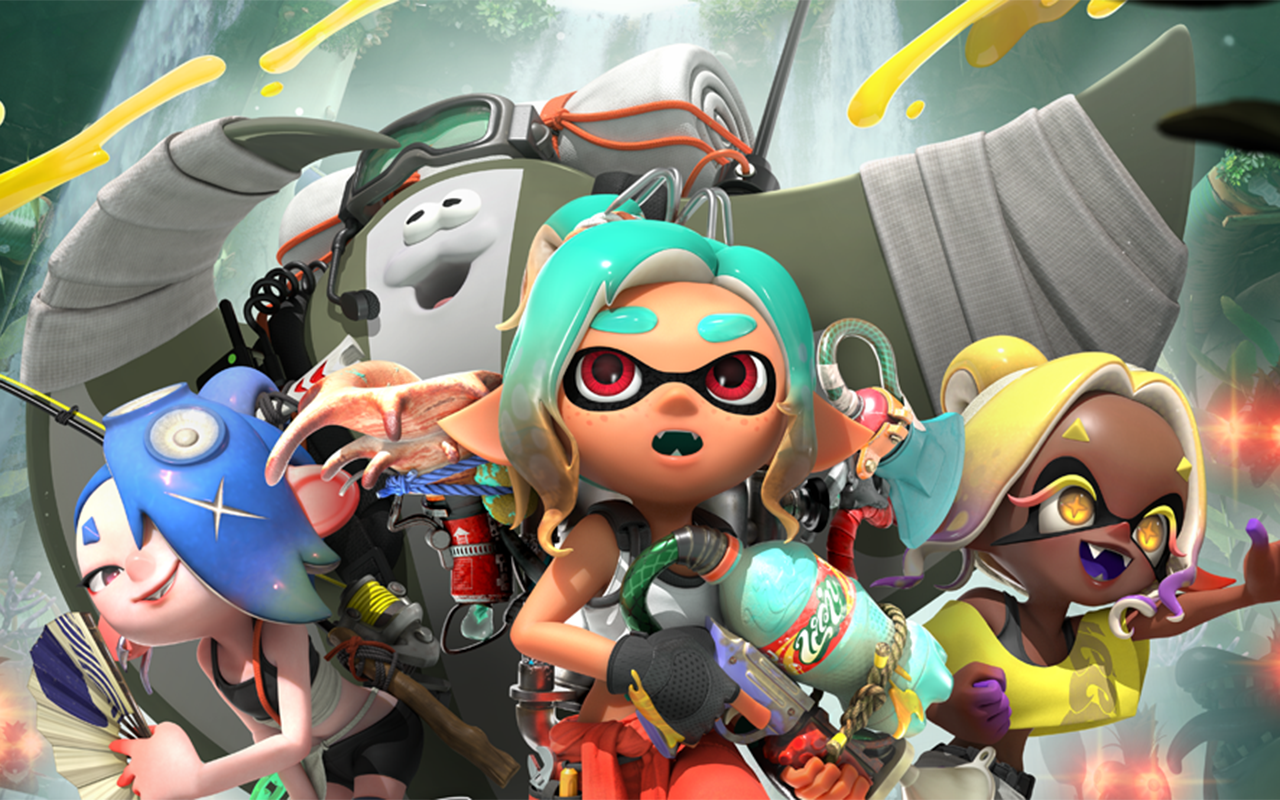
Splatoon Raiders takes Nintendo’s colourful shooter series in a more focused direction, replacing the usual mix of competitive multiplayer, cooperative defence, and single player content with a campaign built mainly around raids, loot, upgrades, and repeated battles against Salmonids.
The result is a narrower game than earlier Splatoon releases, but also one with a clear sense of purpose. Its mission structure is easy to understand, its progression system provides frequent rewards, and the short length of each raid makes it well suited to quick sessions. The main weakness is repetition, especially once the game stops introducing new enemy types and begins increasing difficulty by placing more familiar opponents on the battlefield.
Splatoon Raiders launches for Nintendo Switch 2 on July 23, 2026, with a digital price of $50. It can be played alone or cooperatively with up to three other players through online play or local wireless.
The story sends Deep Cut to the Spirhalite Islands
You play as the Mechanic, a lightly customisable character who pilots a helicopter for Deep Cut. A powerful storm causes the group to crash on the mysterious Spirhalite Islands, where they establish a base and begin searching for treasure.
Returning home is part of the objective, but much of the campaign focuses on gathering Spirhalite Shards, upgrading equipment, and investigating the islands’ connection to the Salmonids.
The story is relatively simple and does not attempt to deliver a deeply emotional narrative. It becomes more interesting as you strengthen your relationship with individual members of Deep Cut and uncover optional pieces of the series’ unusual background lore.
The conclusion provides a larger sense of scale, but the characters and progression remain more important than the plot itself.
Raids form the centre of the experience
Standard raids place you in mostly linear stages alongside a chosen Deep Cut companion. That character travels in an Exploration Bot equipped with a drill.
Your main task is to find caches containing Spirhalite Shards. Before the bot can open them, you must defeat the Salmonids that appear around each location. Once the area is clear, the cache can be collected and the raid continues.
| Mission type | Main objective | General difficulty |
|---|---|---|
| Standard raids | Clear enemies and recover shard caches | Usually accessible |
| Open objective raids | Complete goals across wider areas | Moderate |
| Salmonid Dens | Collect enough Power Eggs before time expires | Challenging |
| Buried Ruins | Clear three underground levels and defeat a stronger enemy | High |
| Sampler Dungeons | Finish stages with fixed weapons or gadgets | Short but more creative |
| Boss encounters | Defeat larger specialised enemies | Major campaign highlights |
The basic rhythm is familiar if you have played Salmon Run. You cover areas in ink, defeat groups of enemies, transform into squid form to move faster, and refill your ink supply by swimming through your own colour.
Weapons include familiar options such as Splattershots and Rollers, along with more unusual equipment such as ink based katanas. Looted weapons have levels and rarity ratings, with higher rarity versions offering additional statistical bonuses.
Gadgets and Showstopper attacks add more combat options
Players can gradually equip up to three gadgets. These abilities operate on cooldown timers and provide effects such as protective ink spreading satellites or an ink boomerang that damages groups of enemies.
Defeated enemies also drop Power Eggs. Collecting enough charges the Exploration Bot and unlocks a large Showstopper attack capable of clearing much of the battlefield.
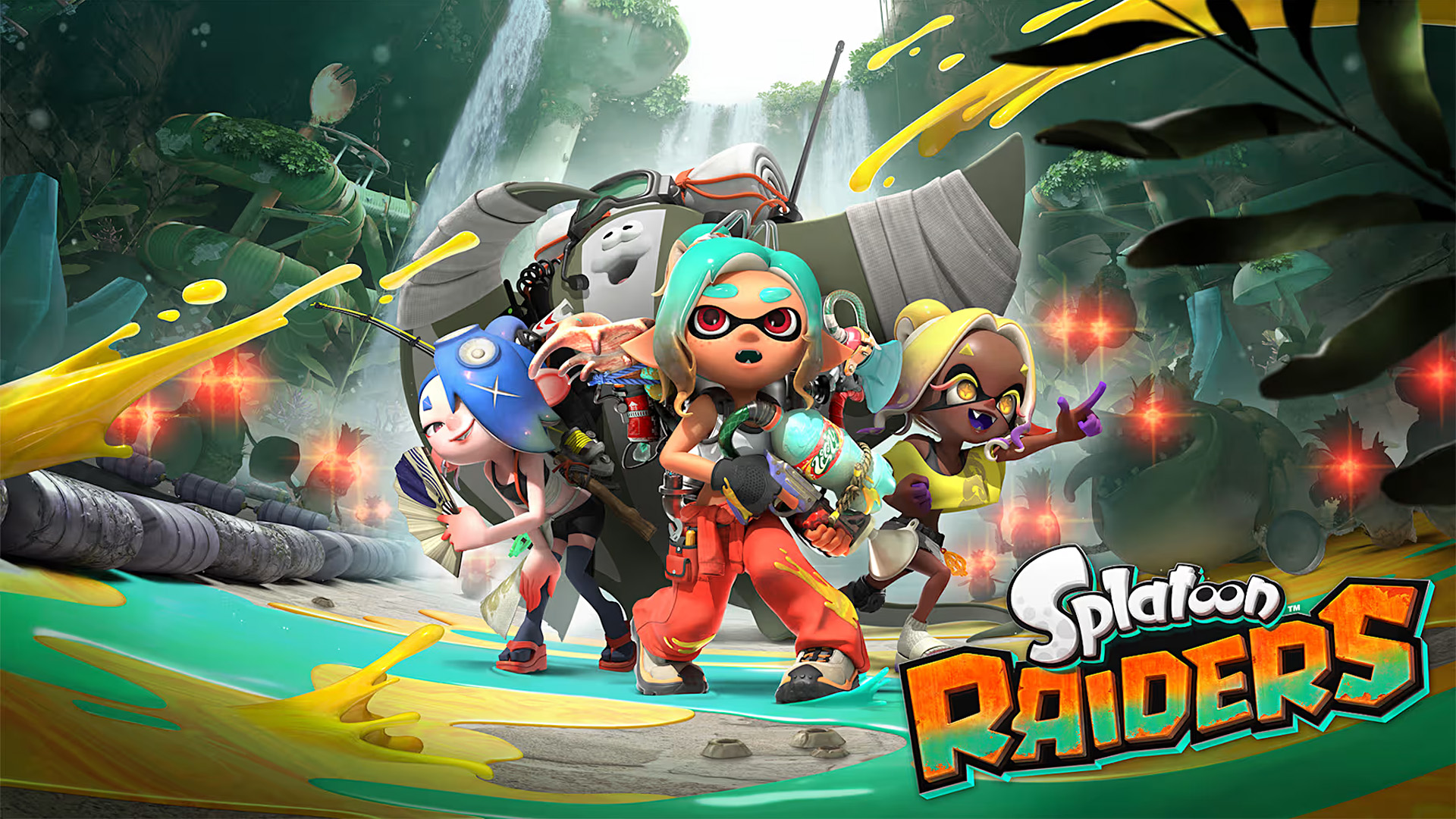
These abilities make combat more flexible, but enemy behaviour remains simple. Most Salmonids rush toward the player in large groups, while stronger Boss Salmonids introduce more dangerous attacks or specific weaknesses.
Battles can become intense when the screen fills with enemies, although the encounters rarely demand complex tactics. Standard raids usually provide enough space to retreat and recover, making them less punishing than the underground mission types.
Progression helps overcome the repetitive structure
The game’s strongest feature is its constant stream of upgrades.
Weapons can be collected in different levels and rarities, while gadgets can be modified using parts found during raids or created from gathered materials. Your ink tank also gains upgrades as you level, including higher health, more damage, and additional gadget part capacity.
Separate progression systems track Power Eggs, treasure earnings, and player rank. Each system unlocks further improvements, creating frequent rewards even when a mission itself feels familiar.
Failure is also handled generously. You keep experience, weapons, and collected items after an unsuccessful run, so time spent attempting a difficult mission is rarely wasted.
This design gives Splatoon Raiders a strong sense of forward movement. Even repetitive raids usually contribute toward a stronger build or a new equipment combination.
Mission variety helps, but enemy variety runs out early
Nintendo introduces several raid formats, but the majority of the game still revolves around fighting large groups of Salmonids.
New enemy types appear at a steady pace during the opening hours. Later, the game relies more heavily on larger crowds and tougher combinations of existing enemies.
Sampler Dungeons provide some of the most creative level design because they force you to use a specific weapon or gadget. They also include more platforming and light puzzle solving than the standard raids, but many of these stages end quickly.
Salmonid Dens and Buried Ruins provide a more demanding challenge. Their tighter spaces and timed objectives can become frustrating, especially when large groups restrict movement.
Boss battles are among the strongest sections because they break away from the standard raid pattern and introduce more distinct encounters.
The presentation lacks some of Splatoon’s usual energy
Splatoon Raiders retains the series’ ink effects, character designs, and unusual humour, but many environments look more muted than expected.
Most stages become more visually interesting after they are covered in ink, yet the underlying locations do not always have the variety or energy associated with earlier games. The campaign contains only three main biomes, which contributes to the feeling of repetition.
The soundtrack supports the action effectively but does not stand out as strongly as some earlier Splatoon music.
Performance and responsiveness remain important strengths, especially during crowded encounters. The Switch 2 handles the game’s busy combat well enough for the action to remain readable.
Cooperative play expands the replay value
Every major activity can be played with up to three other players online or through local wireless.
The game also includes a system that allows another player to assist during a difficult section. This provides a useful option when an underground mission or boss becomes too demanding.
Cooperative play reduces some of the repetition because different weapon combinations and team strategies can change the pace of familiar missions.
The campaign takes around 12 hours to complete under normal conditions. Harder Spicy versions of raids, endgame activities, cooperative play, and the search for stronger equipment can extend the total beyond 20 hours.
| Review category | Assessment |
|---|---|
| Combat | Fast and enjoyable, though not highly strategic |
| Progression | Frequent and rewarding |
| Mission design | Varied formats but often straightforward |
| Enemy variety | Strong early, limited later |
| Visual presentation | Functional but sometimes subdued |
| Cooperative play | A valuable addition |
| Campaign length | Around 12 hours |
| Extended playtime | More than 20 hours possible |
| Overall rating | 8 out of 10 |
Splatoon Raiders succeeds because it understands the appeal of short missions and steady rewards. The combat remains satisfying, equipment arrives frequently, and there is always another upgrade within reach.
Its focused design also creates its biggest limitation. Players looking for the broad variety found in earlier Splatoon games may find the repeated Salmonid battles too narrow. Those who enjoy looter shooter progression, cooperative missions, and building stronger loadouts should find a compelling loop that makes one more raid easy to justify.



Discussion (0)
Be the first to comment.