



Splatoon Raiders takes Nintendo’s colourful shooter series in a more focused direction. Instead of combining competitive multiplayer, story missions, cooperative defence and other modes in one package, this spinoff centres on raid based combat, equipment upgrades and repeated battles against Salmonids.
The narrower approach works because the core action remains enjoyable. Weapons feel responsive, movement through ink is fast, and the steady supply of upgrades gives you a strong reason to complete another mission. However, the limited enemy variety and straightforward stages become increasingly noticeable during the second half of the adventure.
Splatoon Raiders is available for Nintendo Switch 2 and costs $50 digitally. The main story takes around 12 hours to complete, while optional challenges and harder missions can extend the total playtime beyond 20 hours.
| Category | Details |
|---|---|
| Platform | Nintendo Switch 2 |
| Main story length | Around 12 hours |
| Extended playtime | More than 20 hours |
| Multiplayer | Up to four players |
| Main focus | Combat, loot and equipment upgrades |
| Rating | 8 out of 10 |
Raids combine familiar Splatoon combat with a loot system
You play as the Mechanic, a customisable character who pilots a helicopter for the musical group Deep Cut. After a storm causes the crew to crash on the Spirhalite Islands, they build a temporary base and begin searching for valuable treasure.
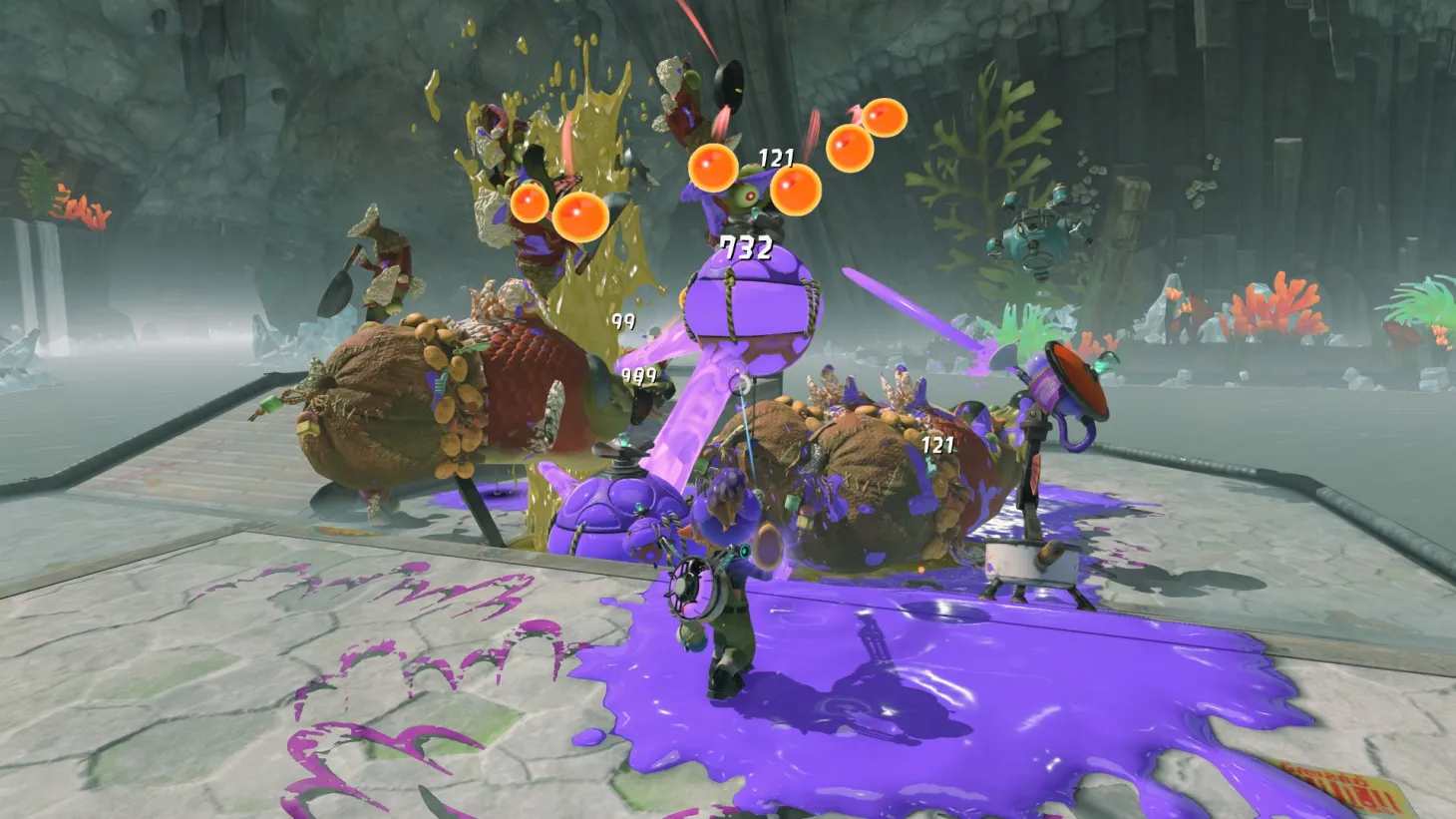
Most missions send you into compact areas to recover Spirhalite Shards. A chosen member of Deep Cut accompanies you inside an Exploration Bot, but the machine cannot collect the shards until nearby Salmonids have been defeated.
The combat follows familiar Splatoon rules. You cover enemies and surfaces with ink, transform into squid form to move quickly and refill your supply, and choose from weapons such as Splattershots, Rollers and ink based Katanas.
Gadgets add another layer to battles. These abilities operate on cooldowns and can create protective satellites, launch ink projectiles or provide other useful effects. Defeated enemies also drop Power Eggs, which charge a large Showstopper attack performed by your Deep Cut partner.
The action can become intense when large groups of enemies fill the screen. Most Salmonids still rely on simple behaviour, however, usually moving directly towards you in large numbers. This limits the amount of tactical planning required during ordinary encounters.
Mission variety helps, but repetition remains a problem
Standard raids make up most of the campaign. They are easy to understand and usually short enough to complete without becoming tiring. Their level layouts are often linear, with open spaces that allow you to retreat when a battle becomes overwhelming.
Other mission types offer more demanding challenges. Salmonid Dens ask you to collect a required number of Power Eggs before time expires. Buried Ruins contain several underground floors and finish with a stronger Seasoned Salmonid encounter.
Sampler Dungeons are among the more creative sections. These stages restrict your weapon or gadget selection and place greater emphasis on platforming, movement and simple puzzles. They are usually brief, but their more deliberate design provides a welcome break from standard raids.
The larger boss battles are another highlight. They introduce more memorable mechanics and give the campaign some of its strongest moments.
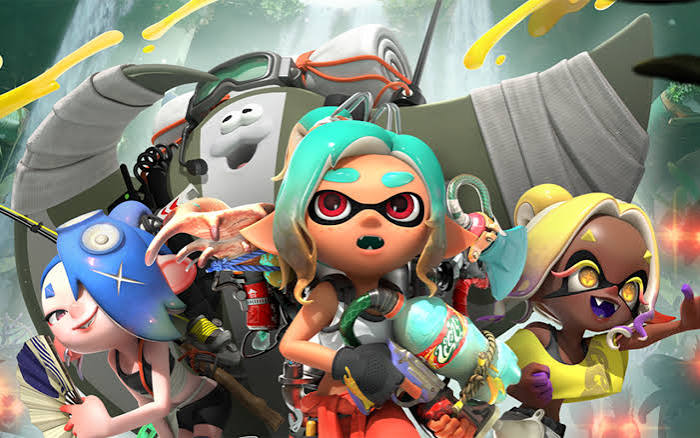
All missions can be played alone or with up to three other people through online play or local wireless. You can also request assistance during difficult sections, allowing another player to join and help you progress.
Despite these variations, the game eventually begins to feel repetitive. Early missions introduce new Salmonid types at a reasonable pace, but later challenges often increase difficulty by placing more familiar enemies on the battlefield. Most of your time is still spent defeating similar groups before collecting another reward.
Constant upgrades make each completed mission feel worthwhile
The progression system is the strongest part of Splatoon Raiders. Raids provide weapons with different levels and rarity ratings, while rarer equipment can include additional stat bonuses.
You also collect materials used to craft parts for gadgets. These parts let you adjust their performance and create combinations suited to your preferred style. Your ink tank receives separate upgrades that can increase health, damage and the number of gadget parts you can equip.
Additional bonuses come from collecting Power Eggs, earning money and increasing your rank. Because several systems progress at the same time, most missions provide something useful even when the objective itself feels familiar.
Failure is also handled fairly. You keep experience, weapons and collected items after an unsuccessful attempt, so difficult missions rarely feel like wasted time.
The presentation is less impressive than the progression. Several environments look muted outside the colourful ink covering their surfaces, and the three main biomes do not provide enough visual variety. The soundtrack supports the action effectively but lacks many memorable tracks.
Splatoon Raiders delivers a satisfying combat loop and a well designed upgrade system. Its stages and enemies could use more variety, but the short missions, cooperative support and steady rewards create a convincing reason to continue playing. For anyone who enjoys fighting Salmonids and improving equipment, this focused spinoff offers a substantial and enjoyable experience.



Discussion (0)
Be the first to comment.