



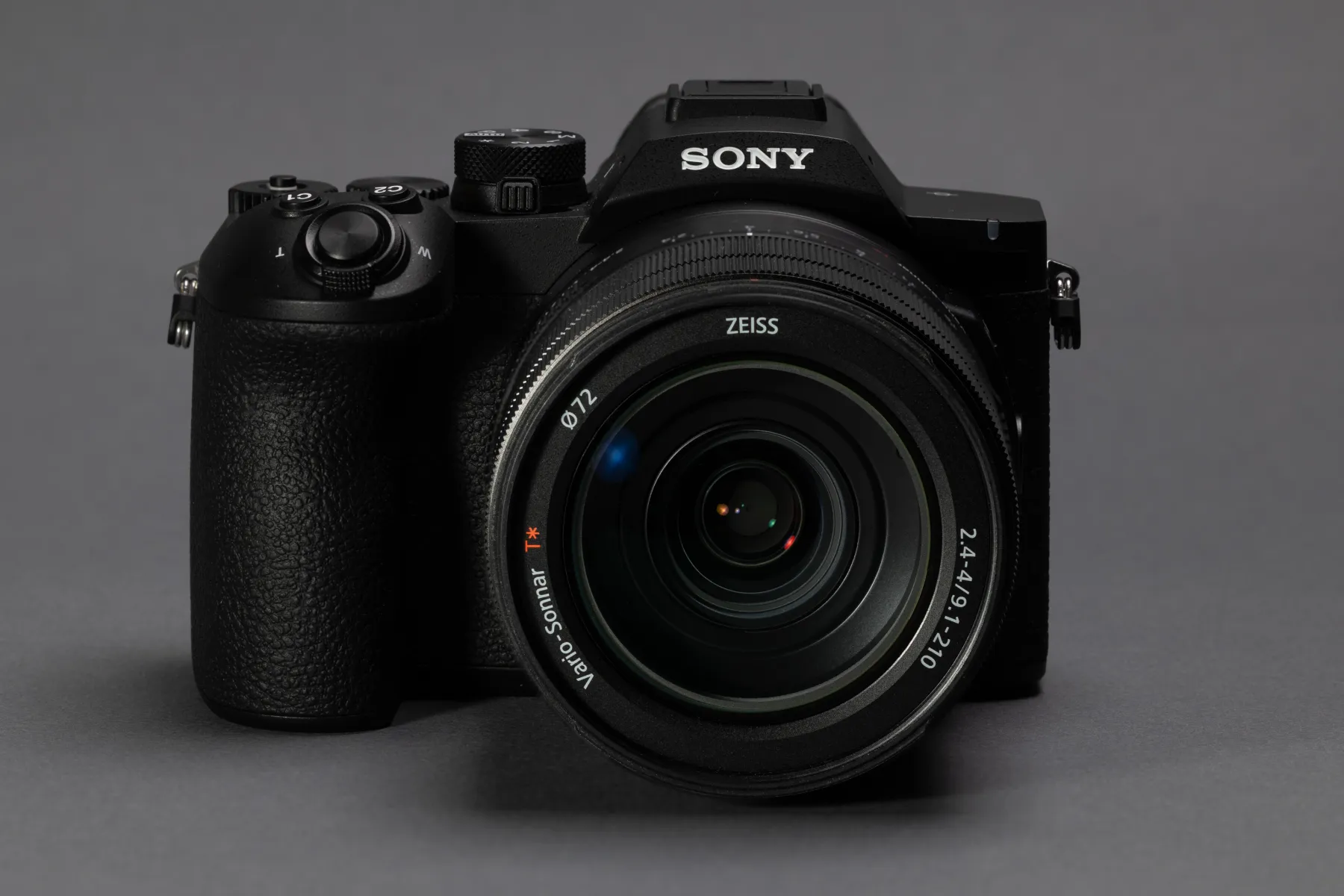
Sony has finally updated its RX10 bridge camera line with the new RX10 V, nearly nine years after the previous model arrived. The camera keeps the core idea that made the series popular: one fixed lens, a large zoom range, strong stills features, and serious video tools in a body that avoids the hassle of swapping lenses.
The RX10 V is built around a 24 to 600mm equivalent ZEISS Vario Sonnar lens with an f/2.4 to f/4 aperture range. That gives photographers a huge focal range in one camera, covering wide scenes, portraits, wildlife, sports, travel, and distant subjects without carrying several lenses. For people who want one camera that can handle almost everything, that remains the strongest reason to consider the RX10 series.
Sony has also redesigned the body. The RX10 V now borrows more from the Alpha mirrorless lineup, with a larger grip, updated controls, a revised button layout, and a rear autofocus joystick. It also gets a blackout free 3.69 million dot electronic viewfinder running at 120 fps, which should help with fast action and continuous shooting.
Sony mixes a familiar sensor with newer processing and AI driven autofocus
The camera still uses a 20 megapixel 1.0 type stacked Exmor RS sensor, but pairs it with Sony’s newer BIONZ XR processor and a dedicated AI processing unit. That combination brings major improvements to autofocus and burst shooting, even if the sensor itself is not completely new.
| Sony RX10 V feature | Details |
|---|---|
| Sensor | 20MP 1.0 type stacked Exmor RS |
| Lens | 24 to 600mm equivalent ZEISS Vario Sonnar |
| Aperture | f/2.4 to f/4 |
| Processor | BIONZ XR |
| AI hardware | Dedicated AI processing unit |
| Burst shooting | Up to 30 fps electronic shutter |
| Viewfinder | 3.69 million dot EVF at 120 fps |
| Video | Up to 4K at 120p |
| Battery | NP FZ100, about 630 shots |
| Price | $2,299.99 |
The new AI autofocus system can recognize and track humans, animals, birds, insects, and vehicles. In bright conditions with clear contrast, early impressions suggest the system can lock on quickly and follow subjects well. That should make the RX10 V useful for wildlife, outdoor sports, travel, and casual action photography.
The camera can also shoot up to 30 fps using the electronic shutter, which gives it plenty of speed for action scenes. On the video side, Sony includes 4K recording at up to 120p, along with S Cinetone, S Log3, and AI based Auto Framing. These features push the RX10 V beyond a casual superzoom and make it more useful for hybrid creators who shoot both photos and video.
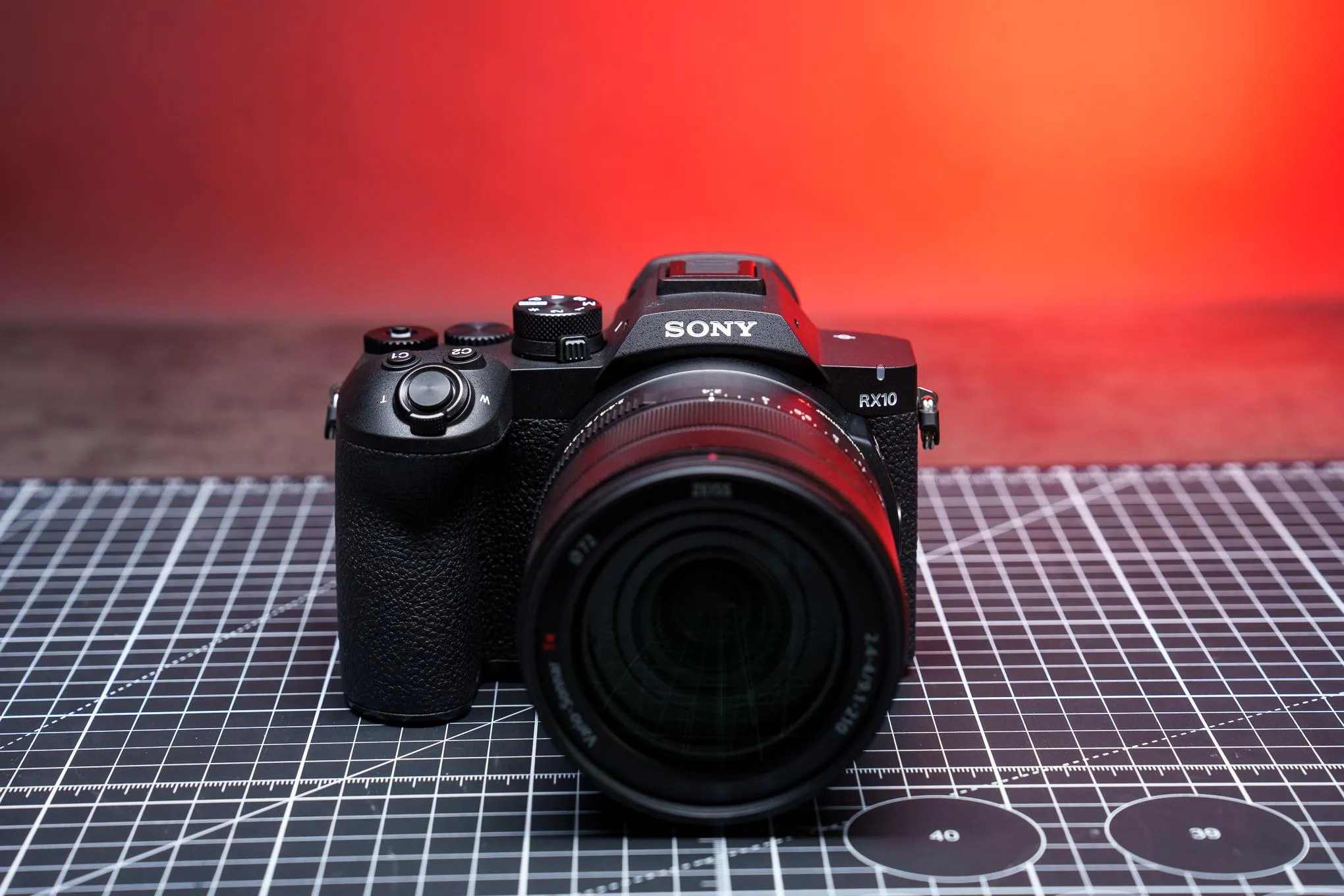
Battery life also improves because Sony has moved to the larger NP FZ100 battery. The RX10 V is rated for roughly 630 shots per charge, a 50 percent increase over the previous generation. That is an important upgrade for travel and field use, where charging may not always be convenient.
The main concern is value. At $2,299.99, the RX10 V is expensive for a fixed lens bridge camera, especially when mirrorless bodies and lens bundles compete in the same broad price range. The built in 24 to 600mm lens gives it a unique advantage, but buyers will still need to accept the limits of the older 1.0 type sensor.
Low light performance appears to be one of those limits. Early reviews suggest that low ISO images are sharp, colorful, and detailed, but image quality drops more quickly at ISO 1600 and ISO 3200, where noise reduction can become heavy. Automatic white balance is also said to lean cool and flat in mixed lighting.
Autofocus may also be less consistent in difficult scenes. The AI tracking system performs well when light is strong and subjects are clearly separated, but it can hesitate when light drops or when the background becomes busy. That does not make the camera weak, but it shows that the new processor and AI unit cannot fully erase the limits of the sensor and lens system.
The RX10 V is best suited for photographers who value reach, convenience, and speed more than interchangeable lens flexibility. It could be a strong travel, wildlife, family, event, and outdoor camera for people who want one body to cover almost every situation. But at this price, buyers should compare it carefully against mirrorless options before deciding.
Sony’s new bridge camera is impressive because of its range, handling, battery life, video features, and autofocus upgrades. The question is whether those strengths are enough to justify $2,299.99 in a market where mirrorless cameras continue to dominate serious photography.



Discussion (0)
Be the first to comment.