



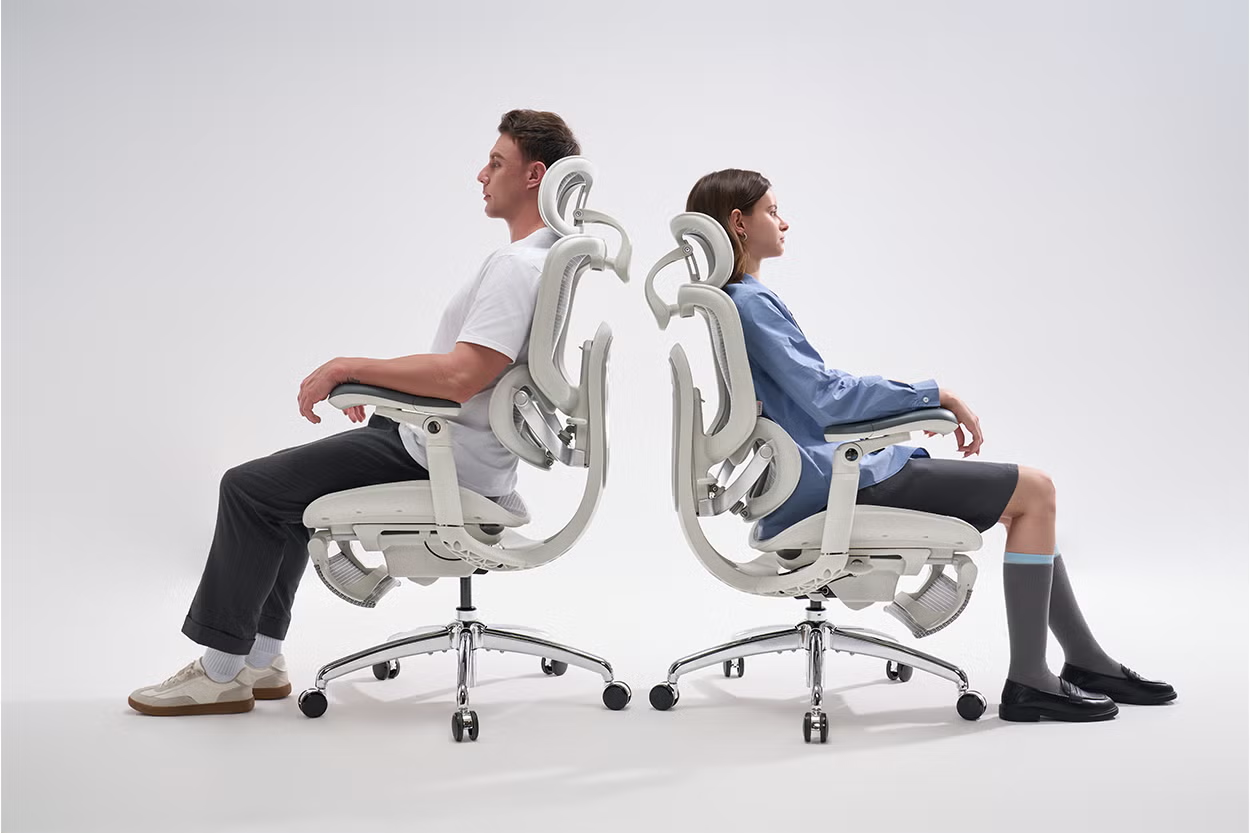
A high-performance PC setup is usually judged by its processor, graphics card, monitor and peripherals, but the chair can have just as much impact on long sessions.
The Sihoo Doro C300 Pro V2 is designed for gamers, developers, content creators and professionals who spend several hours at a desk. Its main focus is adaptive support, allowing the chair to respond to changes in posture rather than relying on one fixed sitting position.
The chair combines adjustable lumbar support, an adaptive backrest, multi-directional armrests and a wide headrest. It also supports several reclining positions and includes a breathable mesh design intended to improve comfort during extended use.
This is sponsored content, so the product claims should be considered alongside independent reviews and personal fit. Ergonomic chairs can feel very different depending on height, body shape, desk position and individual preferences.
| Feature | Specification |
|---|---|
| Recline positions | 105°, 120° and 135° |
| Weight capacity | Up to 330 pounds |
| Armrests | Eight-direction adjustment |
| Headrest | 3D design with a 28% larger surface area |
| Lumbar system | Self-Adaptive Dynamic Lumbar Support 2.0 |
| Seat | Pressure-minimised cushion with depth adjustment |
| Material | Breathable mesh |
| Warranty | Three years |
| Trial period | 30 days |
DynaCore system is designed to support changing postures
The Doro C300 Pro V2 uses what Sihoo calls the DynaCore System for full-body adaptive support.
Traditional office chairs often use fixed support points. Those designs can feel comfortable in one position but less effective when the person leans forward, sits upright or reclines.
Sihoo’s system is intended to move with the body as posture changes. The backrest, lumbar area and other support zones are designed to maintain contact rather than forcing the person to remain in one position.
This approach may be useful for people who move frequently between different tasks. A gaming session may involve leaning towards the screen, while video editing or reading may encourage a more upright or relaxed posture.
The chair’s design aims to accommodate those changes without requiring constant manual adjustment.
SyncroFlex backrest follows the shape of the spine
The SyncroFlex system is another central part of the chair.
It is designed to follow the natural curve of the back from the moment someone sits down. As the person shifts position, the backrest is intended to maintain support and reduce gaps between the chair and the spine.
This could help people who regularly move between typing, mouse use, drawing, gaming and other desk-based activities.
The practical benefit will depend on whether the chair fits the individual correctly. No adaptive system can compensate for a desk that is too high, a monitor placed incorrectly or a seat depth that does not match the person’s legs.
Proper setup remains important even with an adjustable chair.
Dynamic lumbar support offers three adjustment levels
Lower-back support is one of the main differences between an ergonomic chair and a basic office model.
The Doro C300 Pro V2 uses Self-Adaptive Dynamic Lumbar Support 2.0, which is designed to respond to movement rather than remain fixed.
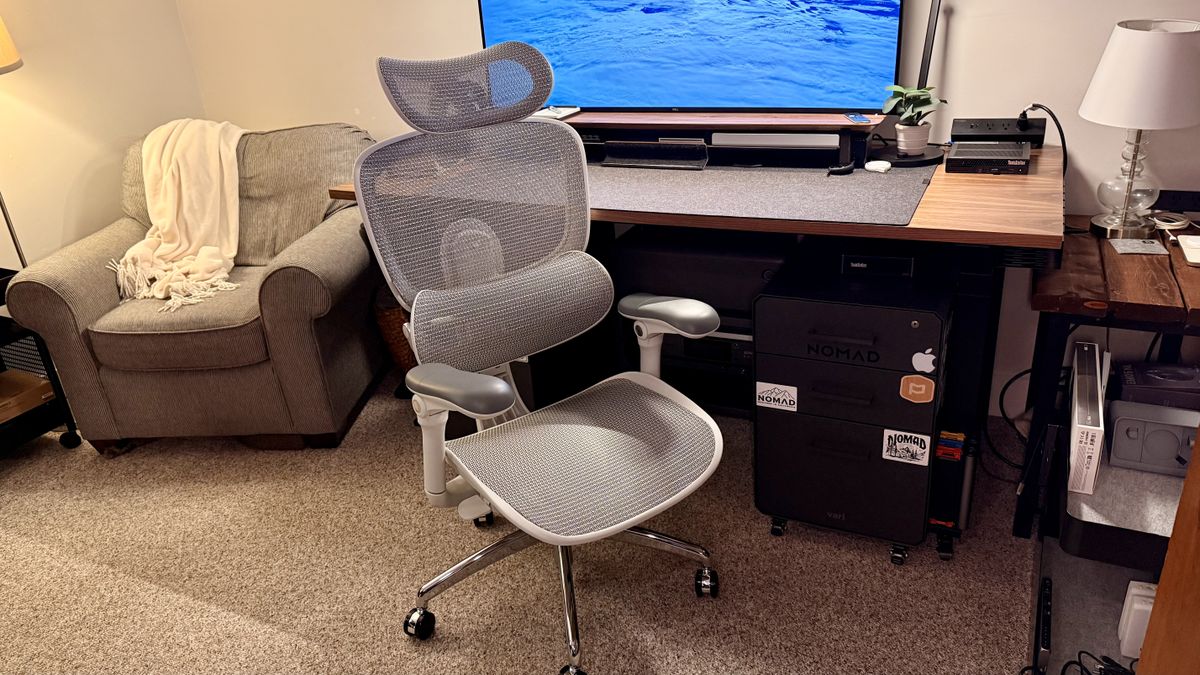
The system includes three levels of adjustment, allowing the person to change the amount of support according to their body shape and preference.
Sihoo also claims the lumbar area covers a larger surface than conventional designs. A wider contact area may help distribute pressure more evenly across the lower back.
An integrated lateral spring mechanism allows the lumbar section to move as the person changes position.
For people who sit for long periods, this may feel more natural than a fixed cushion. However, lumbar support should not be so strong that it forces the lower back forward or causes discomfort.
Eight-direction armrests support different desk tasks
The chair includes 8D Bionic Armrests that can be adjusted in several directions.
Armrest position matters because unsupported arms can increase tension in the shoulders and neck. Armrests that are too high can lift the shoulders, while those placed too low may not provide meaningful support.
The ability to move the armrests in several directions can help when switching between a keyboard, mouse, controller, drawing tablet or other input device.
The ideal position should allow the shoulders to remain relaxed while keeping the forearms supported.
Gamers who use low mouse sensitivity may also need more room for wide arm movement, so the armrests should not interfere with the desk or restrict motion.
Seat depth and headrest adjustments improve fit
The pressure-minimised seat cushion includes seat-depth adjustment.
This allows the chair to accommodate different leg lengths. A suitable seat depth should support the thighs without pressing tightly against the back of the knees.
The 3D headrest has a wider surface area and is designed to support the head and neck during reclining.
A headrest is most useful when leaning back. It may have less value during forward-focused work, depending on posture and desk position.
The chair supports recline angles of 105°, 120° and 135°. These options allow people to move between an upright working position and more relaxed postures.
Breathable mesh may help during longer sessions
The chair uses soft, breathable mesh instead of thick foam across key areas.
Mesh can allow more airflow, which may help in warm rooms or during long work and gaming sessions.
It can also distribute pressure differently from a padded chair. Some people prefer the flexible support of mesh, while others may find a softer foam seat more comfortable.
The material choice is therefore a matter of preference rather than a universal advantage.
Certifications and after-sales support add reassurance
The Doro C300 Pro V2 carries BIFMA certification for durability, safety and performance. It has also received certification from the Institute for Health and Ergonomics.
These certifications indicate that the chair has been tested against certain standards, but they do not guarantee that it will suit every person.
Sihoo offers a 30-day trial period and a three-year warranty. The trial gives buyers time to test the chair in their own workspace, which is particularly useful for a product where comfort depends heavily on personal fit.
The warranty also provides some protection against manufacturing problems during long-term use.
A promotional discount code, SIHOOWF7, offers an additional 6% off at checkout. Pricing and availability may vary, so buyers should confirm the current total cost before ordering.
The Sihoo Doro C300 Pro V2 offers a broad set of adjustments for people who spend substantial time at a desk. Its value will depend on whether the adaptive lumbar system, armrests, seat dimensions and mesh design match the buyer’s body and working habits.
Discussion (0)
Be the first to comment.