



Samsung’s ability to provide advanced logic manufacturing, memory and packaging under one organisation is becoming an important advantage as it competes with TSMC for large AI semiconductor contracts.
The company has reportedly signed a memorandum of understanding with Broadcom covering the development of next generation AI infrastructure over the next five years. The wider agreement is valued at as much as $200 billion and is expected to include Samsung’s 2nm manufacturing process, HBM4 memory and advanced packaging services.
Broadcom is expected to use Samsung technology in custom AI accelerators and high speed data communication chips. Samsung will reportedly support the work from the design and optimisation stages through packaging and volume manufacturing.
This gives Broadcom access to several important semiconductor technologies through one supplier. It could also help reduce development delays caused by coordinating separate foundries, memory manufacturers and packaging companies.
| Area | Samsung’s expected role |
|---|---|
| Logic manufacturing | Produce Broadcom chips using the 2nm GAA process |
| Advanced memory | Supply HBM4 and later HBM4E |
| Conventional memory | Provide DRAM products where required |
| Packaging | Integrate processors and memory into completed packages |
| Design support | Assist with optimisation, power and thermal planning |
| Production | Handle volume manufacturing |
| Partnership period | Reportedly five years |
| Potential agreement value | Up to $200 billion |
Samsung can combine technologies that TSMC usually sources from partners
TSMC remains the leading semiconductor foundry and continues to hold a major advantage in advanced manufacturing scale, customer trust and production execution.
Its pure play foundry model is also one of its main strengths. TSMC does not normally compete with customers through its own consumer processors, smartphones or memory products.
However, that business structure means it does not manufacture all the components needed for a complete AI accelerator package.
A customer using TSMC for the main processor may still need to source HBM from Samsung, SK hynix or Micron. It may also need additional companies for packaging, substrate manufacturing and system integration.
Samsung can offer several of these services internally.
The company manufactures advanced logic chips, DRAM, NAND flash, HBM and storage products. It also has packaging capabilities and experience producing complete electronic devices.
For Broadcom, this could reduce the number of suppliers involved in a project and make it easier to coordinate chip design with memory and packaging requirements.
It may also shorten the time needed to move from the first design to commercial production.
Broadcom could use Samsung’s 2nm process for custom AI chips
Samsung’s 2nm gate all around manufacturing process is expected to play a central role in the partnership.
Broadcom develops custom application specific integrated circuits for cloud companies and other large technology customers. These processors can be designed for AI training, inference, networking or data movement.
Advanced process technology allows more transistors to fit within a smaller area while potentially improving performance and reducing power consumption.
The effectiveness of Samsung’s 2nm node will depend on yields, frequency, power use and manufacturing cost.
Samsung has faced challenges with earlier advanced processes, particularly when competing with TSMC for high volume customers. A large Broadcom agreement could provide an important opportunity to demonstrate that its latest manufacturing technology has improved.
Broadcom may also benefit from close cooperation during physical design. Samsung could optimise chip layout, power delivery and thermal behaviour around its own process and packaging capabilities.
That level of involvement is particularly useful for AI accelerators, which consume substantial power and require fast communication with memory.
HBM4 gives Samsung a larger role in the complete accelerator
High bandwidth memory is now one of the most valuable parts of an AI accelerator.
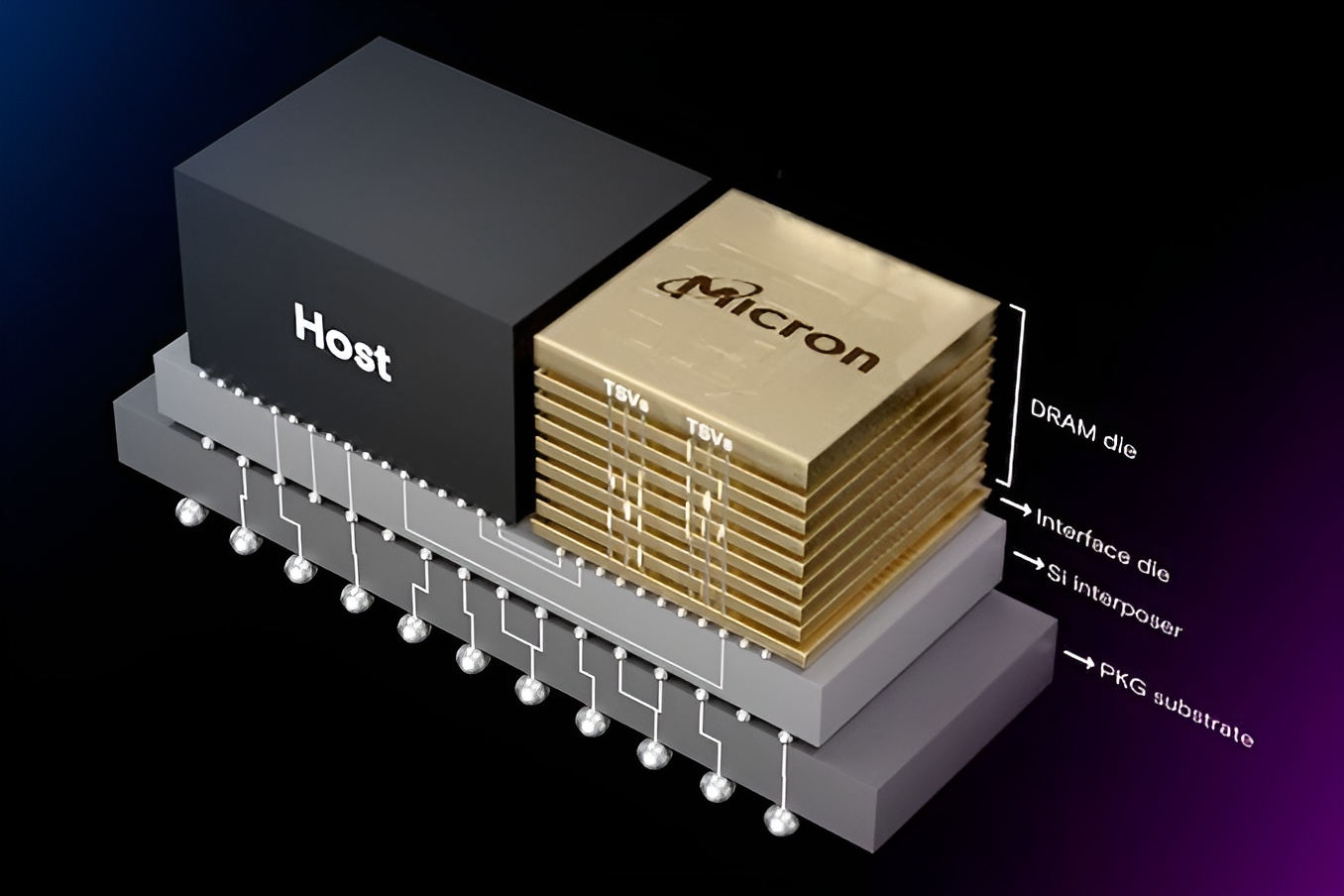
HBM stacks several memory dies vertically and places them close to the processor. This provides much greater bandwidth than conventional memory modules and helps large AI models access data more efficiently.
Broadcom is expected to use Samsung HBM4 in future accelerators produced under the agreement.

Samsung also plans to move towards HBM4E, which should provide further improvements in capacity, bandwidth and efficiency.
Supplying both the processor and its memory allows Samsung to coordinate the two technologies more closely.
The company can optimise memory interfaces, package layout, power delivery and heat management as part of one development process.
A foundry working with an external memory supplier can still achieve strong results, but the customer must manage additional technical and commercial relationships.
Samsung’s integrated structure may reduce some of that complexity.
Packaging is becoming as important as the manufacturing node
Modern AI processors are often built from several chiplets rather than one large die.
These packages may include compute dies, input output components, cache, networking interfaces and multiple HBM stacks.
The performance of the completed accelerator depends on how efficiently those parts communicate.
Advanced packaging is therefore becoming a major competitive area alongside process technology.
Samsung’s involvement from design through packaging could help Broadcom reduce communication delays and avoid late changes caused by incompatible components.
It may also improve thermal planning because the company can consider the heat generated by both the processor and memory from the beginning of the design.
The supplied report suggests that this broader support is a significant part of the agreement’s value.
Samsung is not simply expected to manufacture wafers. It may provide engineering assistance across much of the product development cycle.
TSMC still holds important advantages
Samsung’s wider product portfolio does not automatically make it a stronger foundry than TSMC.
TSMC has a large customer base, mature manufacturing processes and a strong record of producing advanced chips at scale.
Its pure play model also reassures customers that the foundry does not have a competing product division using similar technology.
Broadcom and other semiconductor designers may still prefer using several suppliers to reduce risk.
Depending too heavily on one company for logic, memory and packaging can create a serious problem if that supplier experiences delays, yield issues or capacity shortages.
Using separate providers can also encourage competition and give customers more flexibility when negotiating prices.
Samsung must therefore prove that its integrated model offers better execution rather than simply greater convenience.
The Broadcom agreement could strengthen Samsung Foundry
A multi-year Broadcom partnership would give Samsung Foundry a major customer and help increase use of its advanced production capacity.
Foundries require large and predictable orders because new semiconductor factories and lithography tools cost billions of dollars.
A contract covering processors, memory and packaging could provide stronger revenue visibility than a conventional wafer agreement.
It may also attract other customers that want a similar combination of services.
Broadcom is an important participant in the custom AI chip market. Successful production for the company would give Samsung a useful reference when approaching cloud providers and other semiconductor designers.
The opportunity is significant, but the final outcome will depend on manufacturing performance.
Samsung must deliver competitive 2nm yields, qualify its HBM4 products and keep packaging schedules aligned with Broadcom’s development plans.
Samsung’s wider portfolio creates a different way to compete
Samsung may not overtake TSMC simply by matching its process roadmap.
Its more realistic advantage is the ability to combine several parts of the semiconductor supply chain.
Logic manufacturing, memory, storage and packaging can be planned together for customers building complex AI systems.
That structure could become more valuable as accelerators require larger memory pools and more advanced packaging.
TSMC can still provide similar complete solutions by working with specialist partners, but those arrangements may require additional coordination.
The reported Broadcom partnership shows that some customers may prefer Samsung’s integrated approach when it can meet their performance and production requirements.
The agreement remains dependent on successful execution across several technologies. If Samsung can deliver competitive 2nm chips, HBM4 memory and reliable packaging under one programme, it could strengthen its position as a serious alternative to TSMC for future AI hardware.



Discussion (0)
Be the first to comment.