



NVIDIA’s expanding AI infrastructure is creating a new storage challenge as temporary model data grows beyond what GPUs can handle efficiently. Samsung is reportedly preparing its latest V10 NAND technology to support large Context Memory Storage systems designed to reduce that pressure.
AI inference relies heavily on Key Value cache, commonly called KV cache. This temporary data stores information generated while a model processes prompts and produces responses. As context windows grow and more people use the same systems, the amount of KV cache can increase rapidly.
GPUs can store some of this data in high bandwidth memory, but HBM capacity is limited and expensive. Moving selected context data to a faster storage layer can free valuable GPU memory and allow accelerators to continue processing larger workloads.
Samsung is already said to be supplying V9 NAND for these systems, while V10 NAND is entering mass production. The newer technology could provide higher capacity and better storage density, making it possible to place more NAND inside the same physical system.
Context Memory Storage gives AI servers another data layer
Context Memory Storage, or CMX, is designed to sit between expensive accelerator memory and conventional data centre storage.
It provides a large pool of flash storage for temporary AI data that does not need to remain inside GPU memory at every moment. This can help servers manage longer prompts, larger models, and more simultaneous inference requests.
| CMX and NAND detail | Reported information |
|---|---|
| SSDs supported in one CMX system | Up to 576 |
| Maximum reported storage capacity | Around 9,600TB |
| Samsung production allocated to V9 | Around 60 percent |
| V9 NAND layer count | 286 layers |
| V10 density improvement over V9 | Around 50 percent |
| Expected V11 layer count | Up to 500 layers |
A CMX system with hundreds of SSDs could provide several petabytes of temporary storage. This does not replace HBM, which offers much lower latency and far higher bandwidth, but it gives AI systems another place to hold context data.
The practical value will depend on software. Data must move between GPU memory and flash storage without creating delays that cancel out the capacity benefit.
V10 NAND could increase capacity without expanding system size
Samsung’s V10 NAND is expected to use more vertically stacked memory layers than V9.
Higher layer counts allow manufacturers to store more data on each chip. This can improve capacity per wafer and help SSD makers produce larger drives without increasing the number of packages inside the device.
The report claims V10 offers around 50 percent more storage density than V9. That would be useful for CMX systems, where hundreds of SSDs must fit within a limited physical and power envelope.
Higher density could also reduce the number of drives required for a target capacity. Fewer drives may simplify cooling, networking, maintenance, and power delivery.
However, density alone does not determine performance. Controller design, NAND speed, endurance, software scheduling, and connection bandwidth will all influence how well CMX works in a live AI environment.
Samsung may allocate a large share of production to AI customers
Samsung reportedly has production capacity equivalent to around 100,000 units dedicated to NVIDIA related demand, with approximately 60 percent of its V NAND output allocated to V9 production.
The exact meaning of the reported unit figure is unclear from the available information, so it should not be treated as a confirmed measure of wafers or finished chips.
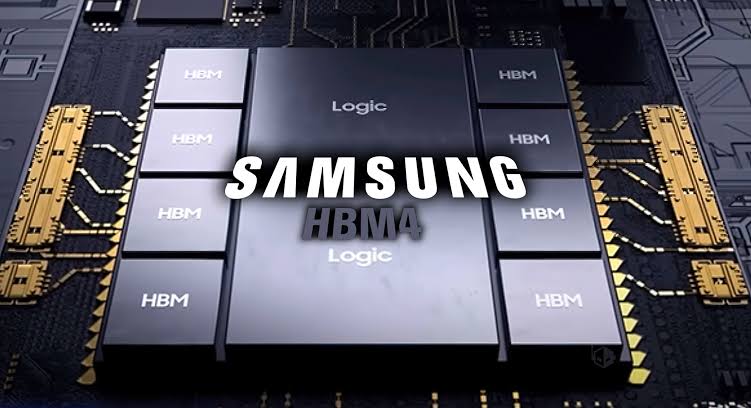
What is clearer is the broader direction. AI infrastructure customers are becoming a priority for memory suppliers because they purchase large volumes and are willing to pay for high capacity products.
The report estimates that CMX related storage demand could rise from 35 million terabytes to more than 100 million terabytes during 2026. Samsung’s total NAND shipments are projected to reach around 250 million terabytes.
If these estimates are accurate, CMX could consume a meaningful part of the available NAND supply.
Consumer SSD supply may face additional pressure
The main concern is that heavy AI demand could reduce the NAND capacity available for consumer SSDs, smartphones, laptops, and enterprise storage products outside the largest data centres.
Memory manufacturers naturally prioritise products that offer stronger margins and long term contracts. AI customers often place large orders and provide better revenue visibility than the consumer market.
| Market group | Possible effect of rising CMX demand |
|---|---|
| AI data centres | Better access to high capacity NAND |
| Enterprise storage buyers | Higher prices or longer delivery periods |
| PC manufacturers | Increased SSD component costs |
| Laptop buyers | Smaller included storage or higher prices |
| Retail SSD customers | Reduced discounts and limited availability |
| Smartphone makers | Greater pressure on storage costs |
A reduction in consumer supply would not necessarily lead to empty shelves. It could instead appear as higher prices, fewer promotions, smaller default capacities, and slower adoption of larger SSDs.
The effect may become more noticeable if AI demand grows faster than new NAND production.
V11 NAND could eventually bring 500 layer designs
Samsung is also reportedly researching V11 NAND with as many as 500 vertically stacked layers.
That would be roughly 100 layers more than the expected V10 design. A successful transition could further increase storage density and lower the cost per bit over time.
For AI systems, V11 could support larger CMX installations while reducing the number of physical NAND packages required.
The same technology could eventually benefit consumer products by making higher capacity SSDs cheaper to manufacture. A laptop with 4TB or 8TB of storage could become more affordable if supply expands and production yields improve.
The difficulty is allocation. New manufacturing technology does not automatically lower retail prices if most early production is reserved for high margin AI customers.
CMX cannot fully replace GPU memory
Context storage based on NAND should not be confused with a direct substitute for HBM.
HBM sits close to the GPU and delivers extremely high bandwidth with relatively low latency. NAND flash is much slower, even when used through advanced controllers and high speed connections.
CMX is better understood as an additional tier in the memory hierarchy.
Frequently accessed data can remain in HBM, while less active context information moves to flash storage. Software can then retrieve that information when required.
This arrangement resembles the way conventional systems use several layers of memory and storage, including cache, DRAM, and SSDs. The difference is that AI workloads require much larger volumes and more careful movement of data.
NVIDIA’s AI growth is reshaping the storage market
The move toward CMX shows that AI infrastructure bottlenecks are expanding beyond GPUs and HBM.
Processors can only remain productive when data reaches them quickly enough. As models use longer context windows and support more concurrent requests, storage capacity and data movement become central parts of system design.
Samsung is well positioned to benefit because it produces NAND, DRAM, HBM, and other semiconductor components. Strong AI demand could support higher profits after several difficult years in the memory market.
The same shift may make storage more expensive for the rest of the industry. If Samsung and other suppliers direct increasing amounts of advanced NAND toward NVIDIA and similar customers, consumer SSD supply could remain tight.
V10 and future V11 NAND may eventually increase total capacity enough to ease the pressure. In the near term, however, the rapid growth of AI context data is likely to keep high density storage in strong demand.



Discussion (0)
Be the first to comment.