



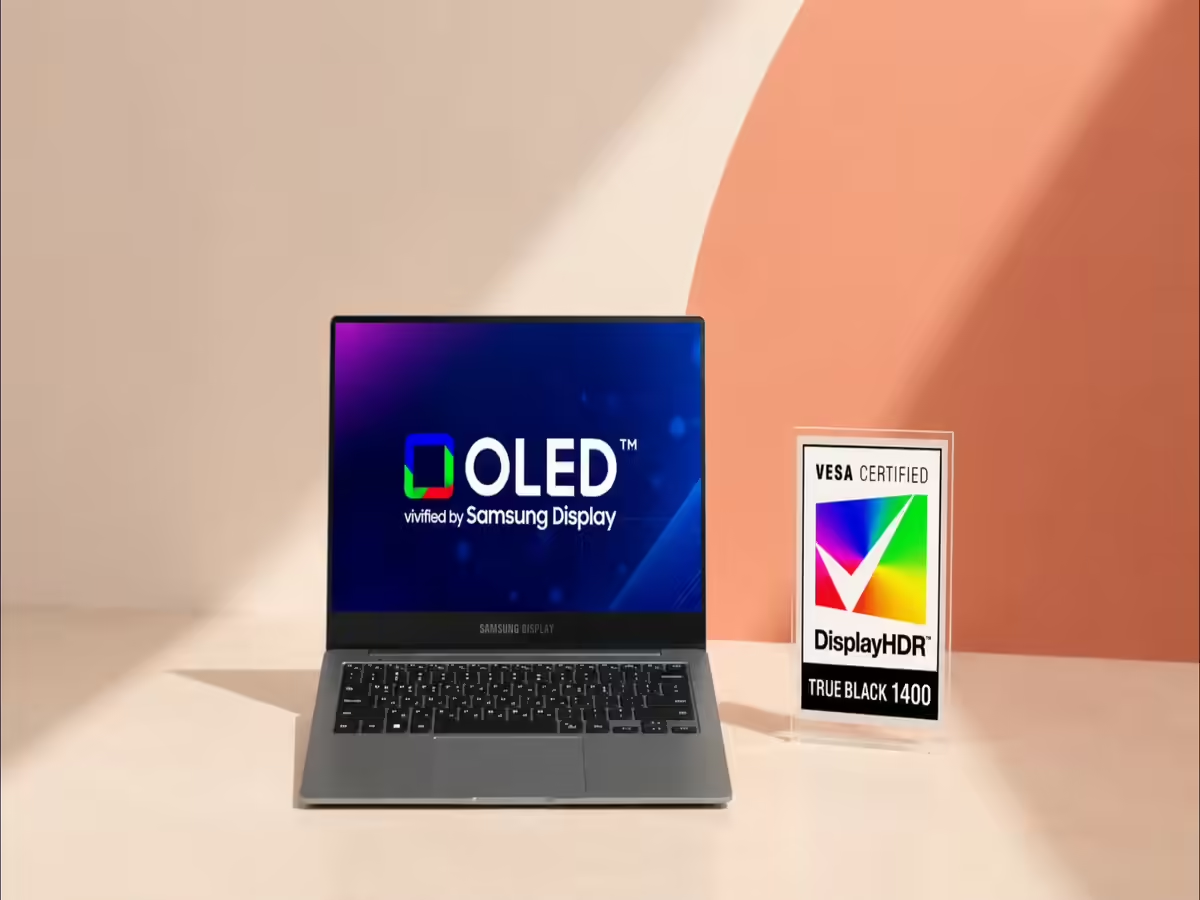
Samsung Display has started supplying a new generation of laptop OLED panels designed to meet the VESA DisplayHDR True Black 1400 standard, bringing higher peak brightness and deeper black levels to upcoming premium notebooks.
The panels use Samsung’s Tandem OLED architecture, which places two organic light emitting layers within the display. This design improves light output while reducing the electrical load placed on each layer, helping the panel reach higher brightness without relying on the same level of current as a conventional OLED display.
Samsung says the new laptop panels can reach up to 1,600 nits of peak brightness at the panel level. That figure is around 40 percent higher than the 1,100 nit peak claimed for its previous conventional OLED panels and exceeds the 1,400 nit requirement associated with the new certification.
The company has already started full scale supply to laptop manufacturers. Lenovo is the first confirmed partner to use one of the certified panels, while ASUS, Dell, and MSI are expected to introduce compatible laptops before the end of 2026.
True Black 1400 raises the brightness target for laptop OLED displays
VESA DisplayHDR True Black certifications are intended for self emissive displays such as OLED, where individual pixels can switch off completely to produce extremely dark black levels.
The new True Black 1400 level raises the maximum brightness target while retaining a black level as low as 0.0005 nits. This combination should improve the visibility of bright highlights without sacrificing the dark scenes and high contrast that distinguish OLED panels from conventional LCD displays.
| Display characteristic | Reported specification |
|---|---|
| VESA certification | DisplayHDR True Black 1400 |
| Required peak brightness | Up to 1,400 nits |
| Samsung panel peak brightness | Up to 1,600 nits |
| Minimum black level | As low as 0.0005 nits |
| Brightness increase over earlier panels | Around 40 percent |
| Display architecture | Tandem OLED |
| First confirmed laptop | Lenovo Yoga Pro 9i Aura Edition |
Higher peak brightness can make HDR footage appear more convincing by allowing reflections, lighting effects, flames, sunlight, and other bright details to stand out more clearly.
It can also help when using a laptop in a bright room, although sustained full screen brightness will usually be lower than the short peak figure used for HDR highlights.
Lenovo is the first confirmed laptop manufacturer
The Lenovo Yoga Pro 9i Aura Edition is the first announced laptop using Samsung’s DisplayHDR True Black 1400 certified panel.
The notebook features a 16 inch OLED display and serves as the initial commercial example of the technology. Samsung is also supplying the panels to ASUS, Dell, and MSI, with additional laptop launches expected later in the year.

The first products are likely to sit in the premium segment, where manufacturers can justify the cost of advanced display technology. Likely use cases include content creation, video editing, high end entertainment, professional visual work, and gaming.
OLED panels already offer strong contrast and fast pixel response times. The new generation focuses on addressing one of the technology’s traditional weaknesses by increasing brightness while attempting to maintain panel durability.
Tandem OLED can improve brightness and panel lifespan
A Tandem OLED display uses two emissive layers rather than depending on one layer to produce all of the light.
Because both layers contribute to the final output, each layer can operate under less stress for a given brightness level. This can improve efficiency and may reduce long term wear compared with driving a single layer more aggressively.
That does not eliminate OLED ageing or image retention risk, but it may help premium laptop panels maintain brightness for longer under normal use.
| Tandem OLED benefit | Practical effect |
|---|---|
| Two emissive layers | Produces more light efficiently |
| Lower load per layer | May reduce long term panel stress |
| Higher peak brightness | Improves HDR highlights |
| Deep pixel level blacks | Preserves strong contrast |
| Improved efficiency | Can reduce the current needed for a target brightness |
Battery life will still depend on the brightness setting, displayed content, resolution, refresh rate, and power management used by each laptop manufacturer.
Bright HDR content can consume more power, especially when a large part of the screen is illuminated. The tandem structure may improve efficiency, but a 1,600 nit peak does not mean the panel can maintain that brightness continuously without affecting power consumption or temperature.
Certification does not describe every aspect of image quality
DisplayHDR True Black 1400 confirms that a panel meets specific brightness and black level requirements, but it does not provide a complete picture of display performance.
Colour accuracy, colour coverage, refresh rate, resolution, response time, calibration, coating, and pulse width modulation behaviour can still vary between laptops using similar panels.
Manufacturers may also apply different thermal limits and power profiles, which can affect how long the display holds its highest brightness.
Buyers interested in these laptops should therefore look beyond the certification label. Independent measurements will be needed to determine sustained brightness, colour performance, battery impact, and how aggressively each notebook manages the panel.
Samsung is expanding its position in premium laptop displays
Samsung Display is already a major supplier of OLED panels for smartphones, tablets, televisions, monitors, and laptops.
The move to True Black 1400 gives the company another way to distinguish its premium notebook panels as competition grows across the OLED market.
The company plans to demonstrate the new Tandem OLED laptop panel at K Display 2026, scheduled to take place in Seoul from July 22 to July 24.
The wider rollout through Lenovo, ASUS, Dell, and MSI suggests the technology will not remain limited to a single showcase product. More certified laptops are expected before the end of the year, giving buyers a broader selection of high brightness OLED systems.
The main questions will be pricing, battery life, sustained brightness, and long term panel behaviour. Even so, the transition to 1,400 nit class certification represents a meaningful step for laptop OLED displays, particularly for HDR content and professional visual workloads.



Discussion (0)
Be the first to comment.