




Samsung, Micron, and SK hynix have reportedly reduced or abandoned plans to develop proprietary CXL memory controllers after major server customers showed limited interest in paying more for tightly integrated products.
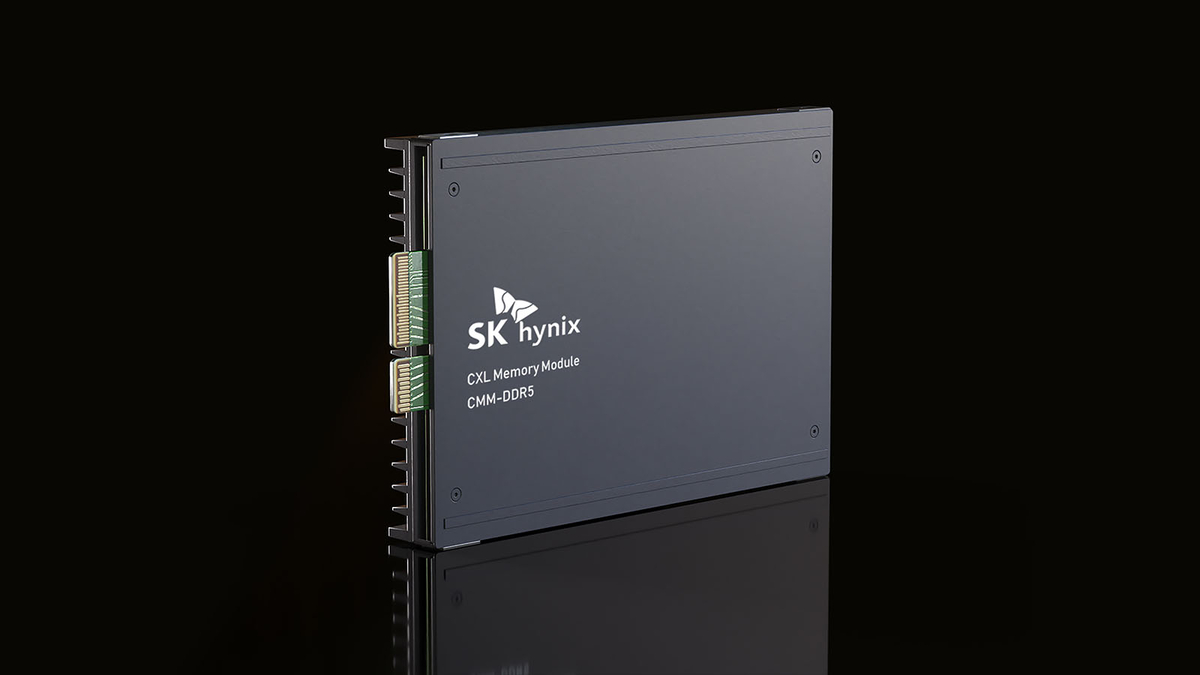
The three companies had explored custom controllers for Compute Express Link memory, which can expand the amount of memory available to servers beyond traditional processor connected DRAM. The reported change suggests that large data centre customers prefer a more flexible design built around standard memory modules and separately sourced controllers.
Micron is said to have withdrawn first, followed by SK hynix. Samsung has reportedly limited its controller work to internal research rather than preparing a commercial product.
The information remains unconfirmed and should be treated as a rumour. Customer requirements can also change as AI servers demand more memory, and the companies could reconsider their plans if the market develops differently.
Server customers may prefer standard DRAM with separate CXL controllers
CXL allows processors, accelerators, and memory devices to share resources through a coherent connection based on PCI Express.
One use is memory expansion. A server can add more capacity through CXL devices instead of relying only on the DIMM slots connected directly to the processor.
Memory manufacturers had reportedly considered selling complete CXL products containing their own controllers and DRAM. However, server buyers may see little reason to pay a premium for a proprietary design when they can purchase a separate controller and use standard memory modules.
| CXL memory approach | Main advantage | Main limitation |
|---|---|---|
| Proprietary controller with integrated DRAM | Easier validation as one complete product | Higher cost and possible supplier lock in |
| Separate controller with standard DRAM | More flexibility and easier component sourcing | Requires system level integration |
| Traditional DIMM memory | Mature and widely supported | Limited by processor channels and slots |
| Processing in memory | Can reduce data movement for selected workloads | Still an emerging technology |
The modular approach allows data centre operators to choose controllers from specialist suppliers while continuing to purchase DRAM from several vendors.
This may improve price competition and reduce dependence on one memory manufacturer for the complete product.
Specialist companies could take over controller development
Controller design is reportedly moving toward companies such as Astera Labs, Montage, and Primemas.
These businesses can focus on the logic needed to connect CXL devices with processors, memory, and system software. Samsung, Micron, and SK hynix can then concentrate on producing DRAM and other memory technologies.
This separation resembles other parts of the server industry, where companies buy memory, processors, network controllers, and storage components from different suppliers.
A dedicated controller company may also support memory from several manufacturers. That gives server makers more choice when qualifying components and negotiating supply agreements.
The approach could be particularly useful during shortages. Customers would have more freedom to switch memory suppliers without redesigning the complete CXL device.
SK hynix may redirect engineers toward processing in memory
SK hynix has reportedly reassigned some personnel from CXL controller work to processing in memory technology.
Processing in memory places selected computing functions close to or inside the memory subsystem. This can reduce the amount of data that must move between memory and the processor.
AI, analytics, databases, and scientific workloads often transfer large datasets repeatedly. Reducing that movement can improve efficiency and lower power consumption.
PIM is not a replacement for general purpose CPUs or GPUs. It is better suited to narrowly defined operations that can be handled efficiently near the stored data.
For a memory manufacturer, PIM may also provide a clearer way to differentiate its products than building a controller that customers can purchase separately from another company.
Samsung is reportedly keeping its work inside research teams
Samsung has not completely ended its interest in CXL controllers, according to the report.
Its work is said to continue internally for research purposes. This would allow the company to maintain technical knowledge and respond quickly if customer demand changes.
Samsung already develops memory, processors, foundry technology, and packaging. That broad experience could support future integrated CXL products if the market eventually values them.
Keeping the programme at a research level also limits commercial spending while preserving the option to return later.
Micron and SK hynix may take a similar approach even if their current product plans have been reduced.
Large server customers have strong negotiating power
The reported decision reflects the importance of hyperscalers and enterprise server customers to the memory industry.
AI infrastructure has increased demand for DRAM, HBM, and enterprise storage. Large customers purchase enormous volumes and often sign long term agreements that influence production planning.
Memory manufacturers may therefore be reluctant to push a product that customers view as unnecessary or too expensive.
| Customer priority | Why it matters |
|---|---|
| Lower hardware cost | Large deployments multiply small price differences |
| Standard components | Simplifies purchasing and replacement |
| Multiple suppliers | Reduces supply chain risk |
| Flexible capacity | Allows systems to be upgraded gradually |
| Open compatibility | Limits dependence on proprietary platforms |
A proprietary CXL module could provide better integration, but server buyers may prefer lower prices and broader supplier choice.
The balance could change if future systems require much larger memory pools or if integrated controllers demonstrate clear gains in performance, power use, or reliability.
The decision could reduce risk during a volatile memory cycle
Developing a custom controller requires engineering investment, verification, software support, and long term customer commitments.
If demand is weak, manufacturers could lose billions through unused development work, production capacity, and inventory.
Sticking with standard DRAM allows Samsung, Micron, and SK hynix to sell into a wider market without depending on one specialised product category.
It also places more of the controller risk on companies that already focus on connectivity and system logic.
However, the memory makers may give up some potential revenue and control by stepping back. A complete CXL product could have carried higher margins and created closer customer relationships.
CXL demand could still grow as AI servers need more memory
The reported retreat does not mean CXL memory has failed.
AI models continue to grow, while processors and accelerators require larger memory pools. CXL can help servers expand capacity and share resources more efficiently across a system.
The main question is how those products should be built and sold.
Current customer preferences appear to favour standard memory modules paired with independent controllers. This design lowers costs and keeps the supply chain flexible.
Samsung, Micron, and SK hynix could return to proprietary controllers if future customers demand tighter integration or are willing to pay for measurable performance benefits.
For now, the reported strategy allows them to protect relationships with major server buyers while focusing on the memory products already generating strong demand.



Discussion (0)
Be the first to comment.