



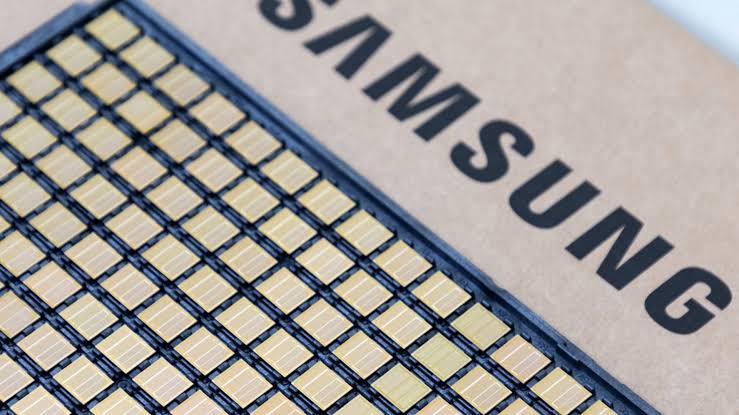
Samsung has reportedly improved the production yield of its HBM4 memory to nearly 80%, giving the company a stronger position as it tries to gain ground in the AI memory market.
The reported milestone is important because Samsung started mass production of HBM4 earlier this year with yields below 60%. Reaching close to 80% within roughly half a year suggests that the company has improved its manufacturing process faster than initially expected.
Higher yields directly affect manufacturing efficiency. When more chips from each wafer meet quality requirements, production costs can fall and suppliers can increase usable output without expanding capacity at the same rate.
Samsung is now expected to increase the share of HBM4 within its broader high bandwidth memory business during the second half of 2026.
Samsung HBM4 specifications
| Area | Detail |
|---|---|
| Reported HBM4 yield | Nearly 80% |
| Early production yield | Below 60% |
| DRAM process | 10nm class 1c |
| Logic process | 4nm |
| Pin speed | 11.7 to 13.0 Gbps |
| Bandwidth per stack | Up to 3.3 TB/s |
| 12 layer capacity | 24 GB to 36 GB |
| 16 layer capacity | Up to 48 GB |
| Interface | 2048 pins |
| Power efficiency improvement | Around 40% |
| Thermal resistance improvement | Around 10% |
| Heat dissipation improvement | Around 30% |
Samsung began mass production of its latest HBM4 generation in February 2026. The company initially focused on 12 layer stacks with capacities reaching 36 GB, while higher capacity 16 layer versions can reach 48 GB.
The memory is designed for high performance AI accelerators where bandwidth, power efficiency and thermal behavior are critical.
AMD is already using Samsung HBM4
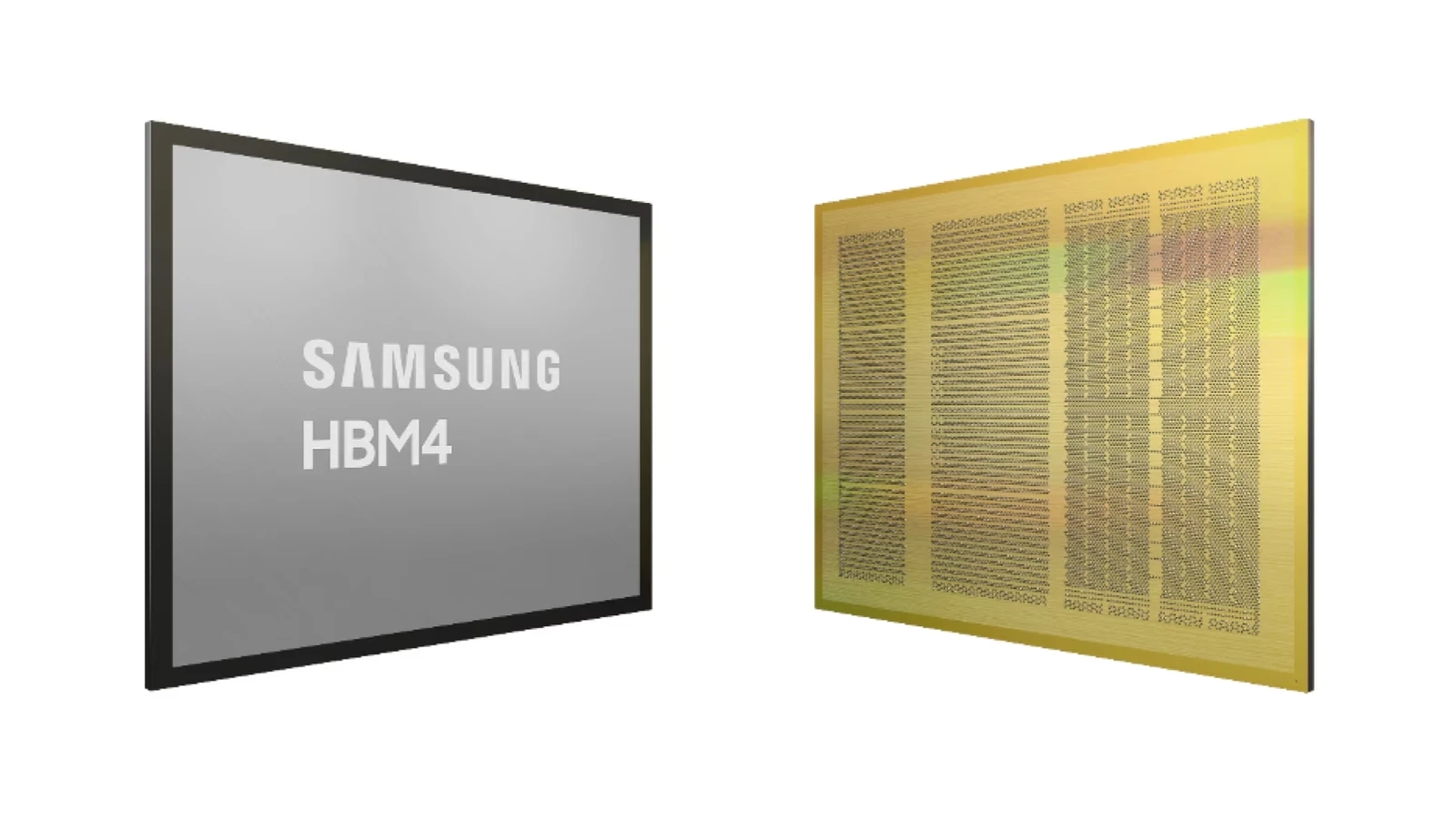
Samsung's progress is also supported by an important customer relationship.
AMD is using Samsung HBM4 memory with its Instinct MI400 series AI accelerators. That gives Samsung a major opportunity to prove its latest memory technology in large scale data center deployments.
Strong production yields are particularly important for products such as the MI400 family because AI accelerators can use large amounts of HBM per package. A lower yield can limit the number of complete systems that manufacturers can ship and can increase costs across the supply chain.
Samsung is also reportedly increasing HBM4 revenue expectations for the third quarter and plans to make HBM4 account for more than 60% of its HBM product mix during the second half of the year.
That would represent a meaningful shift toward the latest generation.
HBM4E is also progressing
Samsung is already preparing the next step with HBM4E.
The company has reportedly raised reliability test yields for HBM4E to around 70%. Its planned HBM4E products are expected to offer capacities of up to 48 GB per stack and bandwidth approaching 4 TB/s.
Samsung hopes those improvements will help it win additional business for future AI processors, including later AMD Instinct products and potentially upcoming NVIDIA platforms.
The broader challenge remains competition from SK Hynix, which has established a strong position in high bandwidth memory for AI accelerators. Micron is also competing aggressively in the same market.
Samsung's reported 80% HBM4 yield does not by itself guarantee a major change in market share, but it removes one important manufacturing obstacle. Reliable high volume production is essential if the company wants to compete for large AI memory contracts.
With AMD already adopting Samsung HBM4 and HBM4E development moving forward, the company now appears better positioned than it was during earlier HBM generations.



Discussion (0)
Be the first to comment.