



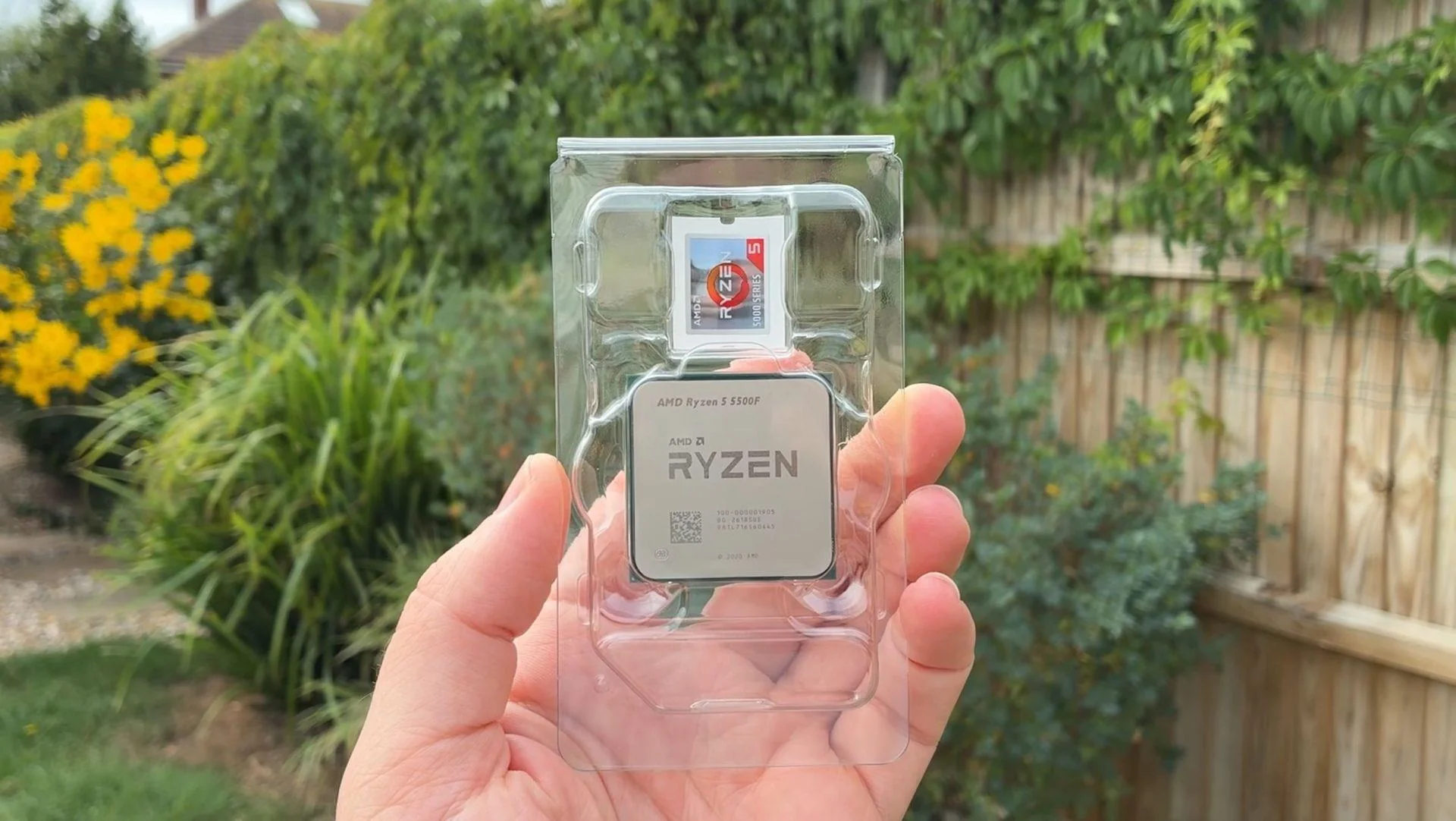
AMD’s newly launched Ryzen 5 5500F is showing a measurable gaming advantage over the older Ryzen 5 5500, with early benchmarks pointing to gains ranging from almost nothing in some games to around 15% in others.
The $99 processor is part of AMD’s long running AM4 platform and uses Zen 3 based Vermeer silicon. It supports PCIe 4.0 and boosts up to 4.4 GHz, giving it some important advantages over the Ryzen 5 5500, which is based on Cezanne and limited to PCIe 3.0.
However, the 5500F still carries only 16MB of L3 cache. That limitation keeps it closer to the Ryzen 5 5500 than to stronger Vermeer based chips such as the Ryzen 5 5600.
| Detail | Ryzen 5 5500F |
|---|---|
| Architecture | Zen 3 |
| Silicon | Vermeer |
| Maximum boost clock | 4.4 GHz |
| L3 cache | 16MB |
| PCIe support | PCIe 4.0 |
| Price | $99 |
| Gaming gain over Ryzen 5 5500 | About 2% to 15% depending on game |
Gaming gains vary significantly by title
Early testing paired the Ryzen 5 5500F with a Radeon RX 9060 XT 16GB, which is a more realistic match for a budget AM4 processor than a flagship graphics card.
In Counter Strike 2, GTA V Enhanced and Cyberpunk 2077, the 5500F was roughly 7% faster than the Ryzen 5 5500.
The newer processor also delivered stronger 1% low frame rates in those tests, which can translate into smoother gameplay even when average FPS gains are relatively modest.
Battlefield 6 produced the largest improvement.
The Ryzen 5 5500F reached about 106.9 FPS compared with roughly 92.1 FPS for the Ryzen 5 5500, representing an improvement of close to 15%.
Other games showed much smaller differences.
Red Dead Redemption 2 and Crimson Desert recorded gains of only around 2% to 3%, while Forza Horizon 6 performed almost identically on both processors.
That spread shows that the benefit depends heavily on how each game uses CPU resources, memory bandwidth and cache.
PCIe 4.0 and higher clocks help the 5500F
Two of the Ryzen 5 5500F’s main advantages are its higher boost frequency and PCIe 4.0 support.
The Ryzen 5 5500 is limited to PCIe 3.0, which can become a disadvantage with some modern graphics cards and storage devices.
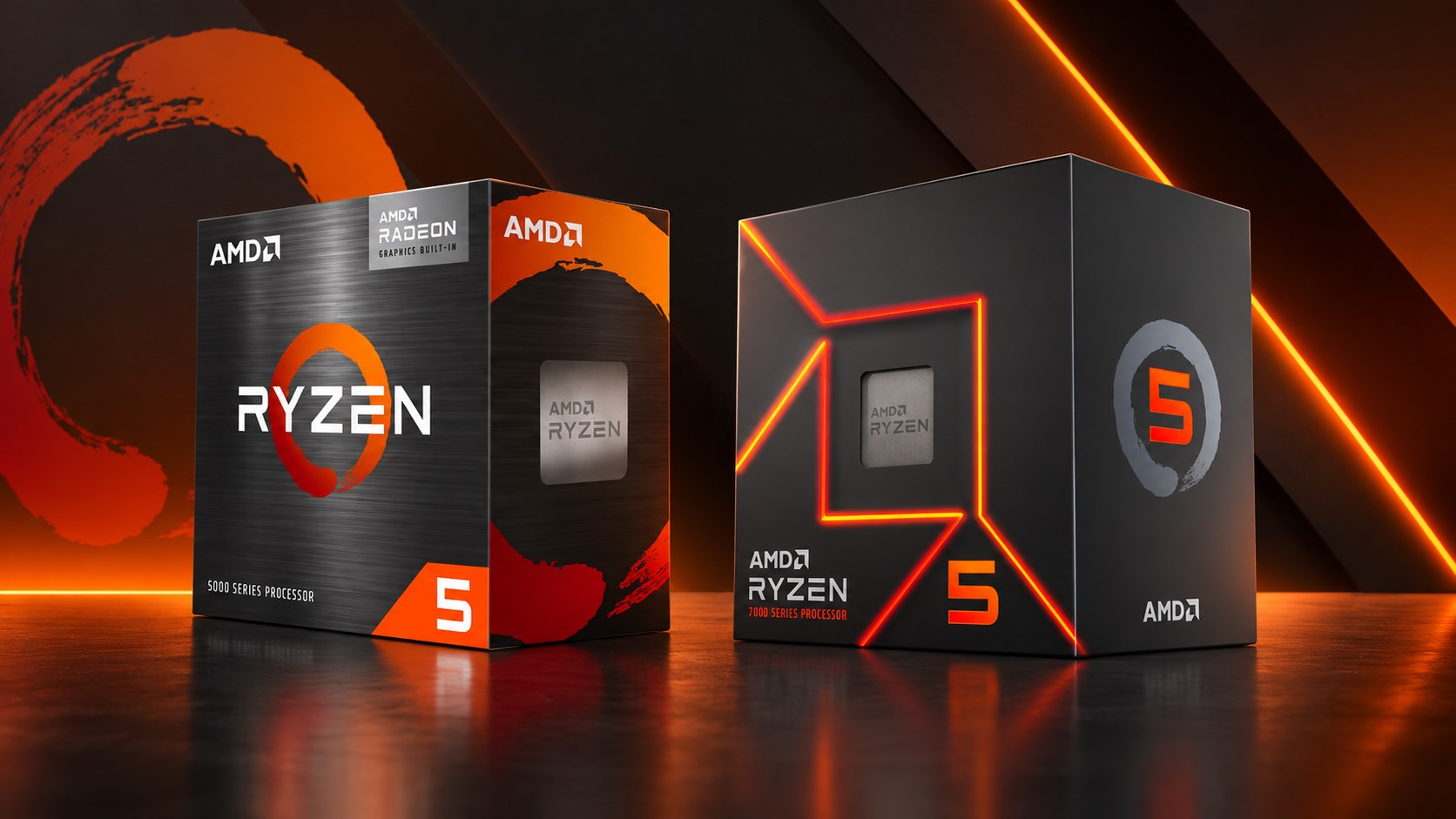
PCIe 4.0 support makes the newer chip a more flexible option for budget AM4 builds, particularly when paired with graphics cards that use narrower PCIe interfaces.
The 4.4 GHz boost clock also gives the 5500F additional CPU performance in workloads that respond well to frequency.
Together, these improvements explain why the processor can outperform the 5500 even though both sit in a similar entry level position.
The 16MB L3 cache remains its biggest limitation
The main weakness is cache capacity.
While the Ryzen 5 5500F uses Vermeer silicon, it has only 16MB of L3 cache. The Ryzen 5 5600 offers twice that amount at 32MB.
Gaming workloads can benefit significantly from larger cache because more frequently used data can remain closer to the CPU cores instead of being retrieved from slower system memory.
That helps explain why the 5500F does not automatically perform like other Vermeer based Ryzen 5000 processors.
Its architecture gives it some advantages, but the smaller cache restricts how far those gains can go.
A stronger budget option for existing AM4 systems
At $99, the Ryzen 5 5500F appears to offer a useful upgrade path for people who already own an AM4 motherboard and want to extend the life of their system without moving to DDR5 and a newer platform.
Its early gaming performance is consistently equal to or better than the Ryzen 5 5500, with the biggest gains appearing in games that can make better use of its higher clocks and PCIe 4.0 support.
The results also show why expectations should remain reasonable. The 5500F is still positioned below chips such as the Ryzen 5 5600, and its 16MB L3 cache prevents it from fully exploiting the advantages of Vermeer silicon.
For a low cost AM4 gaming build, though, the early benchmarks suggest that the Ryzen 5 5500F offers a meaningful improvement over the older 5500 without requiring a platform replacement.

Discussion (0)
Be the first to comment.