



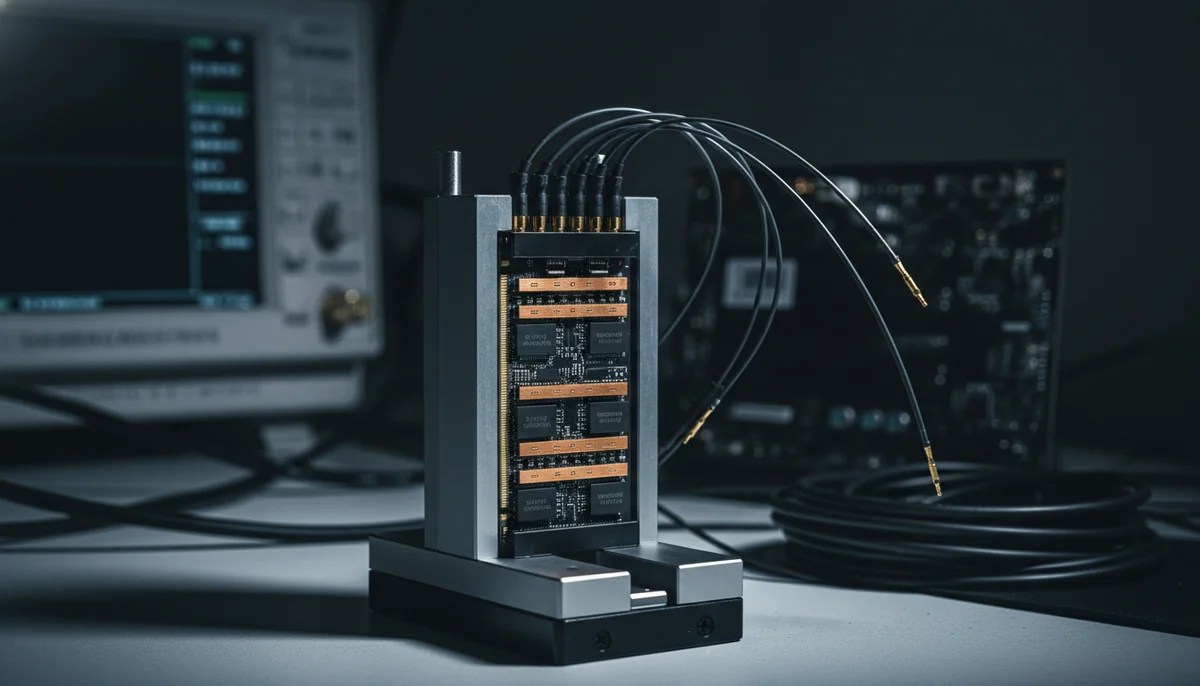
Rambus has introduced a new DDR5 9600 client memory chipset designed for the next wave of high performance PCs, including upcoming systems based on Intel Nova Lake and AMD Zen 6 processors. The new chipset is built to help memory modules reach up to 9600 MT/s natively, giving future desktops, notebooks, and workstations more bandwidth for demanding workloads.
The announcement comes at a time when PC memory needs are rising quickly. AI PCs are expected to handle more local workloads, including agentic AI tasks that can plan, execute, and adapt in real time. These workloads need fast movement of data between the processor and system memory. That makes memory speed and stability more important than before.
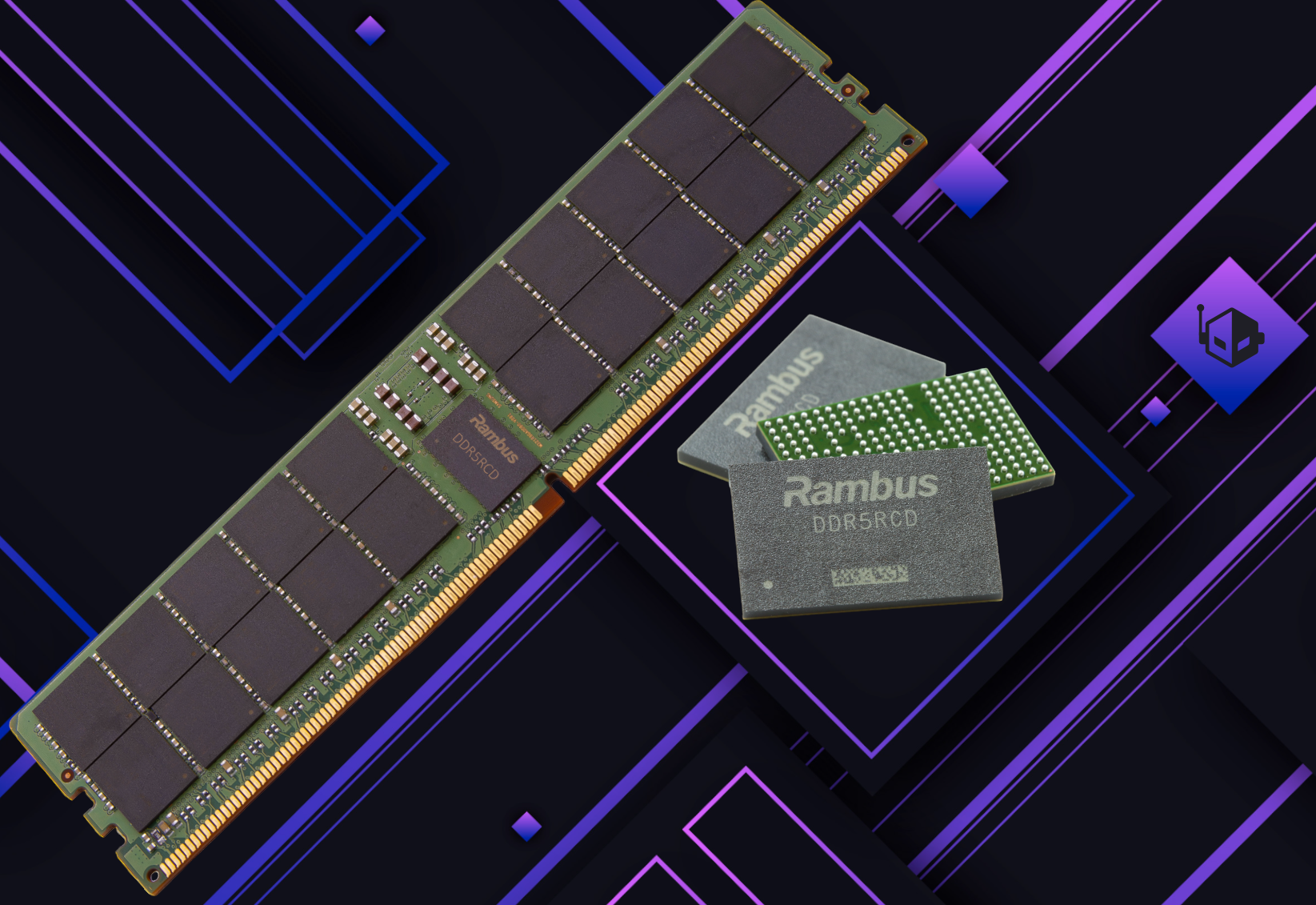
Rambus says its new DDR5 9600 client chipset includes three main parts: a Gen2 Client Clock Driver, a PMIC5120 power management chip, and an SPD Hub. Together, these components are meant to support faster clocked DDR5 memory modules such as CUDIMM, CQDIMM, and CSODIMM.
Faster DDR5 needs better clock control, not only better memory chips
The big issue with pushing DDR5 beyond 6400 MT/s is signal quality. At higher speeds, memory can run into clock jitter, timing instability, and signal degradation. That is why the industry is moving toward clocked memory modules, where a clock driver sits on the module itself and helps clean up and redistribute the clock signal.
Rambus’s Gen2 Client Clock Driver does that job. It retimes, conditions, and distributes the clock sent from the processor to the DRAM devices on the memory module. This helps keep the memory stable at much higher speeds.
The PMIC5120 handles power delivery by stepping down system voltage to the levels needed by the DRAM and other active chips on the module. The SPD Hub stores and communicates module identification, configuration details, and telemetry data.
| Component | What it does |
|---|---|
| Gen2 Client Clock Driver | Retimes and distributes the clock signal for high speed DDR5 |
| PMIC5120 | Manages power delivery for DRAM and module components |
| SPD Hub | Handles module identification, configuration, and telemetry |
| Supported modules | CUDIMM, CQDIMM, and CSODIMM |
| Speed range | 8000 MT/s to 9600 MT/s |
The chipset is aimed at future generation AI PCs, notebooks, and workstations. That matters because upcoming processor platforms are expected to demand more memory bandwidth, especially as more AI features move from the cloud to local hardware.
Intel’s Nova Lake and AMD’s Zen 6 Ryzen platforms are expected to arrive as part of this next PC wave, and faster memory could help these systems handle heavier multitasking, local AI processing, creative workloads, and high bandwidth applications.
This does not mean every future laptop or desktop will immediately ship with DDR5 9600 memory. Higher speed modules usually start in premium systems first, then gradually move into wider use as platforms mature and prices settle. But Rambus’s chipset is an important step because it gives memory module makers the support needed to build faster and more stable client memory.
The timing is also important because memory has become one of the most pressured parts of the PC market. AI demand has pushed up memory costs, while PC makers still need faster and higher capacity modules for consumer systems. Rambus is trying to address the technical side of that shift by making faster DDR5 modules easier to design and deploy.
For everyday buyers, the benefits may take time to appear. But for high end laptops, desktops, and workstations, DDR5 9600 could become one of the key upgrades in the next hardware generation.



Discussion (0)
Be the first to comment.