



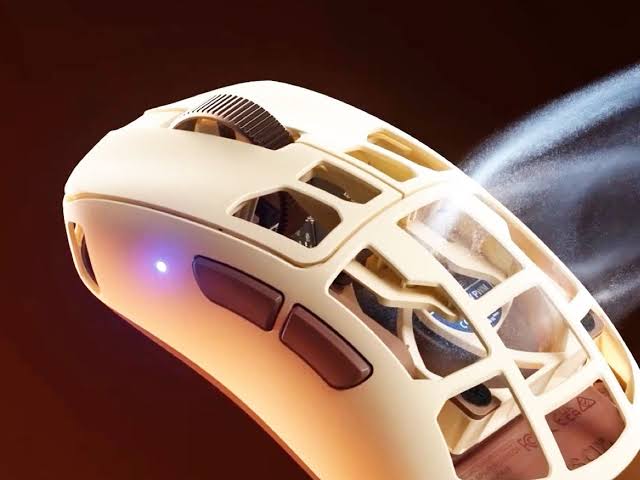
Pulsar will launch the Feinmann F01 Noctua Edition gaming mouse on July 21, 2026, bringing an unusual active cooling system to a lightweight competitive mouse.
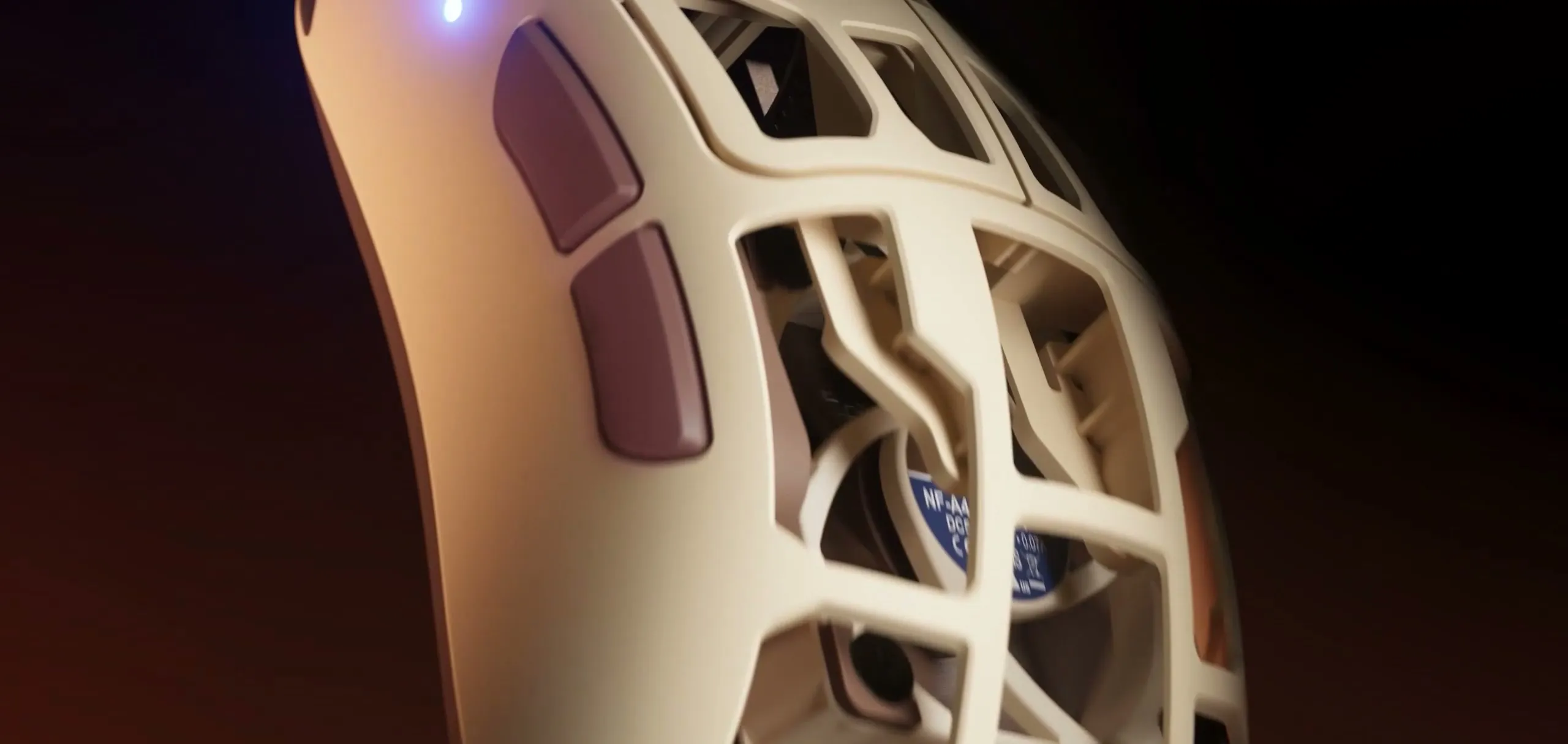
The new model includes a genuine Noctua NF A4x10 5V PWM fan inside its carbon composite shell. The fan pushes air through large openings in the top of the mouse and toward the player’s palm, helping reduce sweat during long or intense gaming sessions.
Pulsar first showed the mouse during Computex but did not confirm when it would become available. The company has now revealed the release date and additional hardware details, although pricing and regional availability remain unknown.
The design is based on the existing Feinmann F01, but the internal fan has increased both the size and weight. The original model weighs 46 grams, while the Noctua Edition weighs 73 grams.
That remains relatively light for a gaming mouse, especially considering that Pulsar has fitted a 40mm cooling fan and its supporting hardware inside the shell.
Five fan speeds give players control over airflow
The integrated Noctua fan includes five speed settings, allowing players to adjust airflow according to comfort and noise preferences.
A lower setting may provide gentle ventilation during normal desktop use, while higher speeds could be useful during longer gaming sessions or in warmer rooms.
The large vents across the upper shell allow air to circulate directly around the palm and fingers. This approach differs from passive honeycomb mouse designs, which reduce weight and improve natural ventilation but do not actively move air.
| Feature | Pulsar Feinmann F01 Noctua Edition |
|---|---|
| Release date | July 21, 2026 |
| Cooling fan | Noctua NF A4x10 5V PWM |
| Fan controls | Five speed settings |
| Weight | 73 grams |
| Sensor | Pulsar XS 2 |
| Maximum sensitivity | 42,000 DPI |
| Polling rate | Up to 8,000Hz |
| Shell material | Carbon composite |
| Hand size target | Small and medium hands |
| Price | Not announced |
The practical value of the cooling system will depend on how much air the small fan can move without creating distracting noise or vibration.
Noctua is known for producing quiet cooling fans, but a mouse places the fan close to the player’s hand and desk surface. Independent testing will be needed to judge whether the cooling effect is noticeable and whether the sound remains acceptable at higher settings.
The XS 2 sensor supports up to 42,000 DPI
Pulsar has equipped the mouse with its latest XS 2 sensor, offering sensitivity of up to 42,000 DPI and an 8,000Hz polling rate.
A higher polling rate allows the mouse to report movement to the computer more frequently. This can reduce input delay on systems with fast processors and high refresh rate monitors, although the difference becomes less noticeable beyond conventional 1,000Hz operation.
Running at 8,000Hz can also increase processor usage and reduce battery life in wireless mice. Pulsar has not detailed the battery capacity or expected operating time with the fan and maximum polling rate enabled.
The 42,000 DPI limit is far beyond what most players use. Competitive gamers commonly select much lower sensitivity settings and rely on consistent tracking rather than maximum DPI.
The high specification still gives players a wide adjustment range and indicates that Pulsar is positioning the mouse as a serious performance product rather than a novelty.
The cooling hardware increases weight but keeps the mouse portable
Adding the fan raises the weight by 27 grams compared with the standard Feinmann F01.
At 73 grams, the Noctua Edition is heavier than many current ultralight gaming mice but remains lighter than numerous conventional wireless models. It should still be manageable for fast aiming and repeated movements.
The mouse has also become slightly larger to accommodate the fan. Pulsar says the overall shape remains compact and is likely to suit small and medium hands better than larger palm grip designs.
The carbon composite shell helps control weight while providing enough rigidity to support the open ventilation structure. Large openings can introduce concerns about dust, moisture, and cleaning, so long term durability will be another important area for reviews to examine.
Players with sweaty hands may find the active cooling useful, particularly in warm climates. Others may consider the added weight and moving component unnecessary when a conventional ventilated mouse already provides enough comfort.
Pulsar has not announced whether the fan can be disabled completely, although the five speed control suggests that airflow can be adjusted according to use.
The Feinmann F01 Noctua Edition will launch on July 21, 2026. Its final value will depend on pricing, battery performance, fan noise, and whether the cooling system provides a meaningful improvement during real gaming sessions.



Discussion (0)
Be the first to comment.