



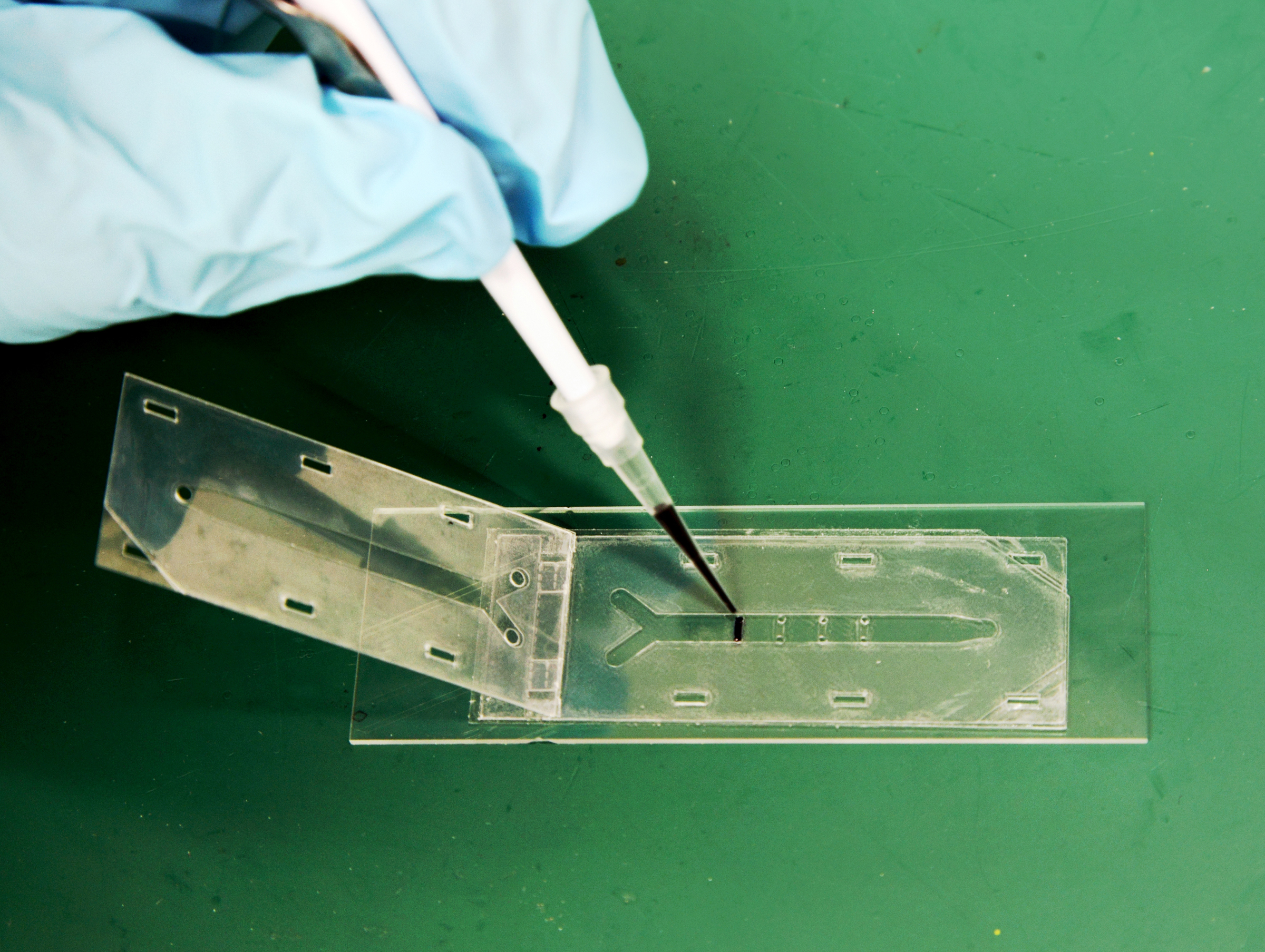
Precigenetics has signed a $2.3 million agreement with Thermo Fisher Scientific covering 11 specialised microfluidic environment chips and related licensing.
Each chip is valued at about $200,000 under the reported deal, with the remaining $100,000 apparently assigned to licensing or other commercial terms. The unusually high unit price has attracted attention because basic microfluidic chips can cost far less to manufacture.
However, comparing the sale price directly with the cost of a simple microfluidic device does not provide a reliable measure of Precigenetics’ profit margin. The company’s products appear to include proprietary optics, software, data processing, research costs and specialised support that go beyond the physical chip itself.
The reported agreement still suggests that advanced biotechnology platforms can command substantial prices when they provide unique research capabilities.
| Deal detail | Reported figure |
|---|---|
| Total contract value | $2.3 million |
| Microfluidic chips included | 11 |
| Reported price per chip | $200,000 |
| Remaining contract value | About $100,000 |
| Customer | Thermo Fisher Scientific |
| Platform | Cell Cinema |
Cell Cinema monitors living cells in real time
Precigenetics develops a platform called Cell Cinema, which is designed to analyse living human cells continuously rather than relying only on static samples.
Traditional laboratory methods often examine cells at a single point in time or require cells to be destroyed during testing. Cell Cinema instead uses optical hardware and artificial intelligence to observe changes inside intact cells while treatments are applied.
The platform reportedly generates between 2GB and 3GB of data per cell every two hours. This large data volume reflects the amount of imaging and chemical information collected during continuous monitoring.
The microfluidic environment chips are an important part of that system. They hold and feed living cells under controlled conditions while researchers introduce drugs or other treatments.
Data collected through the attached optical system can then show how cellular networks respond over time.
The chips are more than simple laboratory consumables
Basic microfluidic chips can be relatively inexpensive, depending on their materials and complexity.
Simple designs may cost between $30 and $80 after accounting for cleanroom use, mould production, bonding and manual labour. More complex glass based versions can cost above $500.
Those figures do not necessarily reflect the cost of Precigenetics’ commercial product.
The company’s chips may include proprietary micro optical sensors, precise manufacturing requirements and integration with its wider software and imaging platform. The contract could also cover calibration, technical support, data systems, intellectual property and access to specialised analysis tools.
| Possible cost area | Role in the product |
|---|---|
| Microfluidic structure | Holds and controls living cells |
| Optical sensors | Measures internal cellular changes |
| Manufacturing and testing | Ensures reliability and accuracy |
| Data pipeline | Processes large imaging data sets |
| Software and AI | Interprets cell behaviour |
| Research and development | Supports platform creation |
| Customer support | Helps deploy and operate the system |
For that reason, the reported $200,000 price should not be treated as the value of a bare plastic or glass chip alone.
A 95 percent margin is only a rough assumption
The original calculation assumes that each chip costs Precigenetics $10,000 to manufacture.
At a sale price of $200,000, that would leave $190,000 before other expenses, equal to a gross margin of 95 percent.
This calculation is mathematically correct under that assumption, but the actual production cost has not been disclosed. It also excludes research expenses, software development, salaries, equipment depreciation, validation work, intellectual property costs and customer support.
| Assumed unit cost | Sale price | Implied gross margin |
|---|---|---|
| $10,000 | $200,000 | 95 percent |
| $25,000 | $200,000 | 87.5 percent |
| $50,000 | $200,000 | 75 percent |
| $100,000 | $200,000 | 50 percent |
Without audited cost information, it is not possible to confirm Precigenetics’ true margin.
The agreement may still be highly profitable, but claims of margins above 95 percent should be viewed as speculative rather than established fact.
Advanced biotechnology platforms can support premium pricing
Scientific equipment is often priced according to the value of the research it enables rather than the cost of its raw materials.
A platform that helps pharmaceutical companies observe drug effects in living human cells could reduce the time required to identify promising treatments. It may also provide information that conventional testing methods cannot easily capture.
For a large research organisation, faster experiments or better early stage decisions can be worth far more than the physical device itself.
This type of value based pricing is common in specialised scientific markets, particularly when a product includes proprietary technology and has few direct alternatives.
The Thermo Fisher agreement may also provide Precigenetics with commercial validation. A large customer adopting the platform could help the company attract additional pharmaceutical, biotechnology and academic clients.
Precigenetics has not publicly disclosed the manufacturing cost of the chips, the duration of the agreement or the exact services included in the $2.3 million contract.
The deal therefore demonstrates strong pricing power, but it does not prove a specific profit margin. Its importance lies in the apparent demand for live cell analysis tools that combine microfluidics, optics, artificial intelligence and large scale data processing.



Discussion (0)
Be the first to comment.