



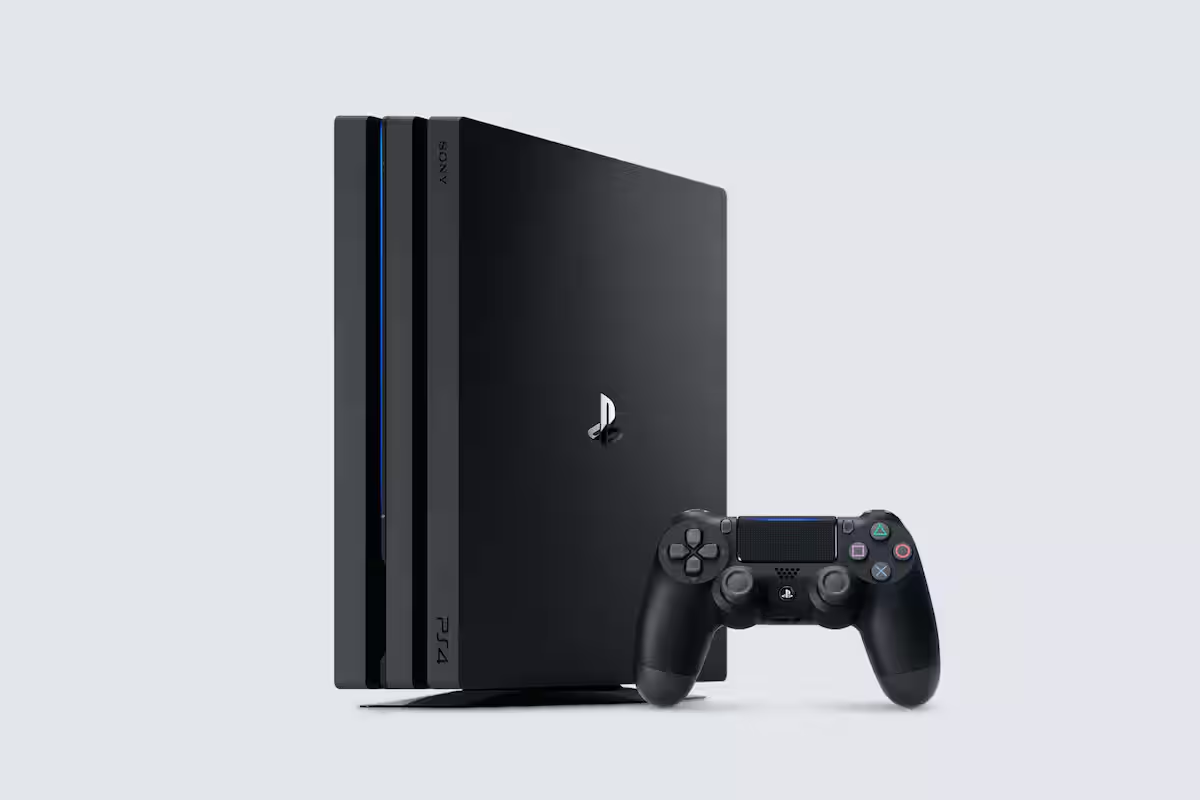
PlayStation is facing heavy criticism after reports that Sony plans to end physical game disc production in 2028. The decision has angered many players who still value physical ownership, resale options, game preservation, and access in regions where digital storefronts are less practical. The backlash has already led to petitions, canceled pre orders, and some players saying they are ending their PlayStation Plus subscriptions.
Still, analysts doubt the protests will be enough to make Sony fully reverse course. The main reason is simple: digital distribution is far more profitable and easier to control than physical media. Once a platform holder moves further into digital sales, it gains more control over pricing, storefront visibility, subscriptions, licensing, and long term revenue. For a company the size of Sony, that business logic may outweigh even a loud wave of online criticism.
Japanese industry consultant Serkan Toto said Sony likely expected the reaction and is now waiting for the backlash to fade. He argued that even if a large number of players cancel PlayStation Plus in protest, the impact may be too small to change the company’s strategy. PlayStation has more than 120 million active accounts, and roughly 50 million subscribers to PlayStation Plus, so even hundreds of thousands of cancellations may not be enough to force a rethink.
Sony may not reverse course, but it still needs to explain what comes next
The issue is not only that PlayStation may be moving away from discs. It is also that the company reportedly made the decision without clearly explaining how physical ownership, backward compatibility, game access, and future hardware will work. That silence has created uncertainty around PS6, retail partners, collectors, and players who prefer buying boxed games.
| Issue | Why it matters |
|---|---|
| Disc production ending in 2028 | Could reduce physical game availability |
| Player protests | Shows strong resistance from physical media fans |
| PS Plus cancellations | May create pressure, but analysts expect limited financial impact |
| Pre order cancellations | Could affect certain upcoming game launches if it spreads |
| CEO stock sale | Raises questions because of the timing |
| Main unanswered question | How PlayStation will handle physical ownership after 2028 |
Analyst Daniel Ahmad also warned against reading too much into every small reaction from Sony. Some players have pointed to account offers or subscription retention deals as proof that protests are working, but he noted that many of those systems have existed for years. He still expects Sony to respond in some way because the backlash is large, but he does not expect a full reversal at this stage.
The part that has fueled more debate is Sony Group CEO Hiroki Totoki reportedly selling 56.5 percent of his company shares shortly after the disc related controversy began. That timing has raised eyebrows, although it does not prove that the sale was directly connected to the backlash. Executive stock sales can be planned in advance, and former PlayStation leadership has also sold major stock holdings before leaving or changing roles.
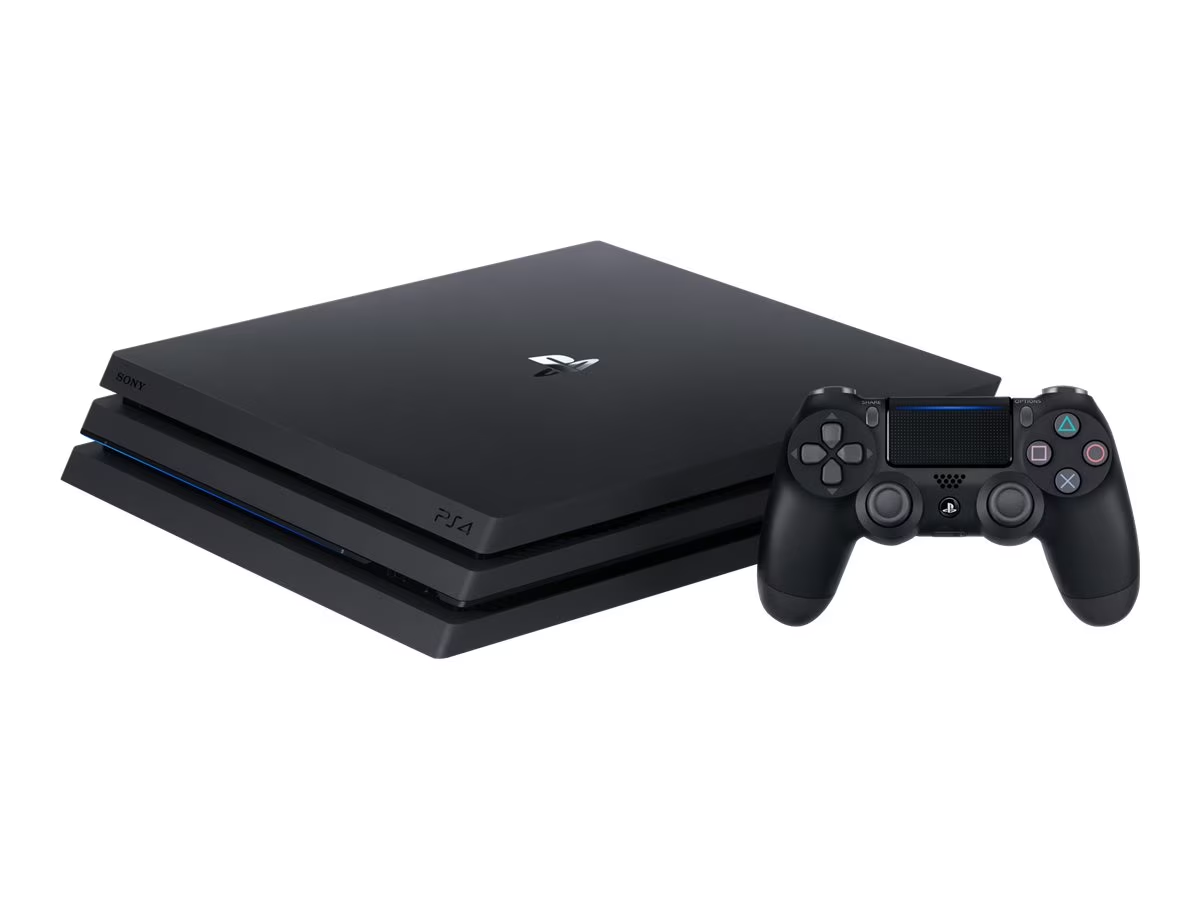
Even with that caution, the sale adds another layer to an already sensitive story. If Sony expected a difficult reaction from players, investors, retailers, and publishers, the company may have known the announcement would create short term pressure. The bigger question is whether that pressure becomes large enough to affect business decisions rather than only social media discussion.
For players, the concern is understandable. Physical discs are not only about nostalgia. They support resale, lending, collecting, offline installation, price competition, and long term preservation. A fully digital PlayStation future could make games more convenient for some buyers, but it would also place more control in Sony’s hands.
Sony’s challenge now is communication. If the company is committed to ending disc production, it needs to explain what protections players will have. That includes access to purchased games, compatibility with older physical libraries, regional pricing, digital refunds, delisting risks, and options for people with limited internet access.
A full reversal may be unlikely, but continued pressure can still matter. It may push Sony to offer clearer policies, better ownership guarantees, external drive support, stronger consumer protections, or a smoother transition for physical buyers. The protests may not stop PlayStation’s digital shift, but they can still influence how painful that shift becomes.

Discussion (0)
Be the first to comment.