



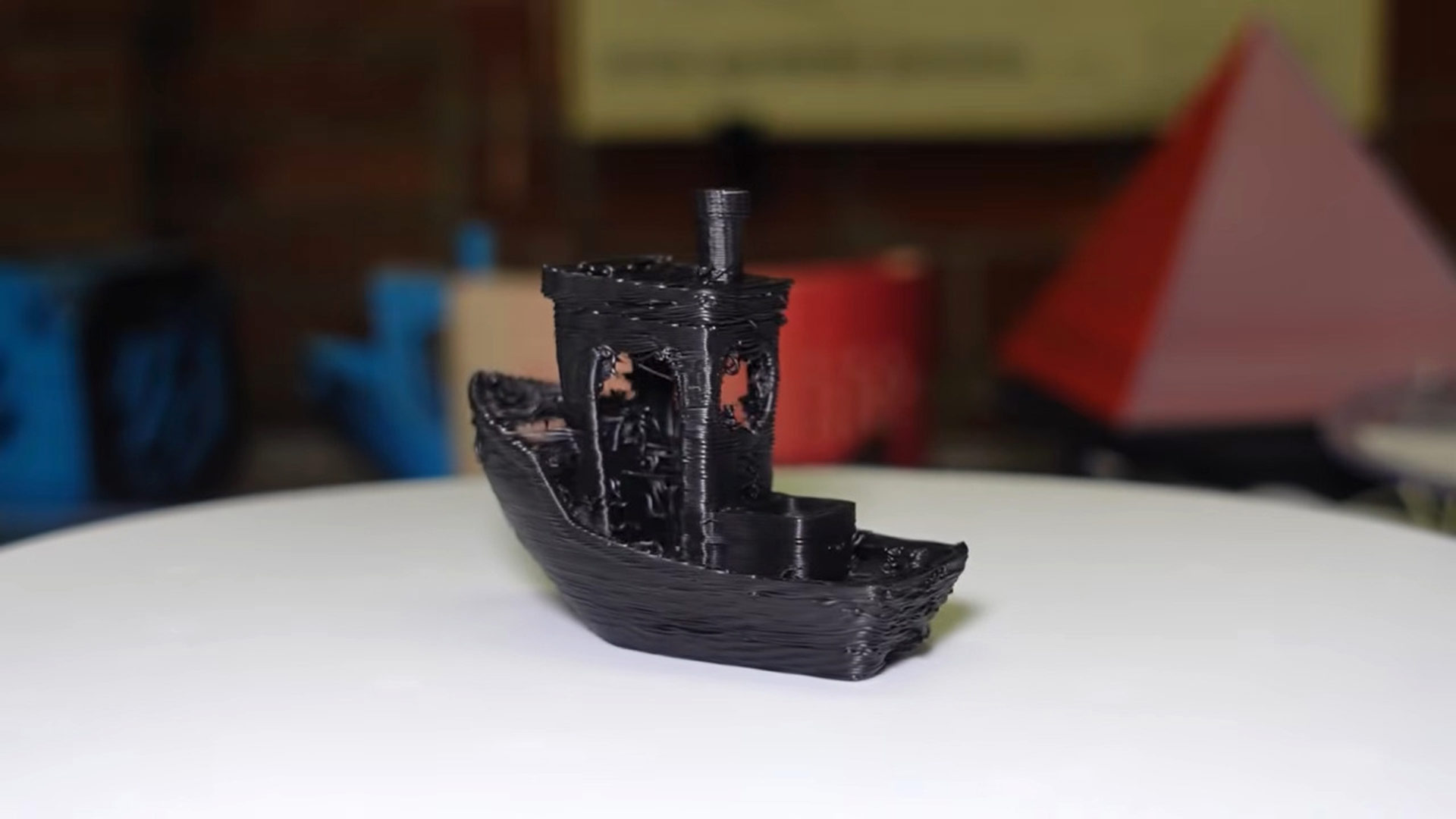
The Pentagon is reviewing a new 3D printed military boat that could change how small naval vessels are built and deployed. Hawaii based startup Voltage Vessels has submitted a six meter rigid hull inflatable boat for consideration, using large format additive manufacturing to print the hull from a material that combines recycled PETG plastic with chopped basalt fiber.
The idea is simple but important. Instead of shipping finished boats across long distances, military forces could print hulls closer to where they are needed. The report notes that this could replace a supply route of roughly 6,545 miles between Okinawa and San Diego. For a military spread across the Pacific, that kind of local production could reduce delays, shipping costs, and dependence on long logistics chains.
Voltage Vessels built the boat using a CEAD large format 3D printing system. The company’s material, called Eclipse X9, uses basalt fiber, which comes from volcanic rock. Compared with the HDPro material currently used by CEAD printers for maritime work, the basalt based material reportedly offers much higher tensile strength.
The material also has another possible advantage: it is non conductive. That means it may reduce radio frequency interference and could help lower the boat’s radar signature, although its performance across specific radio frequencies is still being evaluated. For autonomous or uncrewed naval systems, reducing interference could be useful because these systems depend on clean signals for communication, navigation, and control.
| Feature | Why it matters |
|---|---|
| 3D printed hull | Allows production closer to where boats are needed |
| Six meter RHIB design | Fits small military and support vessel use |
| Recycled PETG and basalt fiber | Combines plastic with volcanic fiber for stronger material |
| Non conductive structure | May reduce RF interference and help lower radar visibility |
| Local manufacturing | Could reduce reliance on long military supply chains |
| Potential scale | Company envisions production of up to 25,000 hulls a year |
The US Navy has already been exploring large scale additive manufacturing as a way to simplify production and support global operations. Current plans include deploying large format metal 3D printers at bases and other locations, mainly for parts and components. Voltage Vessels is proposing a larger step by applying the same idea to full boat hulls.
The company says it could reach an annual output of 15,000 metric tons. Since a six meter RHIB hull weighs around 600 kg, that could translate to as many as 25,000 hulls per year, depending on final designs and sizes.
The use of volcanic material also fits into a wider trend of testing new materials for stealth and military systems. Radar visibility depends on shape, coatings, and material behavior, so basalt fiber alone is not a complete stealth solution. Still, a non conductive hull could be useful for smaller autonomous boats, where every reduction in signal interference or radar return may help.
This is not just a story about a new boat. It shows how the military is thinking about manufacturing in contested or remote areas. If boats, parts, and support equipment can be printed near forward bases, forces may not need to wait for every item to arrive by ship or aircraft.
There are still questions. The Pentagon will need to evaluate durability, cost, repairability, sea performance, and whether the material works reliably in harsh maritime conditions. The radio frequency and radar benefits also need proper testing before they can be treated as proven.
Even so, the proposal points to a practical future for military 3D printing. Instead of using additive manufacturing only for small replacement parts, the Pentagon could use it to produce complete vessels closer to the front line. For naval operations, that could make small boat production faster, more flexible, and less dependent on fragile supply chains.



Discussion (0)
Be the first to comment.