



Origin Code has shown off new high performance DDR5 memory designs at Computex, including high capacity 4 rank CUDIMM modules, low latency EXPO kits for AMD systems, and a liquid cooled memory setup with real time temperature monitoring. The showcase highlights how enthusiast memory is moving beyond simple speed bumps and toward higher density, better cooling, and more specialized tuning for different platforms.
The company, which operates as Biwin’s performance memory brand, used Computex to demonstrate several Vortex DDR5 configurations across Intel and AMD systems. The most eye catching setup was a 256GB DDR5 configuration running at 8000 MT/s on an Intel platform. That kind of capacity previously required four 64GB modules, but Origin Code showed two modules delivering the same total capacity thanks to newer 4 rank CUDIMM designs.
This is important because the memory market is changing quickly. DDR5 prices are under pressure, AI demand is affecting supply, and enthusiasts are looking for kits that offer more than standard speeds. Origin Code’s Computex lineup is aimed directly at that high end crowd.
Origin Code pushes 256GB DDR5 to 8000 MT/s on Intel
The Intel demo used Origin Code 4 rank CUDIMM memory on a Gigabyte Z890 AORUS Elite DUO X motherboard with Intel’s Core Ultra 7 270K Plus. The system ran two modules for a total of 256GB, with speeds listed at 8000 MT/s and timings of CL64 63 63 128 CR2.
That is a strong technical showcase because it combines high capacity with high frequency. Large memory kits usually struggle to hit the same speeds as lower capacity modules, especially when stability is required. Origin Code says the modules use highly binned SK Hynix memory, which helps explain the out of box speed target.
| Demo setup | Key memory detail |
|---|---|
| Intel Z890 system | 256GB using two 4 rank CUDIMM modules |
| Intel memory speed | DDR5 8000 MT/s |
| Intel timings | CL64 63 63 128 CR2 |
| AMD X870E system | DDR5 6200 low latency EXPO kit |
| AMD timings | CL28 35 35 76 CR1 |
| Liquid cooled setup | 256GB DDR5 6000 with live temperature display |
During the benchmark demo, the memory reportedly hovered around 60 degrees Celsius. The displayed modules did not have their final heatsink design covering the DRAM ICs, but that was only for demonstration. The final version is expected to include proper heatsink coverage.
AMD users get low latency EXPO memory tuning
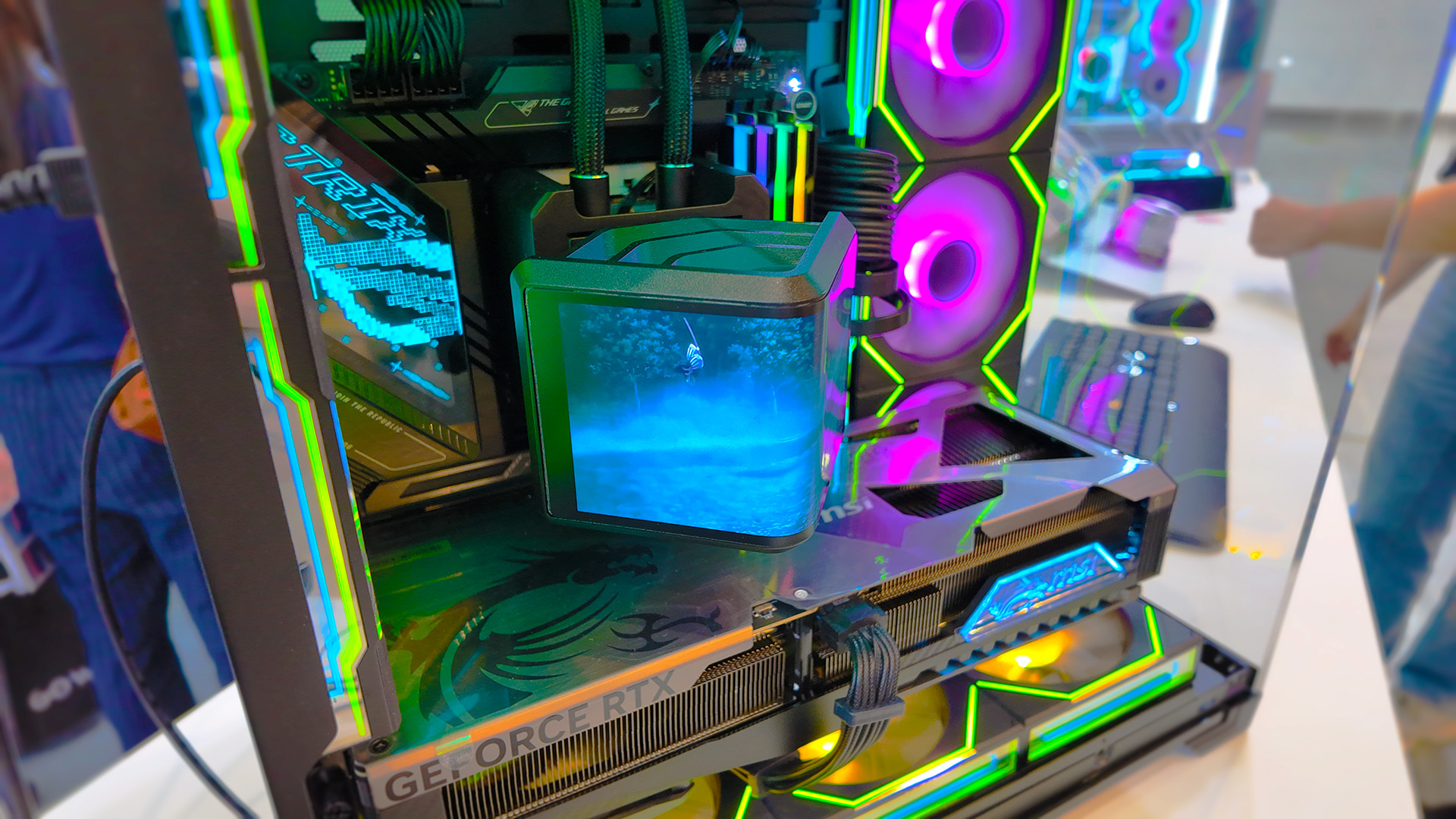
Origin Code also showed an AMD focused EXPO ULL kit, with ULL standing for ultra low latency. The demo ran at 6200 MT/s on an ASUS ROG Crosshair X870E Dark Hero motherboard with a Ryzen 9 9950X3D v2 processor.
The timings were listed at CL28 35 35 76 CR1, which makes the kit more focused on latency than raw frequency. That matters for AMD platforms, where memory tuning can have a noticeable effect on gaming, content creation, and other latency sensitive workloads.
Not every enthusiast wants the highest possible MT/s number. Some buyers care more about balanced performance, tight timings, and stability. A low latency DDR5 6200 kit can make more sense than a much faster kit with looser timings, depending on the platform and workload.
Origin Code is clearly trying to serve both sides. It has high capacity, high speed modules for Intel systems, and low latency EXPO tuned kits for AMD builds.
Vortex cooling now includes a liquid cooled memory design
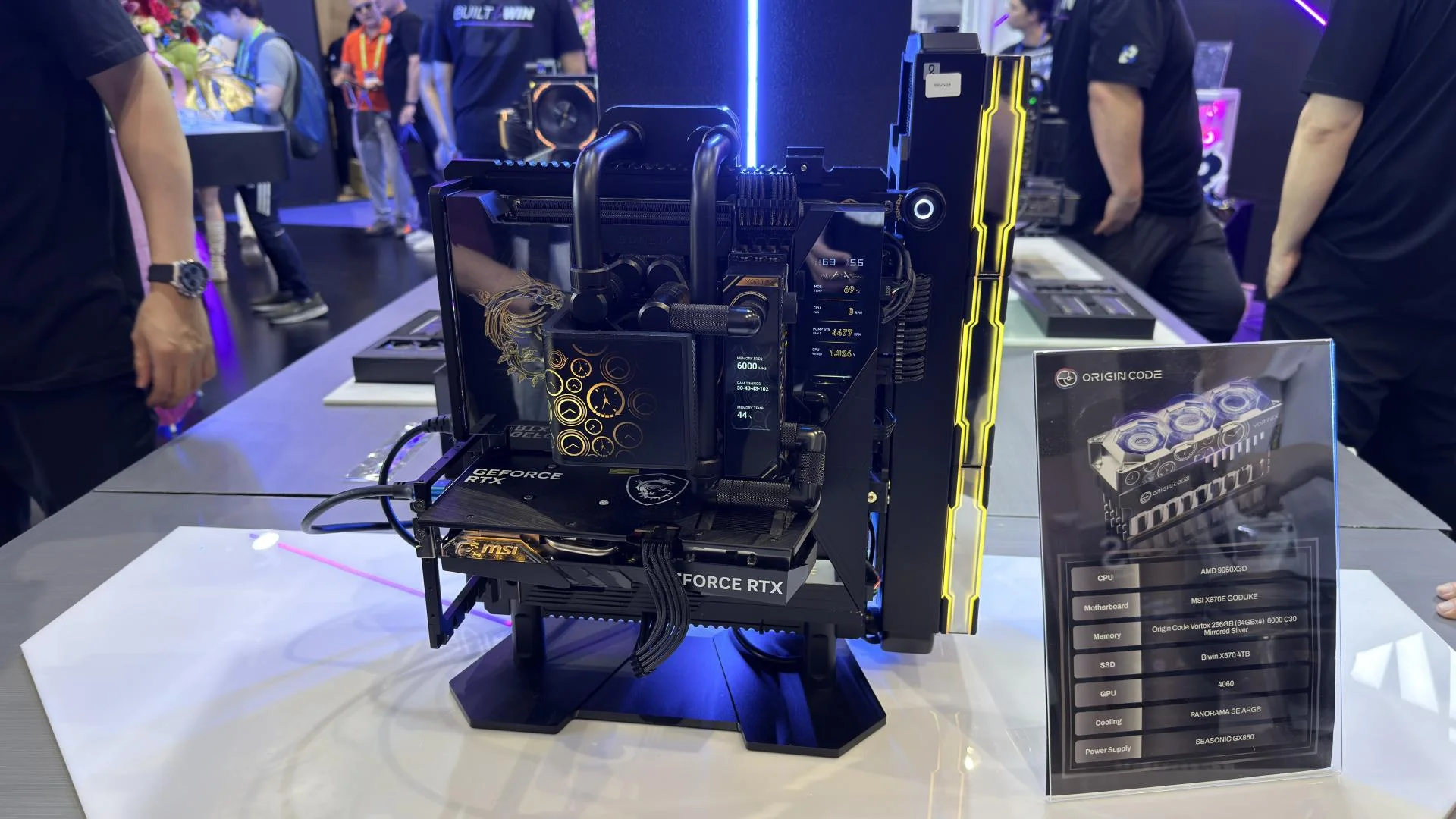
The company has already shown its Vortex triple fan memory cooling concept, but Computex also brought a more ambitious liquid cooled memory module. The design uses an open loop cooling setup and includes a front display that can show real time CPU, GPU, and RAM temperatures.
The liquid cooled demo used 256GB of DDR5 6000 memory, configured as four 64GB modules, on an MSI X870E GODLIKE motherboard. Timings were listed at CL30 43 43 102 CR1.
Memory cooling is becoming more relevant as DDR5 kits push higher speeds and higher densities. Most mainstream kits do not need active or liquid cooling, but enthusiast modules running at high frequencies or in dense configurations can produce more heat. Cooling can help with stability, especially during long stress tests or overclocking sessions.
The built in display is also a sign of where premium PC hardware is going. High end components are increasingly adding monitoring features, RGB, small screens, and visual feedback. For some builders, that is style. For overclockers, live temperature data can also be useful.
Origin Code is targeting serious enthusiast builds
The Computex showcase makes it clear that Origin Code is not chasing basic memory buyers. These Vortex kits are aimed at enthusiasts, overclockers, workstation users, and people building high end systems with large memory needs.
High density DDR5 will matter more as AI workloads, content creation, heavy multitasking, and professional tools become more common on desktops. At the same time, gaming focused systems still benefit from well tuned low latency memory, especially on AMD platforms.
The most interesting part of Origin Code’s lineup is that it is not relying on one headline spec. The company showed capacity, frequency, timings, air cooling, and liquid cooling in different configurations. That gives it a wider enthusiast story.
There are still open questions. Pricing, availability, final heatsink designs, long term stability, and real retail performance will matter more than show floor demos. Memory shown at Computex is often tuned carefully, and buyers will want to see how these kits behave in real systems.
Still, Origin Code’s Vortex DDR5 lineup looks ambitious. A 256GB two module CUDIMM kit running at 8000 MT/s, a low latency AMD EXPO kit at DDR5 6200, and a liquid cooled module with real time monitoring all show that DDR5 innovation is still moving quickly.
For builders who want ordinary memory, this may be overkill. For enthusiasts who want high capacity, low latency, and more control over thermals, Origin Code’s Computex showcase points to a more specialized future for DDR5.



Discussion (0)
Be the first to comment.