




Nvidia has not announced a successor to the RTX 5090 or provided clear details about its next consumer graphics architecture. More than a year after the flagship Blackwell card arrived, discussion around an RTX 60 series remains largely based on rumours and speculation.
Three major AI assistants were asked why Nvidia appears to have paused at the RTX 5090. Their answers differed in wording, but they pointed to several common factors. These included the limited performance space above the current flagship, extreme power requirements, weak demand for very expensive gaming cards, and Nvidia’s growing focus on artificial intelligence and data centre hardware.
None of the assistants identified rising memory costs as a primary explanation. That omission is notable because RAM and VRAM prices can influence production costs, retail prices, and the timing of new graphics cards. However, Nvidia’s broader business priorities may be a more important reason for the current silence.
The RTX 5090 already pushes consumer hardware limits
The RTX 5090 sits at the top of Nvidia’s current gaming range and already demands substantial power and cooling. Its rated graphics power reaches 575 watts, placing it well beyond the needs and practical limits of most gaming PCs.
Creating a noticeably faster card within the same generation would be difficult. Nvidia would need to increase performance enough to justify a higher price while maintaining acceptable temperatures, power consumption, and physical size.
A theoretical RTX 5090 Ti could require a larger cooler, a stronger power supply, and even more expensive components. Small performance improvements would be difficult to market if they came with much higher power consumption and cost.
The RTX 5090 also represents a very small part of the gaming market. Recent hardware survey figures place it in roughly 0.41 percent of participating systems, while less expensive cards such as the RTX 4060 have a much larger share.
That difference shows how limited the audience is for an even faster and more expensive gaming product. Most players do not need RTX 5090 levels of performance, particularly at resolutions below 4K.
| Possible reason for Nvidia’s delay | Why it matters |
|---|---|
| High power consumption | The RTX 5090 already reaches 575 watts |
| Limited performance headroom | A faster card may deliver poor efficiency gains |
| Small flagship market | Few gamers purchase the most expensive model |
| Higher data centre margins | AI hardware may offer stronger financial returns |
| Manufacturing complexity | Larger chips are expensive and difficult to produce |
| Possible mid generation refresh | Nvidia may release updated 50 series cards first |
AI and data centre products may receive greater attention
Nvidia earns a large share of its revenue from data centre processors, artificial intelligence accelerators, and professional computing hardware. These products can generate significantly higher returns than consumer gaming cards.
That creates a clear business reason to prioritise production capacity, engineering resources, and advanced manufacturing for enterprise hardware. The same semiconductor supply that could support a new gaming flagship may be more valuable when used for an AI accelerator.
Consumer graphics cards remain important to Nvidia, but gaming no longer appears to be the company’s main source of growth. This does not mean Nvidia has ended development of new GeForce products. It suggests that the company may feel less pressure to replace the RTX 5090 quickly.
The current flagship also faces limited competition at the highest performance level. Without a rival product forcing a response, Nvidia can continue selling the existing range while preparing its next architecture on a longer schedule.
A refresh could arrive before a full RTX 60 series
Nvidia may fill the gap with additional Blackwell models instead of immediately launching a new generation. Rumours have mentioned possible Super editions and regional variants, including another RTX 5090 based card.
A mid generation refresh would allow Nvidia to improve selected specifications without completing an entirely new architecture. It could adjust memory capacity, clock speeds, power limits, or product positioning while continuing to use established Blackwell technology.
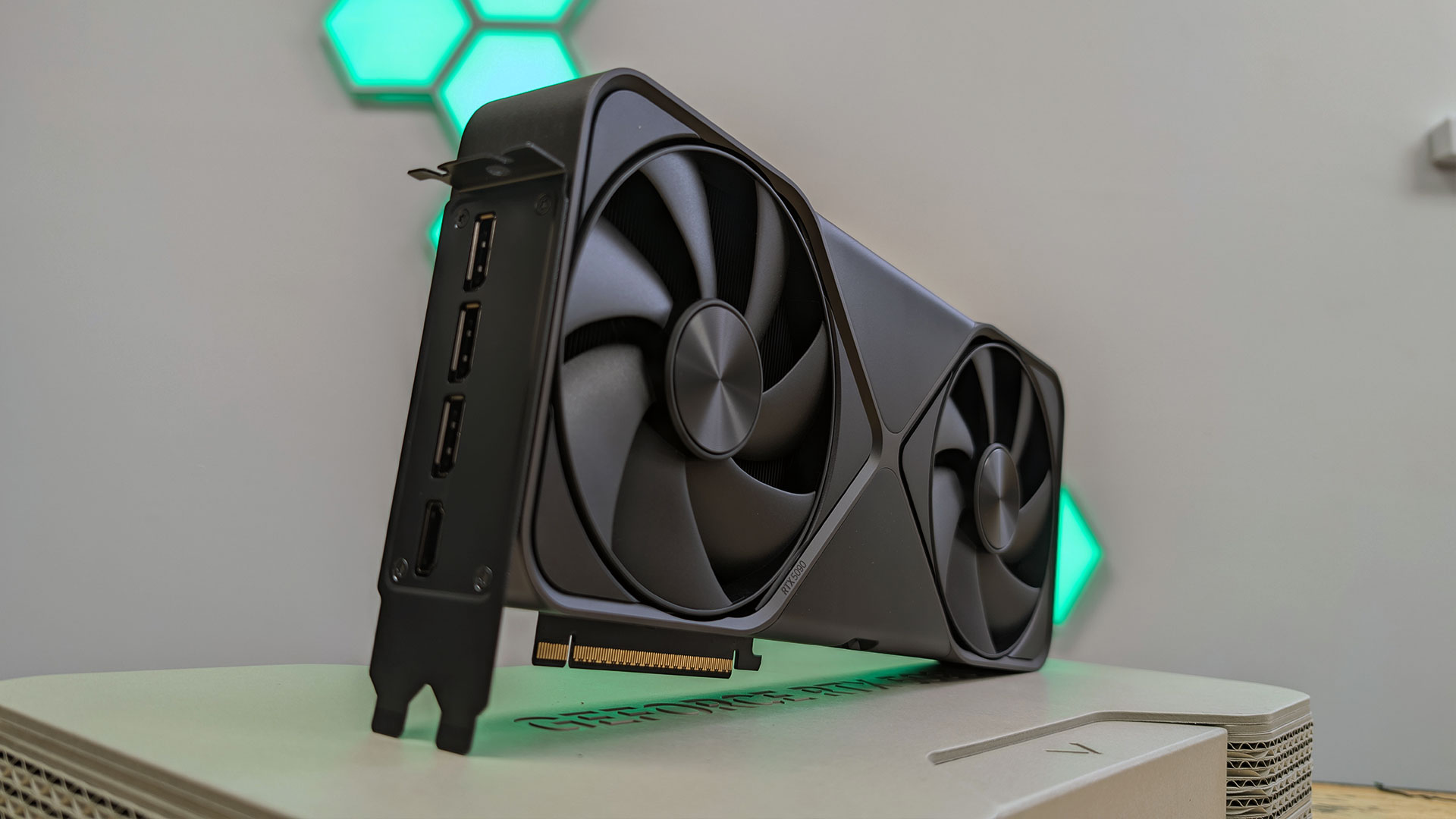
This approach would also extend the commercial life of the RTX 50 series. Nvidia has used refreshes in previous generations to respond to competition and address gaps in its product range.
Memory supply and pricing could still affect these plans. High capacity graphics memory adds considerable cost to premium cards, and wider market shortages may make new configurations less attractive. Even so, memory costs alone do not fully explain Nvidia’s lack of announcements.
The more convincing explanation is a combination of technical and commercial factors. The RTX 5090 already operates near the practical ceiling for a conventional consumer graphics card, demand for something faster would be extremely limited, and Nvidia has stronger financial incentives elsewhere.
A future RTX 60 series remains likely, but there is no confirmed schedule. Until Nvidia provides official details, a refreshed Blackwell lineup may be more realistic than an immediate replacement for the RTX 5090.



Discussion (0)
Be the first to comment.