



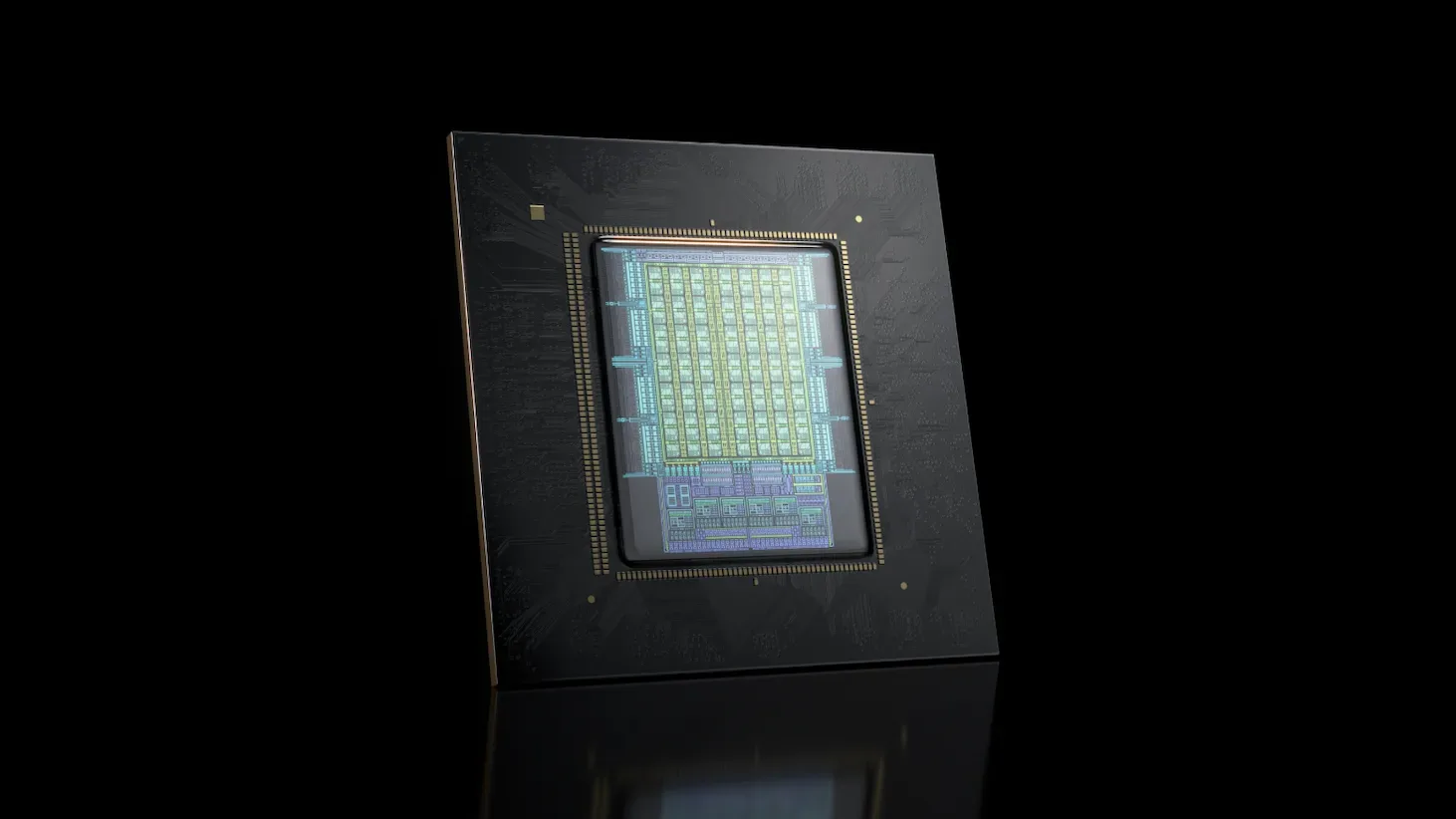
NVIDIA has released detailed performance claims for its Vera CPU, positioning the chip as a purpose built processor for agentic AI, data processing, graph workloads, and other tasks that depend heavily on memory bandwidth and low latency.
The Vera CPU uses 88 Olympus cores and a monolithic design rather than the multi chiplet structure common in modern x86 server processors. NVIDIA says this helps reduce communication delays between cores and avoids some of the memory bottlenecks that can appear when data must travel across several compute and input output dies.
In NVIDIA’s internal comparisons, Vera delivered higher performance than a 128 core AMD EPYC Turin processor across several workloads. The company reported gains in single thread performance, branch handling, graph traversal, Python execution, data analytics, and agent based workflows.
These results come from NVIDIA’s own testing and should be treated as vendor claims until independent benchmarks become available. Performance will depend on software, system configuration, power limits, memory capacity, and the specific workload.
Vera uses a monolithic design to reduce communication delays
Modern server CPUs often use several smaller compute dies connected through a package fabric. This design improves manufacturing flexibility and allows chipmakers to build processors with very high core counts.
The disadvantage is that data sometimes has to travel between separate dies. A request may leave one compute chiplet, move through an input output die, reach another compute chiplet, and then follow a similar path back.
Each additional step can increase latency and consume interconnect bandwidth.
NVIDIA says Vera’s monolithic structure provides more consistent communication between cores. Its internal tests showed up to 50 percent lower core to core latency than the compared EPYC Turin processor.
| Vera CPU feature | Reported benefit |
|---|---|
| CPU cores | 88 Olympus cores |
| Design | Monolithic architecture |
| Memory subsystem | LPDDR5X |
| Per core memory bandwidth | Around 12.7GB/s |
| Compared EPYC bandwidth | Around 3.1GB/s per core |
| Core to core latency | Up to 50 percent lower |
| Memory latency under load | Around 40 percent lower |
| Main target | Agentic AI and data intensive workloads |
NVIDIA also claims Vera can deliver three times more core to core bandwidth through its scalable coherent fabric.
Consistent latency can be important for AI agents that run many small, connected tasks. These workloads often depend on quick communication between threads rather than only high peak compute performance.
Olympus cores focus on branch heavy workloads
The Olympus architecture is designed to handle software with large instruction footprints, frequent branches, and long dependency chains.
Agentic AI applications often combine language model output with tools, code execution, databases, web services, and decision logic. This produces irregular workloads that can stress branch prediction and single thread performance.
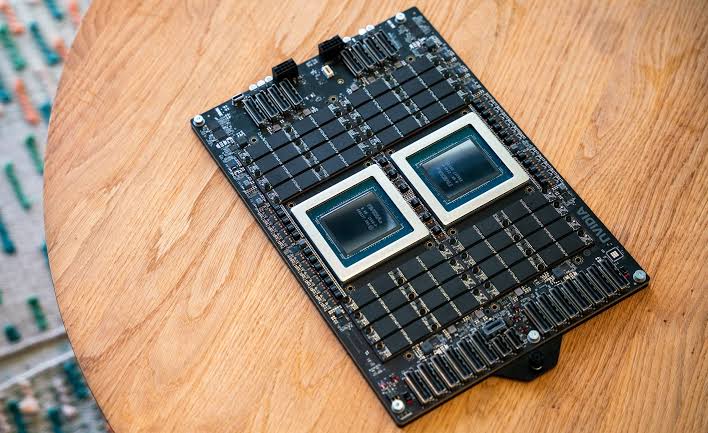
NVIDIA says Vera provides up to 1.9 times higher instructions per cycle than AMD’s Zen 5 architecture in selected tests.
Its branch prediction performance was reported as up to 2.3 times higher, with approximately twice the performance on average. Taken branches per cycle improved by as much as 3.5 times.
The Olympus core includes a 64KB instruction cache, a 128 byte per cycle fetch system, and a 10 wide decode engine. NVIDIA says instruction fetch operations per cycle were up to 2.4 times higher than Zen 5.
Backend operations per cycle were reported as more than three times higher on average, with a maximum gain of 4.3 times in the selected workloads.
| Architectural measurement | Reported Vera advantage |
|---|---|
| Single thread IPC | Up to 1.9 times |
| Branch predictions per cycle | Up to 2.3 times |
| Taken branches per cycle | Up to 3.5 times |
| Instruction fetch operations | Up to 2.4 times |
| Backend operations per cycle | Up to 4.3 times |
These measurements do not mean Vera will be faster in every server application. They show where NVIDIA has focused the architecture, particularly software with complex control flow and frequent branching.
Memory bandwidth is one of Vera’s main advantages
NVIDIA argues that memory performance is becoming more important as agentic AI workloads process large and irregular datasets.
The compared 128 core EPYC Turin processor provided roughly 3.1GB/s of memory bandwidth per core. Vera reportedly supplies around 12.7GB/s per core, with some workloads reaching approximately 14GB/s.
That gives Vera about four times more memory bandwidth per core in NVIDIA’s comparison.
Higher per core bandwidth can help when many threads access large datasets simultaneously. Without enough memory throughput, processor cores may spend more time waiting for information than performing useful work.
NVIDIA also says the EPYC system’s memory latency increased from around 120 nanoseconds to approximately 350 nanoseconds as bandwidth demand rose.
Vera reportedly maintained lower latency under heavy load while delivering about three times more bandwidth. The source material states that Vera achieved 40 percent lower latency under load, although one chart description also refers to a much larger difference at peak utilisation. The exact comparison will require independent validation.
Agentic workloads show gains in Python and software tools
NVIDIA tested Vera across Python execution, code compilation, static analysis, and tool based software workflows.
The company says Vera delivered up to 1.8 times higher Python performance than the compared EPYC processor when both sockets were fully loaded. Other tests showed gains of up to 1.7 times.
Fully loaded per core performance measures how well each core maintains throughput while sharing power, cache, memory bandwidth, and fabric resources with the rest of the processor.
This matters for agent platforms that may run many tasks in parallel. A server could be handling code execution, database queries, search operations, security checks, and model orchestration at the same time.
| Application workload | Reported Vera result |
|---|---|
| Python execution | Up to 1.8 times faster |
| Other software workflows | Up to 1.7 times faster |
| PageRank graph traversal | 2.6 times faster |
| ClickHouse analytics | 1.2 times faster |
| Agentic job completion | Up to 1.5 times faster |
| Sandbox startup | Up to 1.9 times faster |
| Orchestration step latency | Up to 1.8 times faster |
NVIDIA also presented a sixfold gain for selected data processing workloads based on p99 streaming latency. The exact test conditions were not detailed in the supplied material, so this figure should not be interpreted as a general sixfold CPU performance increase.
Graph workloads benefit from the memory system
Vera reportedly delivered a 2.6 times performance improvement in PageRank graph traversal compared with the EPYC Turin processor.
Graph workloads are sensitive to memory latency, cache behaviour, and communication between cores. They often involve following irregular links across large datasets, which can make traditional sequential processing less effective.
NVIDIA also showed scaling results where Vera reached a reported 29.3 times relative gain at 32 cores. The compared EPYC system reached 10.3 times scaling in the same presentation.
This suggests the Vera architecture may retain more performance as additional cores are assigned to a graph workload. The monolithic design and higher bandwidth per core are likely central to that result.
In ClickHouse, a column based analytics database, Vera delivered a reported 20 percent improvement over the EPYC Turin system.
That smaller gain shows that Vera’s advantages will vary across software. Some workloads may benefit strongly from its branch handling and memory design, while others will see more modest improvements.
NVIDIA is expanding beyond GPUs
Vera is a key part of NVIDIA’s attempt to control more of the AI data centre platform.
The company already dominates AI accelerator sales through its GPUs. A competitive server CPU gives it greater control over data preparation, agent orchestration, networking, storage, and general purpose processing.
NVIDIA says early adopters include OpenAI, Anthropic, SpaceX, and Perplexity. Vera is also expected to appear in cloud data centres and supercomputing facilities.
The company is targeting a large server market that has traditionally been led by x86 processors from AMD and Intel. Success will depend on software compatibility, pricing, availability, power efficiency, and whether customers are willing to adopt another CPU architecture.
NVIDIA’s strongest argument is that agentic AI creates different processor requirements from conventional enterprise computing. These workloads often need high single thread performance, low communication latency, fast branch handling, and strong memory bandwidth per core.
Vera is designed around those priorities. Its reported gains are substantial, but independent testing will be necessary to determine how broadly they apply and whether the chip can deliver similar results outside NVIDIA’s selected benchmarks.



Discussion (0)
Be the first to comment.