



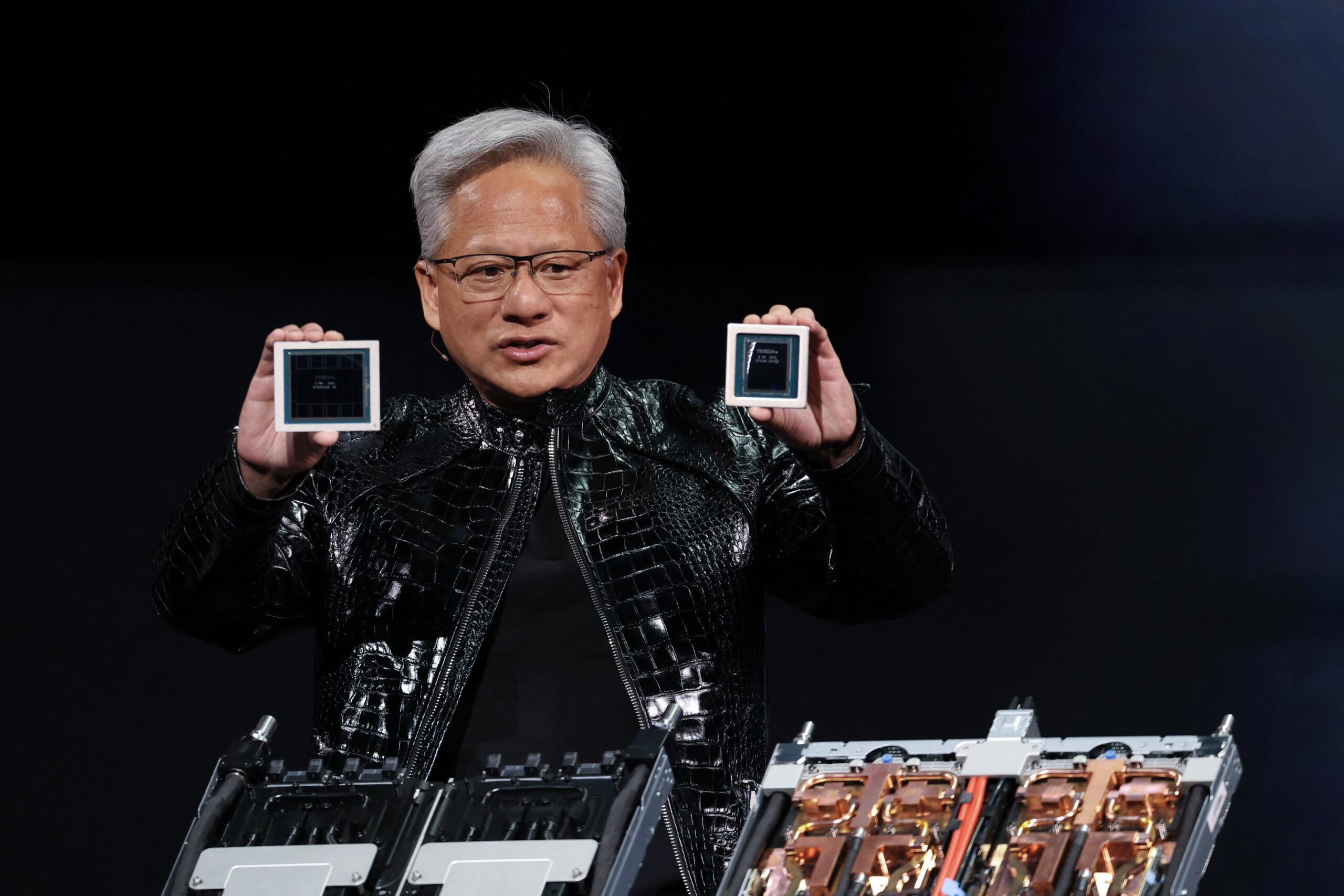
NVIDIA CEO Jensen Huang has rejected reports that the company’s next generation Vera Rubin platform is facing major delays, saying large scale production is moving forward and significant volumes are expected.
Speaking during a visit to Japan, Huang said the rumors surrounding chip and rack delays were inaccurate. NVIDIA has already started production of the Vera Rubin platform, while its Vera CPUs are also moving into volume manufacturing for data center systems.
The comments follow reports that NVIDIA had encountered design and production issues affecting future rack scale products. Some of those claims focused on the Oberon NVL144 platform and the larger Kyber NVL576 system planned for Rubin Ultra chips.
Questions also remain around whether Rubin Ultra will launch with its originally planned four reticle design or move to a smaller two reticle configuration. NVIDIA has not provided a detailed public response to that specific claim.
Huang’s broader message was that development remains on schedule and that NVIDIA expects to ship Vera Rubin hardware in substantial quantities.
Japan’s first Vera Rubin AI factory will use 27,500 GPUs
NVIDIA also announced a major AI infrastructure project in Japan as part of the country’s FRONTia initiative.
The facility will be developed with Noetra Corp and will support multimodal foundation models, robotics, manufacturing, and physical AI research. It is described as Japan’s first AI factory based on the Vera Rubin platform.
The planned system will include 13,750 Vera CPUs and 27,500 Rubin GPUs. It will use NVIDIA’s DSX architecture, Vera Rubin NVL72 racks, and Spectrum X networking.
| AI factory component | Planned specification |
|---|---|
| Rubin GPUs | 27,500 |
| Vera CPUs | 13,750 |
| Data center capacity | 140MW |
| Rack platform | Vera Rubin NVL72 |
| Networking | Spectrum X |
| Main focus | Robotics, multimodal AI, and physical AI |
| Development partner | Noetra Corp |
| Project | FRONTia |
The facility is expected to deliver up to 140MW of data center capacity. It will support Japanese companies working on industrial automation, robotics, advanced manufacturing, and large AI models.
Japan is already an important market for robotics and industrial technology. Several local companies are working with NVIDIA and are expected to use platforms such as Jetson Thor for humanoid robots, autonomous machines, and other physical AI systems.
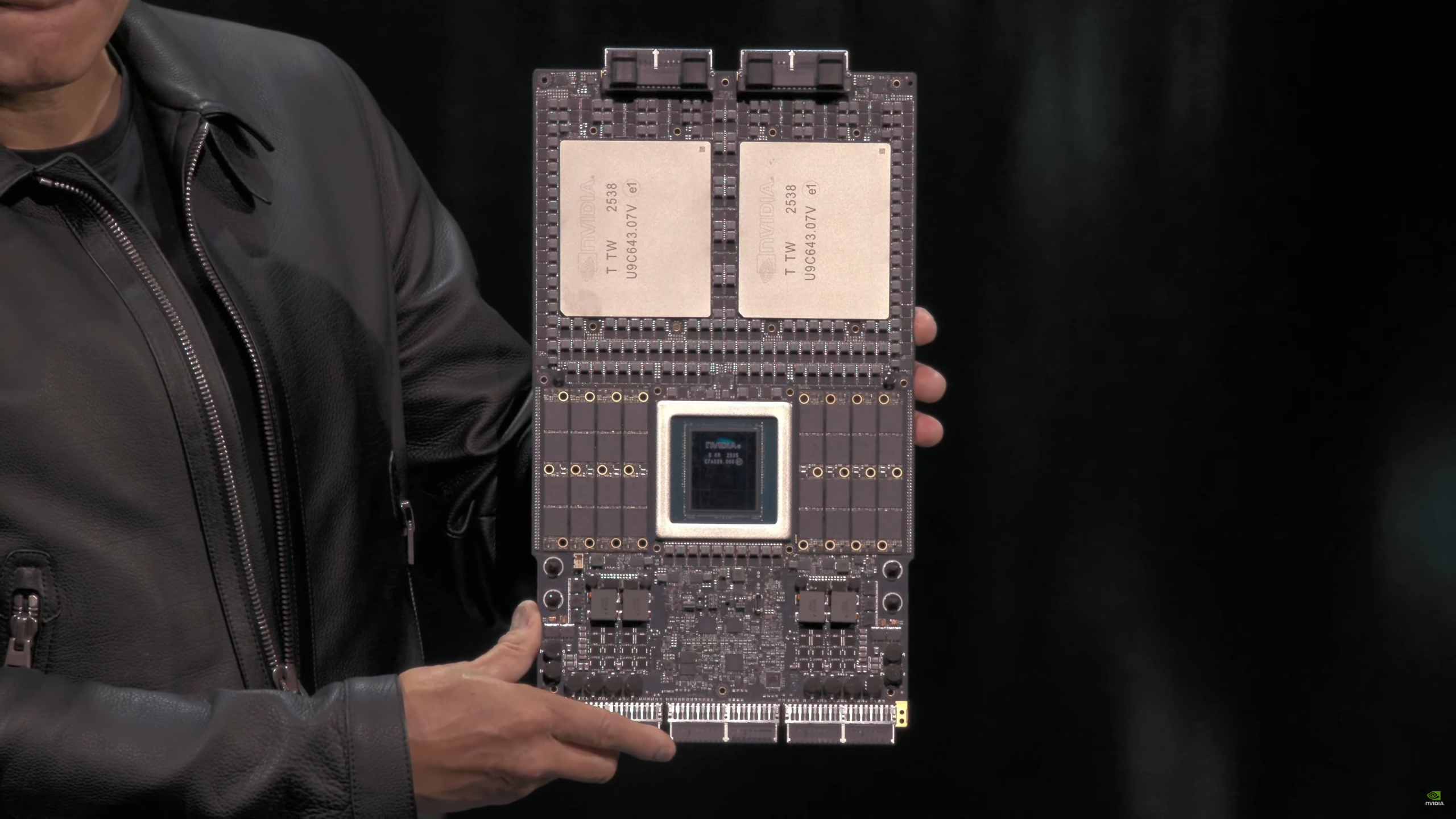
The project is also connected to a wider market opportunity that could reach $133 billion by 2040, according to the estimates discussed during the announcement.
NVIDIA expects AI infrastructure spending to continue for at least a decade
Huang also addressed concerns that AI investment could be approaching a bubble.
He argued that most major technology cycles last between 10 and 15 years before growth begins to slow. In his view, the current AI cycle is still near the beginning, with much of its potential yet to be developed.
NVIDIA expects companies and governments to continue building AI infrastructure for at least the next decade. Huang said AI demand may eventually level out, but he does not expect it to decline in the same way as shorter technology trends.
The company currently sees agent based AI as one stage in a longer progression. Future development is expected to include physical AI, robotics, autonomous systems, and more advanced forms of machine intelligence.
NVIDIA’s business depends heavily on that outlook. Its GPUs, CPUs, networking products, and software are designed to work together inside large AI factories. Continued spending by cloud companies, governments, research organizations, and industrial groups will be necessary to support the scale of production NVIDIA is planning.
Open models and national AI infrastructure are becoming a larger priority
Huang said countries and companies should control their own intelligence infrastructure rather than depend entirely on external services.
Open models can help organizations inspect, modify, secure, and deploy AI systems for their own requirements. This is particularly important for governments and industries working with sensitive data, local languages, manufacturing processes, or national security concerns.
Japan’s new AI factory fits that strategy by giving domestic researchers and companies access to large scale computing infrastructure.
NVIDIA also discussed Rapidus, the Japanese semiconductor manufacturer working on advanced chip production. Huang did not confirm a partnership but said rising AI demand should create opportunities for semiconductor companies across the industry.
The door appears open for future cooperation, although NVIDIA has not announced any manufacturing agreement with Rapidus.
For now, the company is focused on increasing Vera Rubin production and expanding its AI factory projects around the world. The Japan facility will be one of the largest announced deployments of the platform, with 27,500 Rubin GPUs and 13,750 Vera CPUs planned for the completed system.

Discussion (0)
Be the first to comment.