



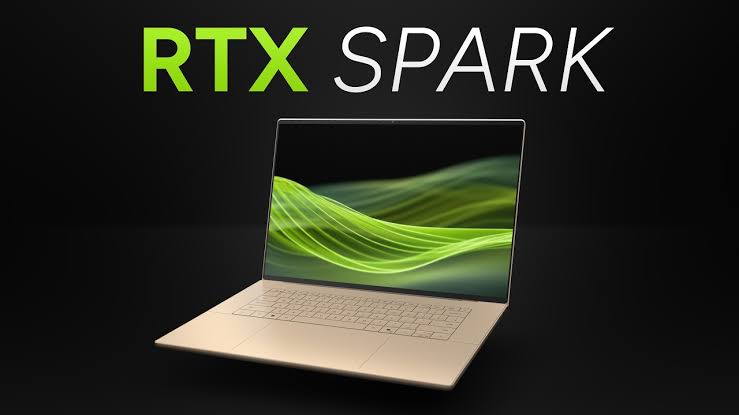
NVIDIA’s RTX Spark is starting to look like one of the company’s most ambitious PC chips in years. Announced at Computex as an Arm based AI super chip developed with MediaTek and Microsoft, RTX Spark is designed to power a new generation of Windows systems built around local AI, large unified memory, and full RTX graphics support.
The chip, previously known by the N1 and N1X codenames, combines NVIDIA’s Blackwell GPU architecture with a 20 core Grace CPU, an NVLink chip to chip interconnect, and up to 128GB of high speed unified memory. NVIDIA is pitching it as a platform for the personal AI era, but the live demos show that the company is not limiting it to chatbot style workloads.
The demonstrations were shown on Microsoft Surface Laptop Ultra systems equipped with RTX Spark. They covered three major areas: gaming with advanced ray tracing, professional game development in Unreal Engine, and local generative AI using a large language model. Together, they give a clearer idea of what NVIDIA wants this platform to become.
RTX Spark combines laptop gaming, huge unified memory, and local AI workloads
The first demo focused on gaming. NVIDIA showed Alan Wake 2 running with full path tracing, which remains one of the most demanding visual workloads in PC gaming. The demo also included an early look at DLSS 4.5 Ray Reconstruction, which is expected to arrive in August. That matters because it shows RTX Spark is being built to support NVIDIA’s latest RTX technologies from the beginning, not as a limited mobile AI chip with reduced graphics capability.
| RTX Spark detail | What it means |
|---|---|
| CPU | 20 core NVIDIA Grace CPU |
| GPU | Blackwell based NVIDIA graphics architecture |
| Memory | Up to 128GB unified memory |
| Interconnect | NVLink chip to chip design |
| Demo system | Microsoft Surface Laptop Ultra |
| Gaming demo | Alan Wake 2 with full path tracing |
| RTX feature shown | DLSS 4.5 Ray Reconstruction |
| Development demo | 80GB Unreal Engine city loaded into memory |
| AI demo | 35 billion parameter Qwen model running locally |
The second demo showed why unified memory could be one of RTX Spark’s biggest advantages. A Surface Laptop Ultra loaded an entire Unreal Engine city project into active memory, with around 80GB of data running in real time. On a normal laptop, developers are often limited by dedicated VRAM, which can force them to break large scenes into smaller sections or work with simplified assets.
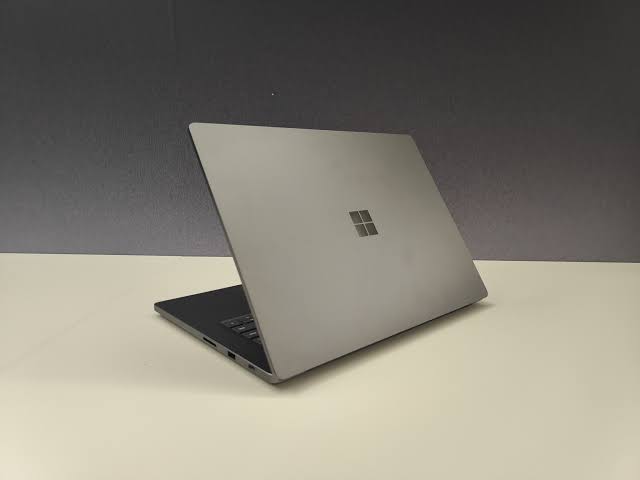
RTX Spark changes that equation by giving the CPU and GPU access to a much larger shared memory pool. For developers, that could make it easier to work inside large, fully lit, high fidelity environments without constant memory management or scene splitting. It does not remove every performance limit, but it could make laptop based development far more practical for complex projects.
The third demo moved into local AI. NVIDIA used RTX Spark to run a heavy Qwen 3.635B model with 35 billion parameters on device, using around 60GB to 70GB of memory. That is the kind of workload that normally pushes users toward cloud AI services or specialized desktop workstations. Running it locally on a laptop could help developers handle code assistance, project Q&A, testing, and private AI workflows without sending every task to a remote server.
The larger point is that RTX Spark is not being shown as a narrow AI accelerator. It is a full platform play. NVIDIA wants one chip to handle modern Windows computing, gaming, creative work, software development, and local AI. The partnership with Microsoft is important because Windows on Arm still needs strong hardware, strong software support, and enough developer confidence to become a serious option at the high end.
There are still questions. Performance, battery life, app compatibility, pricing, thermals, and real product availability will matter more than controlled demos. It is also unclear how many OEMs will adopt RTX Spark beyond Microsoft’s Surface Laptop Ultra systems.
Still, the early demonstrations are impressive. RTX Spark can run a path traced game with upcoming DLSS technology, load a huge Unreal Engine scene into unified memory, and run a large AI model locally on a laptop. If NVIDIA and Microsoft can turn those demos into reliable shipping products, RTX Spark could become one of the most important attempts yet to redefine what a Windows laptop can do.

Discussion (0)
Be the first to comment.