




NVIDIA is reportedly acquiring large amounts of unused long distance fiber infrastructure across the United States, a move that could support a private network connecting AI data centres and cloud computing partners.
The company is said to be purchasing dark fiber routes with configurations reaching as many as 100 fiber pairs. Dark fiber refers to installed fiber optic cables that are not yet carrying active traffic. The buyer can install its own networking equipment and control how the capacity is used.
An earlier estimate suggested that NVIDIA could spend between $5 billion and $10 billion on a major telecommunications project over three years. The reported fiber acquisitions may form part of that wider effort, although NVIDIA has not publicly detailed the size, routes, or intended use of the network.
The infrastructure could help the company connect large GPU clusters, support smaller cloud providers, or eventually offer computing services directly to enterprise customers.
The estimated 7.6 petabit figure depends on several assumptions
A fiber pair normally consists of two individual strands, with each strand carrying traffic in one direction. A network containing 100 pairs would therefore include 200 strands.
Modern dense wavelength division multiplexing equipment can carry many separate optical channels over one strand. If each strand supports 96 wavelengths and every wavelength carries 800Gbps, the theoretical total reaches 7.68 petabits per second.
| Capacity assumption | Estimated value |
|---|---|
| Maximum reported fiber pairs | 100 |
| Individual fiber strands | 200 |
| Wavelengths per strand | 96 |
| Capacity per wavelength | 800Gbps |
| Theoretical combined capacity | 7.68Pbps |
This is a theoretical maximum rather than confirmed usable capacity. Real network performance would depend on route length, optical equipment, redundancy, maintenance requirements, signal quality, and how much capacity NVIDIA actually activates.
Some strands may also be kept as backups or reserved for future expansion. The calculation is still useful because it shows the scale of the reported acquisition, even if the active network starts with much lower throughput.
A private fiber network could connect separate AI data centres
Large AI systems increasingly operate across several buildings or regional facilities. Moving model data, checkpoints, storage traffic, and inference requests between those locations requires very high bandwidth.
Leased network connections can be expensive and may not provide enough control over latency or capacity. Owning or controlling dark fiber allows a company to install its preferred optical systems and increase bandwidth when needed.
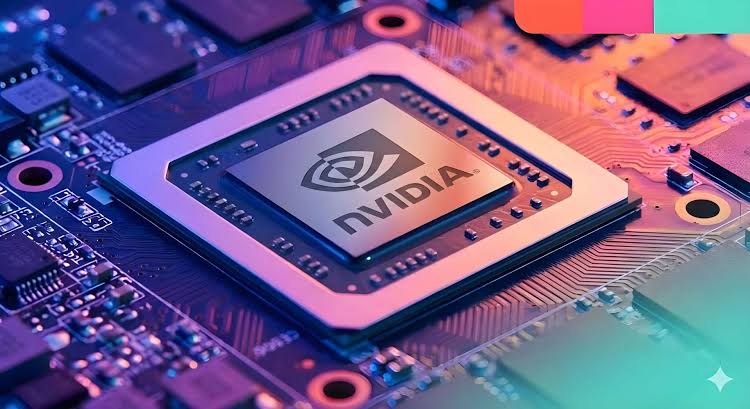
NVIDIA could use the network to connect clusters built around its Blackwell, Rubin, and future AI platforms. It may also help the company coordinate storage and compute resources across different locations.
A private backbone would not replace the networking used inside a data centre. Technologies such as NVLink and high speed Ethernet connect processors within racks and facilities, while long haul fiber connects separate sites across cities or states.
Smaller cloud providers could gain access to more competitive infrastructure
Another possible use is supporting specialised cloud companies that operate NVIDIA GPU infrastructure.
Large cloud providers already own or lease extensive fiber networks, giving them an advantage when connecting data centres and serving customers across regions. Smaller providers may have access to powerful GPUs but lack equivalent telecommunications infrastructure.
NVIDIA could lease capacity to these companies or include network access as part of broader computing partnerships.
This would help smaller operators compete with established cloud platforms and could increase demand for NVIDIA hardware. It would also allow NVIDIA to influence more of the infrastructure surrounding its GPUs rather than depending entirely on outside providers.
The company has already invested in several specialised cloud businesses. A reported 9.3 percent stake in one such provider suggests that NVIDIA is willing to support companies that expand access to its computing platforms.
Direct GPU cloud services could reduce dependence on hyperscalers
The most significant possibility is that NVIDIA could use the fiber network to offer more complete AI infrastructure directly to businesses.
Selling GPUs has made NVIDIA one of the largest companies in the technology industry, but major cloud providers are developing their own AI accelerators. These custom chips could reduce their dependence on NVIDIA over time.
If NVIDIA controls more of the infrastructure, including GPUs, networking, software, data centre capacity, and long distance connectivity, it could sell complete AI computing services rather than relying only on chip sales.
| Possible use | Strategic benefit |
|---|---|
| Connecting NVIDIA data centres | Creates larger distributed AI clusters |
| Supporting specialised cloud providers | Strengthens alternatives to major cloud platforms |
| Leasing network capacity | Generates infrastructure revenue |
| Offering GPU cloud services | Builds a direct relationship with enterprises |
| Linking turnkey AI factories | Simplifies deployment across multiple locations |
A direct service model could appeal to companies that want access to large GPU clusters without committing to one of the biggest cloud providers.
It could also give NVIDIA more control over pricing, software deployment, and customer support. However, operating a national network and cloud service would require substantial investment and expertise outside the company’s traditional semiconductor business.
Custom AI chips are changing NVIDIA’s competitive position
Major cloud providers are investing heavily in application specific integrated circuits designed for AI training and inference.
These chips may not replace general purpose GPUs across every workload, but they can reduce costs for services that run at very large scale. Cloud companies also control the platforms through which many businesses access AI computing.
That creates a strategic risk for NVIDIA. Its largest customers are also developing alternatives to its products and could eventually prioritise their own hardware.
A national fiber network could serve as insurance against that shift. NVIDIA would be better positioned to reach customers directly and offer complete systems built around its own chips.
The company’s expanding portfolio already includes CPUs, GPUs, networking switches, network interface cards, storage processors, software, and rack scale systems. Long haul connectivity would add another layer to that stack.
The project remains largely unconfirmed
NVIDIA has not publicly announced a national dark fiber network or confirmed the reported capacity.
The available information comes from financial research and industry reports rather than a detailed company statement. It is therefore unclear how much fiber has already been acquired, whether every route will be activated, or how the infrastructure will be operated.
The 7.6 petabit estimate also assumes the use of advanced optical equipment at full density across all reported fiber pairs. The final active capacity could be considerably lower.
Even with those limitations, the reported plan fits NVIDIA’s broader strategy. The company is moving beyond individual GPUs toward complete AI platforms that include processors, networking, software, cooling, and data centre systems.
Acquiring long distance fiber would extend that approach beyond the rack and data centre. It could give NVIDIA the ability to connect AI factories across the country and reduce its dependence on the same cloud providers that are developing competing chips.



Discussion (0)
Be the first to comment.