



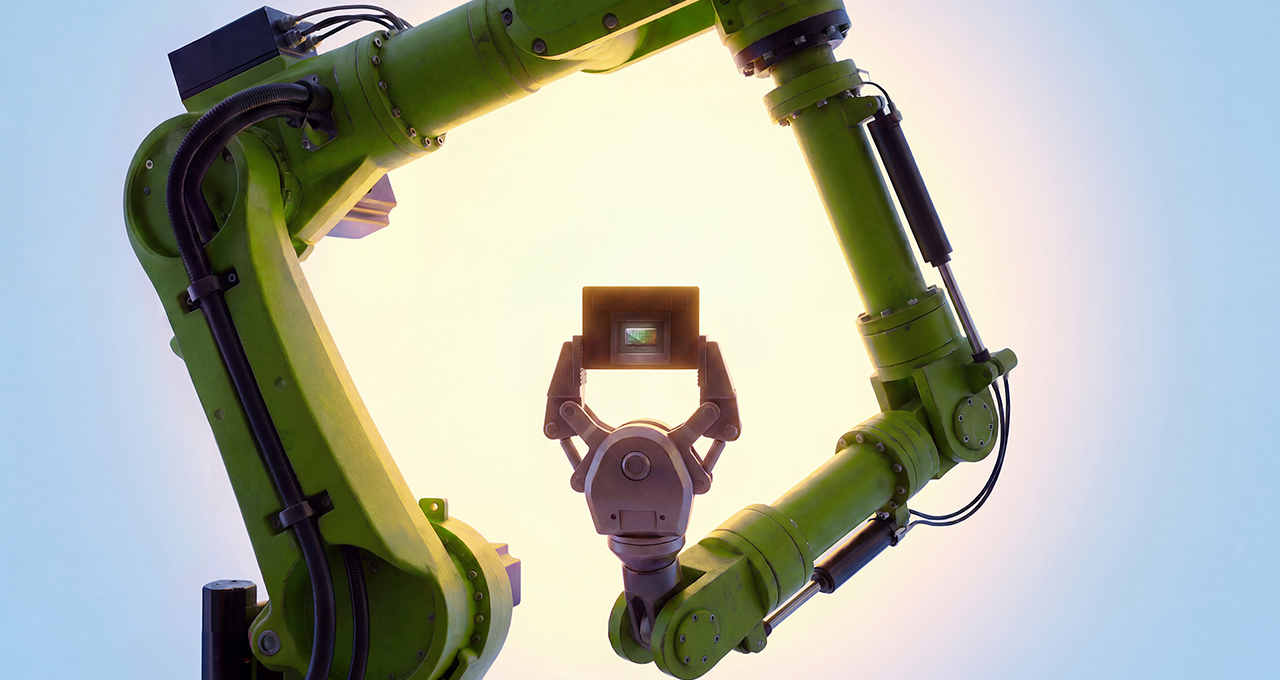
NVIDIA has introduced two new Jetson Thor modules designed to bring more AI processing power to humanoid robots, autonomous machines, healthcare systems, and other edge computing devices.
The Jetson Thor T3000 targets advanced robotics and humanoid platforms, while the smaller T2000 is aimed at visual AI agents, autonomous mobile robots, and lower power edge systems.
Both products expand NVIDIA’s Jetson AGX Thor family below the flagship T5000 and T4000 models. The company plans to launch the T3000 and T2000 during the first quarter of 2027.
Developers will be able to test the T3000 through an emulation mode this month with JetPack 7.2.1. Support for T2000 emulation will arrive in a later software release.
Jetson Thor T3000 delivers 865 TFLOPs in a 70W design
The Jetson Thor T3000 offers up to 865 TFLOPs of FP4 AI compute while using 70 watts of power.
It combines a Blackwell based GPU with up to eight Arm Neoverse CPU cores, 32GB of LPDDR5X memory, and memory bandwidth of 273GB per second. The module also includes 25Gb Ethernet connectivity for fast communication with sensors, storage, and other systems.
NVIDIA says the T3000 can deliver inference performance close to the larger T5000 in workloads involving large language models, vision language models, and world foundation models.
The smaller size and lower power requirement may make it easier to integrate into humanoid robots and industrial systems where heat, battery capacity, and physical space are limited.
| Specification | Jetson Thor T3000 | Jetson Thor T2000 |
|---|---|---|
| AI performance | 865 TFLOPs FP4 | 400 TFLOPs FP4 |
| Memory | 32GB LPDDR5X | 16GB |
| Memory bandwidth | 273GB per second | Not announced |
| CPU | Up to eight Arm Neoverse cores | Not fully detailed |
| Power | 70W | 40W |
| Main use | Humanoids and advanced robotics | Edge AI and mobile robots |
| Planned launch | First quarter of 2027 | First quarter of 2027 |
The T3000 also supports NVIDIA’s Halos robotics safety technologies. These tools are intended to help developers build systems that operate more predictably around people and in industrial environments.
Jetson Thor T2000 targets lower power edge AI systems
The Jetson Thor T2000 provides up to 400 TFLOPs of FP4 performance with 16GB of memory and a 40W power rating.
It is positioned as an entry point into the Thor platform for systems that do not require the performance or memory capacity of the T3000.
Potential uses include visual inspection, warehouse robots, smart retail equipment, traffic systems, cameras, and autonomous mobile machines.
The lower power requirement should make it easier to deploy in compact products or systems that operate from limited power supplies. Developers will still have access to NVIDIA’s AI software ecosystem, including tools for computer vision, robotics, simulation, and model deployment.
The T2000 also gives hardware manufacturers a newer option between existing Jetson Orin modules and the larger Thor systems.
NVIDIA says software optimization can reduce memory needs by half
NVIDIA has also introduced new Jetson agent skills designed to reduce memory usage and improve how workloads are distributed across the platform’s different AI engines.
The company says some customers have reduced memory consumption enough to move to cheaper Jetson modules without losing important features.
Humanoid robotics companies have reportedly reduced memory use by as much as 15GB, allowing them to move from a Jetson AGX Orin 64GB module to a 32GB version.
In smart retail, memory savings of up to 4GB allowed one company to replace a 16GB Jetson Orin NX configuration with an 8GB module.
Another example involved an intelligent traffic platform that reduced memory usage by around 30 percent. The saved capacity created room for additional AI functions without requiring more expensive hardware.
| Optimization result | Hardware benefit |
|---|---|
| Up to 15GB less memory in humanoid systems | Move from 64GB to 32GB modules |
| Up to 4GB saved in retail AI | Move from 16GB to 8GB modules |
| Around 30 percent lower use in traffic systems | Add more features on existing hardware |
| Better workload distribution | Use CPU, GPU, and AI accelerators more efficiently |
| Lower hardware requirement | Reduce cost, power, and cooling needs |
These improvements may become important as memory prices rise. A lower memory configuration can reduce both the cost of the module and the power required by the full system.
Robotics and healthcare companies are adopting Jetson Thor
NVIDIA says a wide range of companies are developing products around Jetson Thor. The list includes robotics manufacturers, industrial automation specialists, healthcare companies, and warehouse technology providers.
Applications range from humanoid robots and factory automation to surgical assistance and hospital transport systems.
Healthcare projects include robots designed to support nurses, transport equipment, and assist with surgical workflows. Other developers are working on AI models that can understand live surgical video and respond to natural language questions about what is happening in an operating room.
Industrial companies are using the platform for autonomous machines, robot arms, visual inspection, and logistics. Jetson Thor can process sensor and camera data directly on the device, reducing the need to send everything to a remote data center.
Local processing can improve response times and help systems continue operating when network connectivity is limited.
A wider hardware ecosystem will support the 2027 launch
Several hardware partners plan to offer systems built around the T3000 and T2000. These companies are expected to produce development kits, carrier boards, rugged computers, and complete edge AI systems.
The broader partner network should make the modules easier to adopt across different industries without requiring every company to design its own hardware from the beginning.
NVIDIA’s new Jetson Thor models fill an important gap between the existing Orin range and the most powerful Thor platforms. The T3000 provides high AI performance for advanced robots, while the T2000 offers a lower power option for mainstream edge applications.
Both modules are scheduled to launch in the first quarter of 2027. Their success will depend on pricing, software maturity, and how quickly robotics companies can turn the additional computing power into practical products.



Discussion (0)
Be the first to comment.