



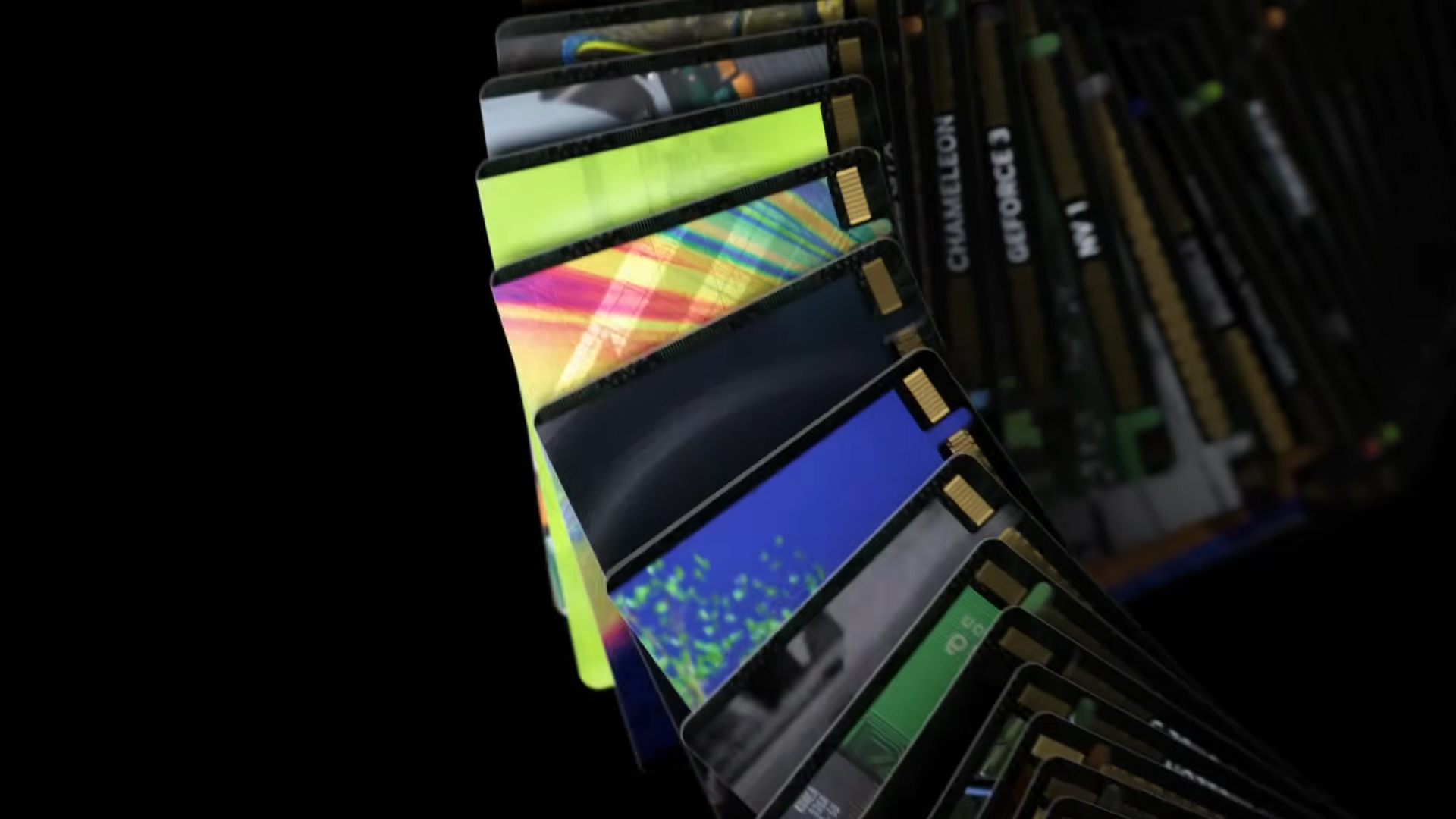
Nvidia has introduced a new kind of GeForce card, but this one is not meant for a PCIe slot. The company has unveiled GeForce Trading Cards: Series 1, a free collectible card set that looks back at several important graphics cards, tech demos, and games tied to the history of PC gaming.
The collection is part of Nvidia’s Summer of RTX campaign and includes 14 cards in total. Unlike graphics cards, these are not expensive pieces of hardware and they will not upgrade your gaming PC. They are physical collectibles designed for fans who want a small piece of Nvidia history without paying today’s high GPU prices.
That timing gives the campaign a bit of extra attention. Graphics card prices have remained a sore point for many PC gamers, especially as memory shortages and AI demand continue to affect hardware costs. A free collectible “card” is obviously not a replacement for a GPU, but it gives Nvidia a lighthearted way to celebrate its past while keeping the barrier to entry low.
The first GeForce trading card series covers classic GPUs, demos, and games
The Series 1 set includes cards based on some of Nvidia’s most recognizable hardware milestones. The lineup reaches back to the NV1 from 1995, then moves through the GeForce 256 from 1999, the GeForce 3 from 2001, the GeForce 7800 GTX from 2005, and the GeForce GTX 1080 from 2016.
For longtime PC gamers, those names mark several different eras of graphics technology. The GeForce 256 helped establish Nvidia’s GeForce identity, while cards such as the GeForce 3 and GeForce 7800 GTX became associated with major jumps in 3D gaming performance. The GTX 1080, meanwhile, remains one of the most memorable high end cards from the Pascal generation.
| Card theme | What it represents |
|---|---|
| NV1 | Nvidia’s early graphics hardware history |
| GeForce 256 | One of the most important early GeForce products |
| GeForce 3 | A major step in programmable graphics |
| GeForce 7800 GTX | A well known mid 2000s gaming GPU |
| GeForce GTX 1080 | A popular Pascal era flagship |
| Bubble, Chameleon, Medusa | Classic Nvidia tech demo history |
| Unreal Tournament 2004, Borderlands | Games linked to the GeForce gaming legacy |
The set is not limited to hardware. Nvidia is also including cards inspired by old tech demos such as Bubble, Chameleon, and Medusa. These demos were once an important part of how GPU makers showed off new rendering features, lighting effects, shaders, and animation techniques.
Games also appear in the collection. Unreal Tournament 2004 and Borderlands are among the titles represented, giving the series a wider PC gaming angle rather than making it only about silicon. That makes sense for a brand campaign built around nostalgia, since many players remember the games as much as the hardware that powered them.
Nvidia is giving the cards away through social media channels and gaming events, including Gamescom 2026. They are free collectibles, so availability will likely depend on where and when Nvidia distributes them. The company has not positioned them as a normal retail product.
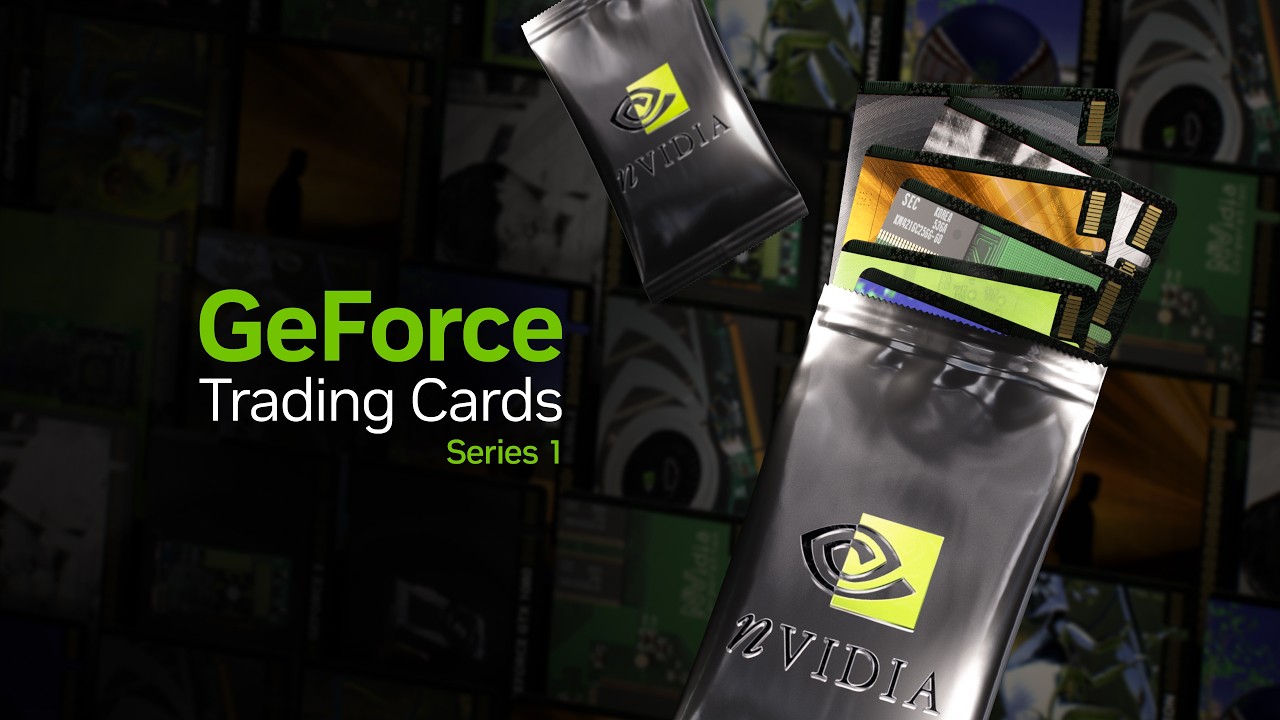
The cards are also not described as playable trading cards in the traditional sense. There is no mention of a game system, rarity mechanics, or competitive use. They are better understood as promotional memorabilia for Nvidia and GeForce fans.
That may not stop them from becoming sought after later. Free promotional items tied to major hardware brands can sometimes gain value on second hand markets, especially when they are connected to well known products or limited event distribution. For now, though, Nvidia’s pitch is simple: these are GeForce cards that almost anyone can afford because they cost nothing.
GeForce Trading Cards: Series 1 is a small campaign, but it is a clever one. It gives Nvidia a way to revisit its PC gaming legacy, highlight iconic GPUs, and engage fans during the Summer of RTX without asking them to buy another expensive graphics card.



Discussion (0)
Be the first to comment.