


NVIDIA CEO Jensen Huang believes modern graphics processors can remain economically useful for eight years or longer, significantly exceeding the four year replacement cycle traditionally associated with data center hardware.
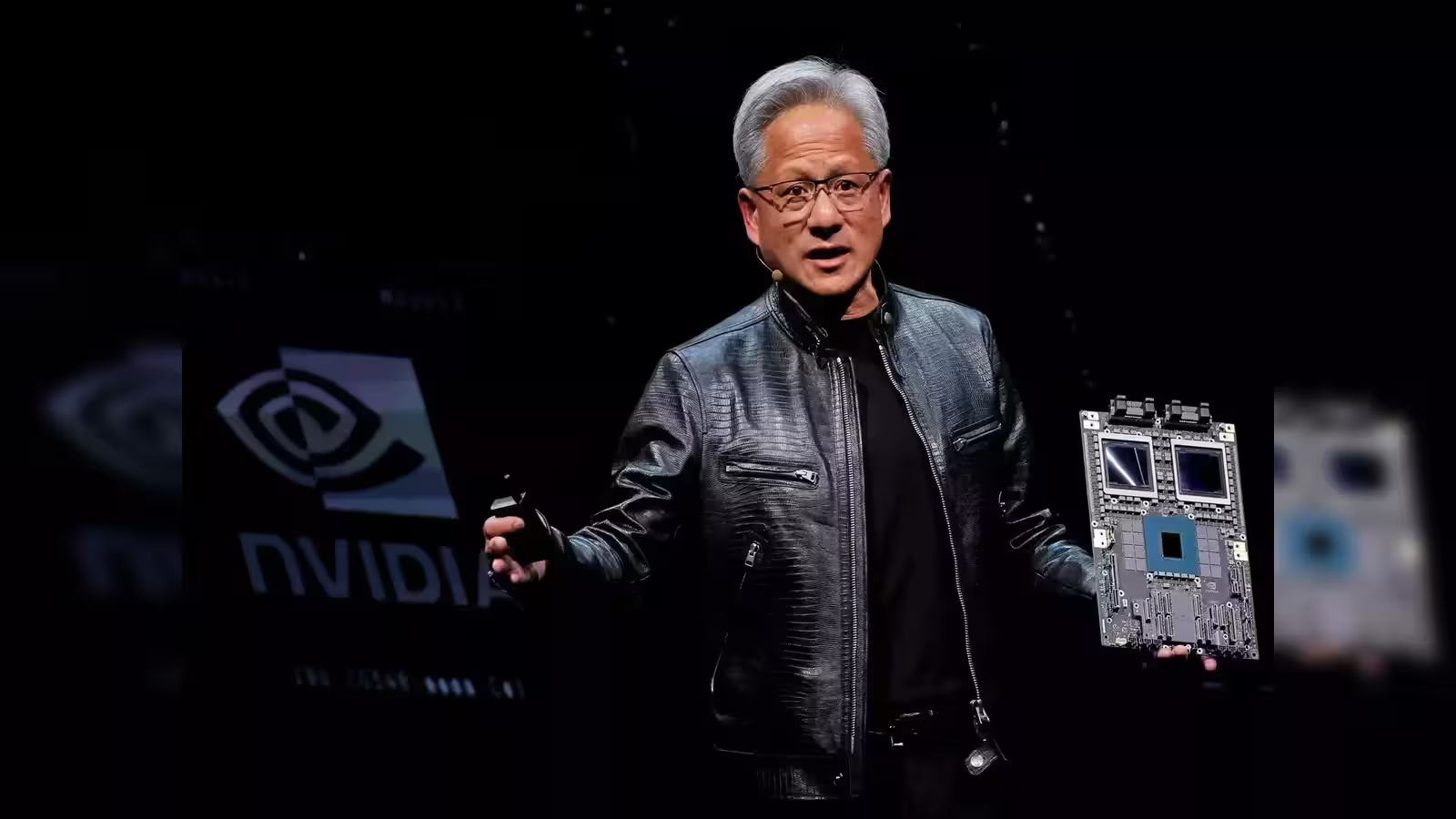
Speaking at GTC Berlin on October 21, 2026, Huang explained that improvements in software, growing demand for artificial intelligence computing, and the versatility of NVIDIA's hardware are extending the productive lifespan of GPUs.
His comments follow similar observations from Elon Musk, who argued that even older AI accelerators are becoming more valuable as improvements in artificial intelligence models allow them to generate more useful results from the same computing resources.
The discussion comes amid unusually strong demand for AI infrastructure, with some graphics processors reportedly retaining values considerably higher than conventional depreciation models would suggest.
Jensen Huang Says NVIDIA GPUs Have an Eight Year Lifespan
During GTC Berlin, Huang discussed how NVIDIA's software ecosystem helps extend the usefulness of its computing hardware.
Traditionally, businesses operating large data centers have often planned hardware replacement cycles of approximately three to five years.
This approach reflects the expectation that newer processors will gradually make older hardware less efficient or economically attractive.
However, Huang believes that assumption is changing for AI accelerators.
He explained that NVIDIA continues improving its software throughout the operational life of its computing systems.
These improvements allow existing hardware to remain productive even after newer generations become available.
Huang suggested that a GPU previously expected to remain useful for four years could now deliver economic value for eight years or more.
Another important factor is the wide range of organizations seeking computing resources.
When a GPU becomes less suitable for the most demanding AI workloads, it may still be useful for smaller models, inference services, research, and other applications.
This creates opportunities for older hardware to continue generating revenue instead of being immediately replaced.
However, an extended useful life does not guarantee that every GPU will retain its original market value.
Elon Musk Says Older GPUs Are Producing More Intelligence Per Watt
Elon Musk discussed similar developments during SpaceX's third quarter 2026 earnings call.
According to Musk, improvements in AI software are changing how companies measure the value of their computing infrastructure.
Rather than focusing exclusively on raw processing performance, companies can evaluate how much useful intelligence a system produces for each watt of electricity consumed.
As AI models and inference techniques improve, the same GPU can potentially deliver more useful results without requiring additional hardware.
Musk argued that this increases the economic value of existing computing resources.
He also claimed that NVIDIA H100 accelerators are currently being rented at higher prices than when they were new.
That observation suggests demand for AI computing capacity may be strong enough to offset some of the usual effects of hardware aging.
However, rental prices are influenced by several factors, including availability, contract duration, location, and changing market conditions.
Higher rental rates do not necessarily mean older hardware has become technically faster or more energy efficient on its own.
Instead, improvements in software can increase the usefulness of the work performed on that hardware.
NVIDIA A100, H100, and B200 GPUs Are Retaining Higher Values
Recent market observations suggest that certain AI accelerators are retaining more value than traditional depreciation schedules would predict.
According to estimates from semiconductor market analysts, older NVIDIA A100 and H100 GPUs are maintaining residual values considerably above the levels implied by standard three or five year depreciation models.
The NVIDIA B200 is reportedly showing an even more unusual trend.
Its estimated residual value has reached approximately 158% of its original cost, equivalent to a 58% premium.
The figures suggest that demand for high performance AI computing remains substantial.
Here is how the reported market observations compare.
| NVIDIA GPU | Reported market trend |
|---|---|
| A100 | Residual value above conventional depreciation estimates |
| H100 | Strong rental demand, with higher rates reported for older hardware |
| B200 | Estimated residual value reaching 158% of original cost |
These figures represent reported market estimates rather than guaranteed resale prices.
Actual valuations depend on factors such as hardware condition, system configuration, market availability, and demand for specific AI workloads.
The results are also unusual when compared with conventional consumer graphics cards, which generally lose resale value as newer products become available.
AI Inference Is Changing the Economics of GPU Ownership
One major reason for the increasing value of computing hardware is the rapid expansion of AI inference.
Inference refers to the process of using a trained AI model to generate responses, predictions, or other outputs.
Unlike model training, which often requires substantial computing resources over a concentrated period, inference can generate ongoing demand as AI applications serve customers.
As models become more capable and software becomes more efficient, businesses may extract additional value from existing GPU infrastructure.
This changes the relationship between computing costs and potential revenue.
Gavin Baker, an investor known for his analysis of semiconductor companies, discussed this development during an event associated with GTC Berlin.
He observed that the rental cost of GPU computing has risen sharply even as the price of individual AI tokens has declined.
The apparent difference reflects the possibility of producing more valuable outputs during each hour of GPU operation.
If a processor can generate substantially more useful tokens per hour, customers may be willing to pay more for access to that computing capacity.
However, profitability depends on operating costs, utilization, customer demand, and competition.
Jensen Huang Estimates $40 Billion Annual Revenue From 1GW of AI Compute
Huang also presented figures illustrating the potential economics of large AI data centers.
According to his estimates, deploying one gigawatt of AI computing capacity requires approximately $50 billion in investment.
He suggested that the same infrastructure could generate roughly $40 billion in annual revenue.
This implies a simple revenue based payback period of approximately 1.25 years.
Musk presented a similar assessment, estimating that AI computing capacity currently costs approximately $30 billion to $50 billion per gigawatt.
He also suggested that strong rental demand could produce payback periods of less than one year under favorable conditions.
The reported estimates can be summarized as follows.
| Metric | Reported estimate |
|---|---|
| AI computing investment per gigawatt | $30 billion to $50 billion |
| Huang's estimated investment per gigawatt | $50 billion |
| Huang's estimated annual revenue | $40 billion |
| Simple revenue based payback | Approximately 1.25 years |
These estimates should not be interpreted as guaranteed financial returns.
Revenue does not equal profit, and the simplified calculation does not account for electricity, cooling, maintenance, financing, software, or other operating expenses.
It also assumes that computing resources can maintain sufficient utilization and attract paying customers.
Nevertheless, the estimates help explain why companies may continue investing heavily in AI infrastructure despite high upfront costs.
Older AI GPUs Could Remain Useful in the Secondhand Market
Another factor extending GPU lifespans is the development of secondary markets for AI hardware.
Large technology companies typically prioritize the newest accelerators for demanding workloads such as training advanced models.
However, older GPUs may still be suitable for inference, smaller models, and less intensive computing tasks.
When a major data center replaces its equipment, the retired processors can potentially be sold or transferred to organizations with different performance requirements.
These buyers may include smaller cloud providers, businesses, educational institutions, and research organizations.
This allows computing hardware to remain productive across multiple ownership cycles.
Such a market also supports the argument that the useful economic life of AI accelerators can exceed the replacement schedules used by their original owners.
However, secondary market demand is not guaranteed.
Future improvements in GPU efficiency, changes in AI model requirements, and variations in energy prices could all influence the resale value of older processors.
NVIDIA Software Improvements Could Extend GPU Replacement Cycles
Huang's remarks suggest that software development is becoming increasingly important to the long term value of AI computing systems.
Newer drivers, inference frameworks, model optimizations, and programming tools can improve how existing accelerators perform useful work.
These improvements may allow companies to delay hardware replacements or deploy older GPUs for different applications.
The economic benefit could be particularly important for organizations facing high costs for new AI hardware.
However, NVIDIA's eight year estimate describes potential productive usefulness rather than a universal replacement schedule.
Not every GPU will remain economically competitive for the same length of time, and newer hardware may still offer major advantages in performance and energy efficiency.
The broader market observations indicate that AI demand and software improvements are changing how businesses evaluate computing investments.
For data center operators, the decision to replace GPUs may increasingly depend on workload requirements and revenue potential rather than hardware age alone.
The continuing demand for A100, H100, and B200 accelerators suggests that existing NVIDIA hardware can retain substantial economic value, even as newer generations enter the market.
Discussion (0)
Be the first to comment.