



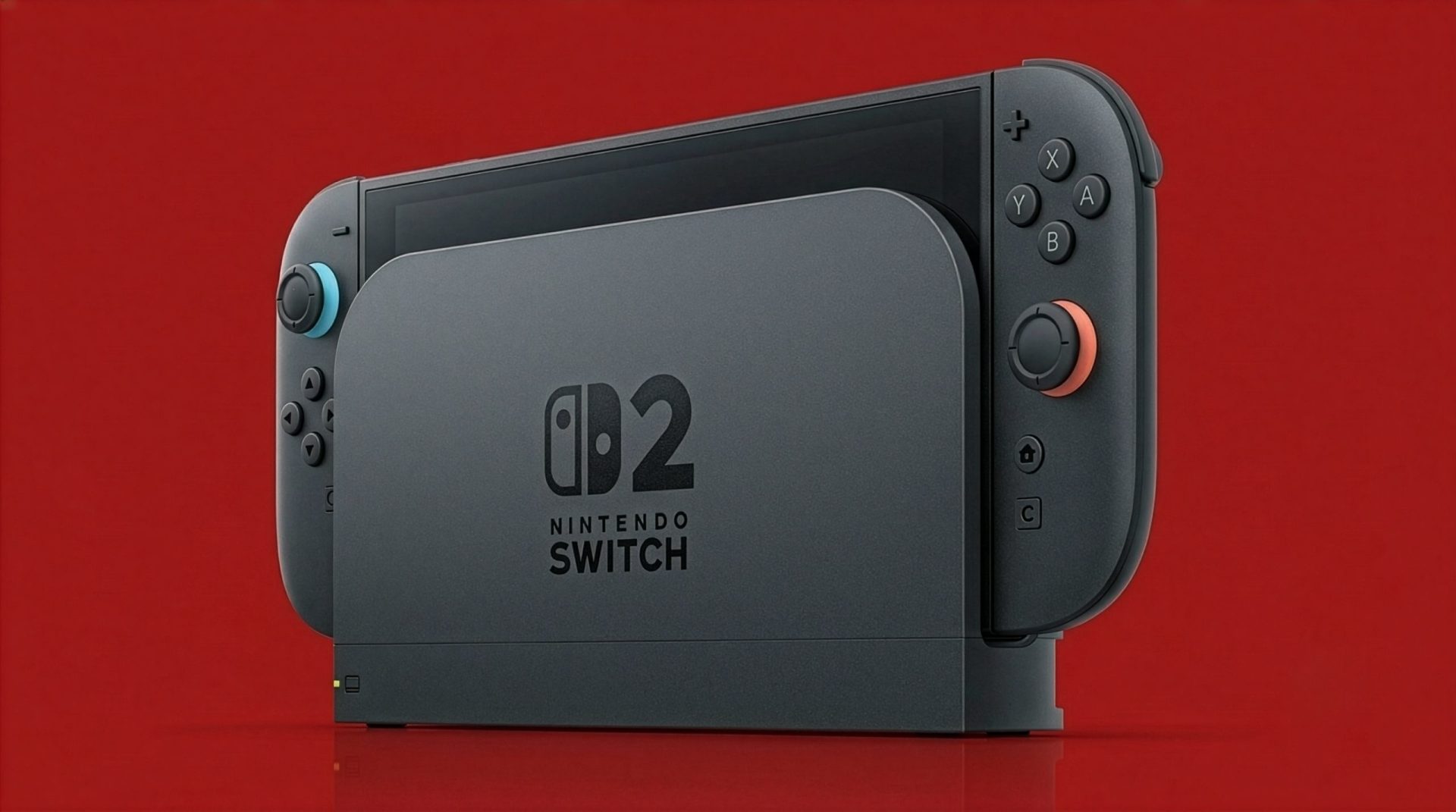
Nintendo Switch 2 security has faced a notable challenge after developer Gezine disclosed a new userland exploit that reportedly works entirely offline and across every current firmware version.
The exploit also supports the original Nintendo Switch, but its importance is greater on Switch 2 because Nintendo has continued strengthening the newer console through frequent firmware updates and additional hardware security.
Unlike earlier entry points, Gezine’s method does not depend on WebKit or modified save files. That removes two major limitations that have slowed homebrew development on Nintendo’s latest handheld.
The exploit is not a complete jailbreak and does not provide full control over the system. It does, however, create a more practical starting point for developers trying to run basic homebrew applications without connecting the console to Nintendo’s online services.
The new exploit avoids save transfers and internet access
Previous userland exploits often relied on modified save files. Moving those files onto a console could require the Nintendo Switch Online save transfer system.
That created a problem for homebrew researchers because using Nintendo’s online services usually requires the latest firmware. A system update may patch the same vulnerabilities developers are attempting to study.
Gezine’s new approach works without a save transfer and does not require an internet connection.
| Exploit characteristic | Reported capability |
|---|---|
| Supported systems | Nintendo Switch and Switch 2 |
| Internet connection | Not required |
| Save file exploit | Not used |
| WebKit exploit | Not used |
| Firmware compatibility | Reportedly all versions |
| Access level | Userland |
| Full jailbreak | No |
| Main potential use | Early homebrew development |
This allows a console to remain on an older firmware while the exploit is launched locally. That could make it easier for researchers to preserve access to vulnerabilities before Nintendo patches them.
The absence of an online requirement also reduces dependence on external services that may change or become unavailable.
WebKit security made browser based methods less practical
WebKit vulnerabilities have historically been used as entry points on consoles, phones, and other devices with browser based components.

Switch 2 reportedly makes this route more difficult through ARM Pointer Authentication Code, commonly known as PAC. The feature helps protect control flow by adding authentication information to memory pointers.
An attacker who changes a protected pointer must also provide the correct authentication value. This can make some forms of memory corruption harder to turn into reliable code execution.
Gezine’s exploit reportedly bypasses the need to attack WebKit at all. That makes the entry point more useful because it does not depend on defeating the browser protections built into the newer hardware.
The technical details have not been fully explained in the supplied information, so it remains unclear which application or system component provides the offline entry point.
Userland access is only the first stage
A userland exploit allows code to run inside a limited application level environment.
It does not automatically provide access to the operating system kernel, security processor, game encryption keys, or protected hardware functions. Those deeper layers usually require separate vulnerabilities.
| Access level | Typical capability |
|---|---|
| Userland exploit | Runs code with limited application permissions |
| Kernel exploit | Provides deeper operating system control |
| Privilege escalation | Moves code into a more powerful security level |
| Boot exploit | Can affect the system early in startup |
| Full jailbreak | Combines several stages for broad system access |
Without a kernel or privilege escalation exploit, homebrew software may remain heavily restricted.
Developers may be able to run small applications, test code, or access limited storage locations, but advanced system modification would still be unavailable.
That is why the discovery should not be described as a complete Switch 2 jailbreak.
Basic homebrew could become possible first
The most realistic early uses include simple utilities, demonstrations, save management tools, and lightweight homebrew applications.
Local save backups could become possible if the exploit provides enough access to the relevant files. Developers may also explore emulators for older systems, media tools, diagnostic applications, and custom interfaces.
More demanding software would require better access to graphics hardware, system memory, controller services, audio, and storage.
Retro emulation is often one of the first popular uses of homebrew, but performance and compatibility depend on how much hardware access the exploit allows.
The existence of a userland entry point does not guarantee that polished homebrew applications will appear immediately. Developers still need software development tools, documentation, libraries, and a reliable method for launching code.
Nintendo is likely to investigate the vulnerability
Nintendo has a long history of responding quickly to console security research.
Firmware updates can patch software vulnerabilities, block known entry points, or introduce additional verification checks. The company may also use online services to restrict consoles that run unauthorised software.
The claim that the exploit works across all firmware versions suggests that it may rely on code present throughout the Switch and Switch 2 software family. Even so, Nintendo could still modify the affected component in a future update.
An offline exploit is harder to neutralise on systems that remain disconnected and avoid updating. Once a console receives a fixed firmware, however, the same method may stop working.
Users interested only in normal gaming should continue installing official updates because they often include stability improvements, compatibility changes, and security fixes.
Homebrew development carries practical risks
Running unofficial software can create several problems.
A failed installation or unstable application may corrupt files or make a console unusable. Connecting a modified system to Nintendo’s services could also lead to account or hardware restrictions.
Homebrew itself has legitimate uses, including accessibility tools, preservation, research, and personal software development. The same vulnerabilities can also be used for piracy or unauthorised modification, which may increase legal and platform risks.
People experimenting with console security should understand the difference between running original homebrew software and distributing copyrighted games.
Nintendo is likely to treat any exploit as a security issue regardless of how individual developers intend to use it.
The discovery is still an important milestone for Switch 2 research
Switch 2 had not yet developed the mature homebrew ecosystem seen on the original Switch.
A universal offline userland entry point could change that by giving researchers a consistent foundation across different firmware versions. Developers would no longer need to rely on online save transfers or WebKit based attacks for the first stage of execution.
The next major challenge is finding a route beyond userland restrictions. Without deeper system access, the exploit will remain useful but limited.
For now, Gezine’s work represents one of the clearest signs that Switch 2 homebrew development is moving forward. It does not unlock the console completely, but it removes several barriers that previously made reliable offline code execution difficult.



Discussion (0)
Be the first to comment.