



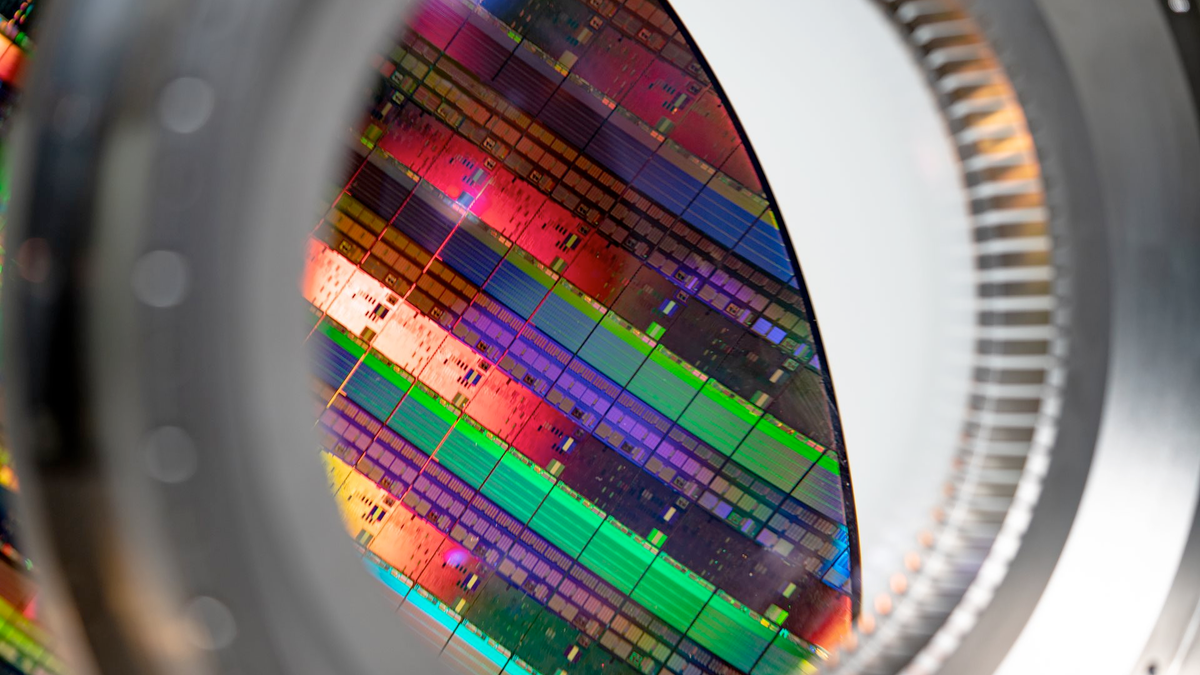
Nikon is trying to regain ground in the chipmaking equipment market by offering lower priced ArF lithography machines to major semiconductor manufacturers. The company’s new president and chief executive, Yasuhiro Ohmura, said Nikon is already in talks with large chipmakers in the United States and Asia, with some discussions reportedly close to purchase orders.
The move is aimed at a part of the market where ASML is powerful but not completely alone. ASML dominates the most advanced lithography systems, especially extreme ultraviolet machines used for leading edge chips. Nikon left the EUV race years ago, but it still competes in argon fluoride lithography, a mature deep ultraviolet process that remains important even for advanced chips.
That detail matters because modern chips do not rely only on EUV. Many patterning steps, including some used in advanced nodes, still depend on DUV tools. Nikon’s strategy is to offer chipmakers a cheaper alternative for those steps, rather than trying to compete directly with ASML’s EUV monopoly.
Nikon needs the turnaround. The company shipped 11 ArF systems in the fiscal year ending March 2024, but reportedly shipped none during the first three quarters of its 2025 fiscal year. ASML, meanwhile, controls more than 80 percent of the lithography market and ended 2025 with a large order backlog.
Ohmura believes Nikon can compete on cost because it makes many parts in house. That could allow the company to price its ArF tools below ASML’s machines. ASML’s advanced ArF immersion systems are said to average around $82.5 million each, leaving room for Nikon to attract buyers looking to lower equipment costs.
| Company | Current position |
|---|---|
| Nikon | Trying to win back ArF lithography customers with lower prices |
| ASML | Dominates the lithography market and fully controls advanced EUV tools |
| Chipmakers | May benefit from having two suppliers for mature DUV tools |
| Nikon’s new platform | Expected in fiscal 2028 with a new lens and wafer stage |
| Main challenge | Convincing customers to return after years of ASML dominance |
Nikon also plans to launch a new ArF immersion platform in its 2028 fiscal year. The system is expected to include a new lens and wafer stage and be compatible with ASML’s installed tools. Compatibility could be important because chipmakers may not want to redesign production lines just to add a second supplier.
The timing could help Nikon. Demand for chipmaking equipment is rising as AI related production puts pressure on tool supplies. If chipmakers face long wait times or high costs from one supplier, a cheaper second source may become more attractive.
Still, price alone may not be enough. ASML pulled ahead through years of research, close relationships with major chipmakers, and control of the most advanced lithography systems. Nikon’s share has continued to shrink, and one of its former key customers, Intel, has cut spending while dealing with its own manufacturing problems.
Nikon is also under pressure financially. The company posted a net loss of 86 billion yen, or about $540 million, for the year ended March, its worst result ever. Weak equipment demand and problems in its metal 3D printing business added to the pressure. Ohmura now wants to narrow Nikon’s focus to cameras and chipmaking tools.
The company’s plan is not a direct attack on ASML’s EUV lead. It is a more practical attempt to compete where Nikon still has a technical path and where customers may want more supplier choice. If Nikon can deliver reliable ArF tools at lower prices, it could make the lithography market less dependent on one company.
For chipmakers, that could mean lower costs and more flexibility. For Nikon, it may be one of the clearest chances to rebuild a business that has lost ground in one of the most important parts of semiconductor manufacturing.



Discussion (0)
Be the first to comment.