



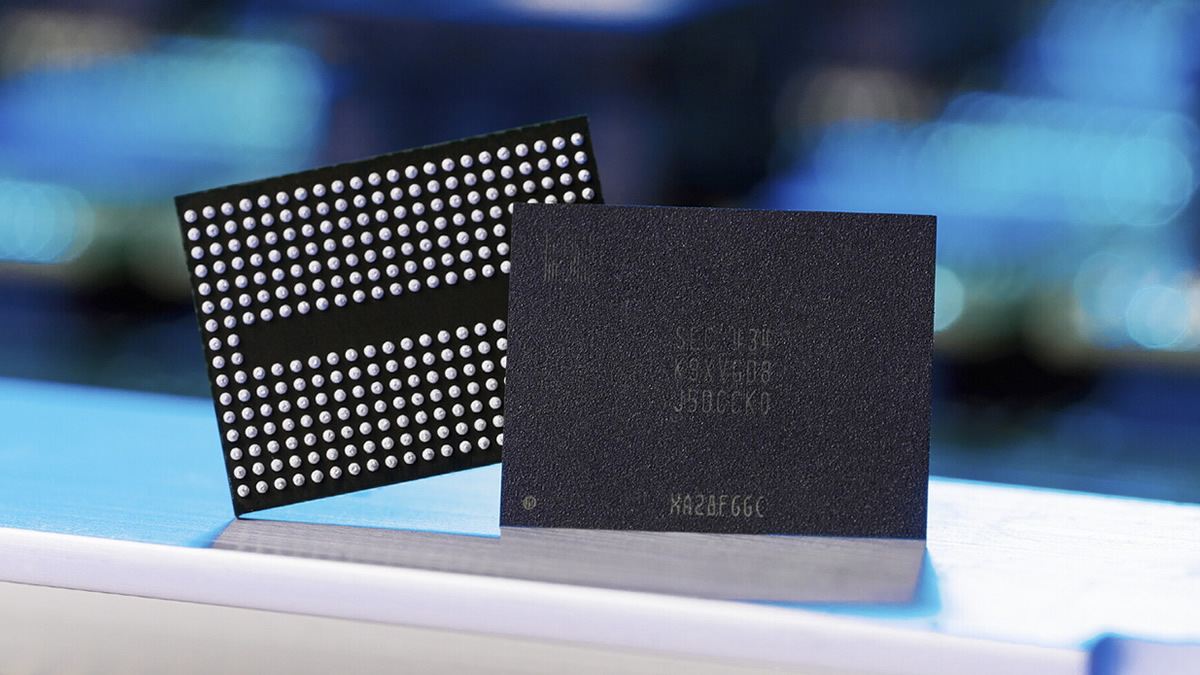
The global NAND flash shortage is expected to continue through 2026, but improving production capacity could bring the market closer to balance during the second half of 2027.
Memory suppliers in South Korea, the United States, Japan, and China are reportedly preparing to upgrade existing production lines and add more equipment. These changes should increase NAND output after a prolonged period of tight supply and unusually high prices.
Demand from AI servers remains one of the main pressures on the market. Large data centres require substantial storage capacity for model training, inference, datasets, checkpoints, and other workloads. This has redirected more NAND supply toward enterprise customers while reducing availability for consumer electronics.
The situation may begin to change as manufacturers raise production and high prices weaken demand for some consumer products. If supply growth continues as expected, NAND production could begin exceeding demand before the end of 2027.
NAND supply is expected to remain tight throughout 2026
The current shortage is unlikely to end quickly. Suppliers still face limits on factory capacity, manufacturing equipment, and the speed at which production lines can be upgraded.
AI infrastructure spending is also expected to remain strong. Server operators are purchasing enterprise solid state drives in large quantities, giving memory manufacturers a reason to prioritise higher margin data centre products.
| NAND market factor | Expected effect |
|---|---|
| AI server expansion | Keeps enterprise NAND demand high |
| Consumer price increases | Reduces demand for some electronics |
| Production line upgrades | Gradually raises NAND output |
| New manufacturing equipment | Supports faster capacity growth |
| Chinese supplier expansion | Adds more supply to the market |
| Expected market improvement | Second half of 2027 |
Consumer NAND prices have reportedly risen far above normal levels in some categories. Higher costs can affect SSDs, smartphones, laptops, tablets, gaming devices, and other products that depend on flash storage.
Manufacturers may respond by increasing retail prices, reducing storage capacity in entry level products, or delaying purchases until component costs improve.
Major suppliers are preparing factory upgrades
NAND manufacturers are expected to improve output by upgrading current facilities rather than relying only on completely new factories.
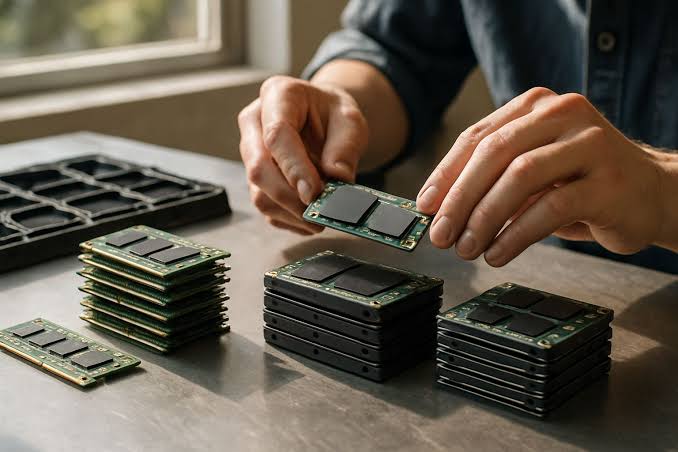
Suppliers in South Korea, the United States, and Japan are preparing changes to existing production lines. These upgrades may include newer manufacturing equipment, denser NAND designs, and improved yields.
Chinese manufacturers are also expected to increase output more aggressively as additional equipment becomes operational. Their expansion could add meaningful capacity, particularly in domestic markets.
However, factory upgrades do not produce immediate results. New equipment must be installed, tested, and qualified before it can contribute to commercial shipments. Manufacturers also need time to improve yields and maintain consistent product quality.
This gradual process explains why the shortage may continue for most of 2027 before supply conditions improve.
Consumer electronics still influence total NAND demand
AI servers have become a major part of the NAND market, but consumer devices remain important.
Smartphones and notebooks together still account for a substantial share of total NAND bit consumption. These products are sold in much larger volumes than enterprise servers, even though each individual device contains less storage.
The supplied figures indicate that smartphones and notebooks represent close to 40 percent of overall NAND demand. Servers are also described as accounting for more than 40 percent in another measurement, suggesting that market share can vary depending on whether analysts measure devices, revenue, or total bits consumed.
This means weaker sales of phones and laptops can reduce demand enough to influence market pricing. If high storage costs discourage upgrades or cause manufacturers to lower device production, the gap between supply and demand could narrow faster.
Higher prices may help restore market balance
Rising NAND prices are painful for buyers, but they can also contribute to eventual market recovery.
Higher prices encourage suppliers to invest in capacity and improve production lines. At the same time, expensive components reduce demand as consumers delay purchases or choose products with less storage.
This combination can gradually move the market toward balance. Manufacturers produce more NAND while customers buy fewer high capacity devices.
The process will not necessarily lead to immediate price cuts. Suppliers may first rebuild inventories and secure long term contracts before reducing prices for consumer products.
Retail prices can also remain elevated after wholesale costs begin falling because distributors and stores may still hold older inventory purchased at higher prices.
SSD prices could improve after supply catches up
If production begins overtaking demand during the second half of 2027, consumer SSD pricing may eventually become more competitive.
Desktop and laptop buyers could see better value on 1TB, 2TB, and higher capacity drives. Prebuilt PC and notebook manufacturers may also begin offering more storage without increasing system prices as sharply.
The recovery could benefit handheld gaming PCs, consoles, smartphones, and tablets as well. All of these products rely on NAND, and storage costs can significantly affect their final retail prices.
Enterprise storage may take longer to normalise because AI demand is expected to remain strong. Data centre customers may continue buying large quantities even after consumer supply improves.
DRAM and NAND may follow different recovery paths
The expected NAND improvement does not mean the broader memory market will fully recover in 2027.
DRAM supply is still expected to remain under severe pressure because manufacturers are directing capacity toward high bandwidth memory for AI accelerators. Conventional DDR memory could therefore remain expensive even while NAND storage prices begin easing.
This difference matters for PC buyers. A new SSD may become more affordable while DDR5 memory remains costly.
The NAND market appears to have a clearer route toward recovery because suppliers are expanding output across several regions. If factory upgrades proceed as planned and consumer demand remains restrained, the shortage could begin ending by late 2027.
Prices may not return to previous lows immediately, but improving supply would still offer welcome relief after several years of tight availability and rising storage costs.



Discussion (0)
Be the first to comment.