



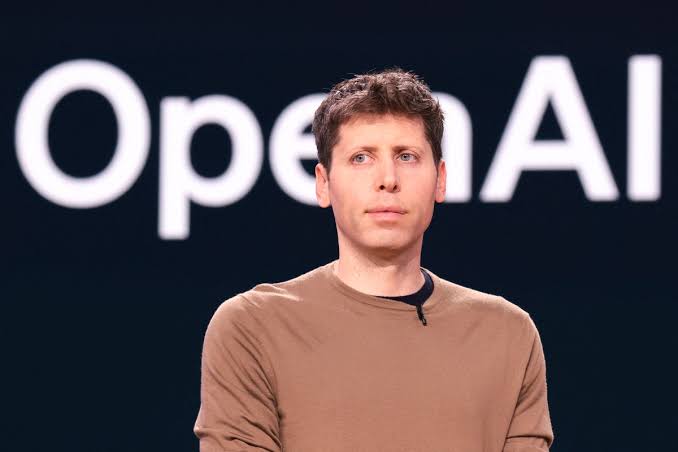
Moonshot AI’s chief executive has criticised OpenAI’s role in the development of modern artificial intelligence, arguing that the company combined existing ideas rather than creating something fundamentally new.
The comments arrived as OpenAI CEO Sam Altman expressed support for a letter calling on the US government to protect the open weight AI ecosystem. OpenAI had not initially appeared among the signatories, which drew attention because the company was founded with a public mission centred on broad access to advanced AI.
Google CEO Sundar Pichai also later supported the letter. Other companies associated with the initiative reportedly include Microsoft, NVIDIA, Meta, Dell, Mistral AI, Perplexity and Palantir.
The debate comes at a time when open weight models are becoming more capable and increasingly competitive with proprietary systems. Moonshot recently introduced Kimi K3, a model positioned as an open weight alternative to products from companies such as OpenAI and Anthropic.
| Company or executive | Reported position |
|---|---|
| Moonshot AI | Supports open weight development through Kimi K3 |
| Moonshot CEO | Claims OpenAI combined existing technologies |
| OpenAI | Later expressed support for the open weight letter |
| Sundar Pichai also backed the initiative | |
| Anthropic | Was not listed among the initial supporters |
| Microsoft, NVIDIA and Meta | Reportedly supported the letter |
Moonshot says OpenAI built on technologies that already existed
The Moonshot CEO reportedly argued that OpenAI did not invent an entirely new technical foundation.
Instead, he described its progress as the result of combining three technologies that were already available. The article does not provide a complete explanation of which three technologies he was referring to, so the exact basis of the claim remains unclear.
The broader point appears to be that OpenAI’s success came from integrating existing research, infrastructure and scaling methods effectively rather than creating every major component from the beginning.
That argument does not necessarily mean OpenAI contributed nothing to the industry. Combining known technologies at a new scale can still produce important advances, especially when supported by strong engineering, training infrastructure and product design.
However, the statement challenges the idea that one company should receive most of the credit for the rapid growth of generative AI.
It also reflects growing competition between proprietary model developers and companies releasing weights that other organisations can inspect, modify or deploy independently.
OpenAI supported the letter after initially remaining absent
OpenAI’s later support attracted attention because the company was not listed among the original signatories.
The letter reportedly asked the US administration to protect the open weight AI ecosystem and ensure that it can continue developing alongside closed commercial models.
Supporters argue that open weight systems can reduce costs, improve competition and allow businesses or researchers to run models without sending sensitive data to an external provider.
They also believe that wider access prevents a small number of companies from gaining excessive control over an important technology.
OpenAI’s eventual support may indicate that the company wants to present itself as compatible with both proprietary and open weight development.
The timing has nevertheless raised questions because the company has built much of its current business around closed models and paid access through products and application programming interfaces.
Previous lobbying claims complicate OpenAI’s new position
The report refers to earlier claims that OpenAI and Anthropic had lobbied US regulators to place restrictions on open source AI systems.
Those allegations make the later public support for open weight models appear inconsistent.
There is an important distinction between open source software and open weight AI. A company may release model weights while withholding training data, source code, safety systems or detailed information about how the model was created.
This means support for open weight models does not automatically represent support for complete transparency.
OpenAI’s exact position will depend on which types of models it believes should remain available, what restrictions it considers necessary and whether it releases more of its own systems under open terms.
The supplied report does not include a detailed policy statement from the company explaining those boundaries.
Kimi K3 increases pressure on proprietary AI companies
Moonshot’s Kimi K3 model is presented as a serious competitor to closed systems from OpenAI and Anthropic.
Highly capable open weight models can weaken the advantage held by companies that require customers to access their technology through controlled cloud services.
Businesses may prefer models they can deploy on their own infrastructure, particularly when handling confidential information or trying to control long term operating costs.
Developers can also modify open weights for specialised tasks, local languages or industry specific use cases.
However, open weight systems create separate concerns around misuse, security and the ability of developers to monitor how the models are deployed.
The disagreement is therefore not simply about whether access should be open or closed. It also involves questions about regulation, national security, competition and responsibility for harmful use.
Chinese open models have become part of the US policy debate
Kimi K3’s release also adds a geopolitical dimension.
The report says the model has faced allegations involving model distillation, a process in which one AI system is trained using outputs from another. The article does not provide evidence confirming that Moonshot used this method improperly.
Chinese open weight models have become increasingly important because they may offer capable alternatives at lower cost.
Some US policymakers and companies are concerned that these models could reduce the commercial advantage of American AI providers or create security risks.
Others argue that restricting them could slow research, reduce competition and encourage other countries to build separate AI ecosystems.
Calls to ban or limit open models from China may therefore conflict with efforts to defend open weight development more broadly.
The dispute reflects a larger fight over control of AI
The disagreement between Moonshot and OpenAI is part of a wider struggle over how advanced AI should be distributed.
Closed model providers can control updates, safety measures, pricing and access. That model can provide a consistent service, but it also creates dependence on a small number of companies.
Open weight releases give developers more control and can make experimentation cheaper. They can also be harder to regulate after the files are widely distributed.
Neither model offers a complete solution.
The main issue is whether the AI industry will remain concentrated around a few proprietary platforms or develop into a broader ecosystem where organisations can run and modify capable models themselves.
OpenAI’s support for the letter suggests that it does not want to be seen as opposing open weight AI entirely. Moonshot’s criticism shows that newer competitors remain willing to challenge both the company’s technical reputation and its influence over policy.
The final effect will depend less on public statements and more on future model releases, licensing terms and regulatory proposals.



Discussion (0)
Be the first to comment.