



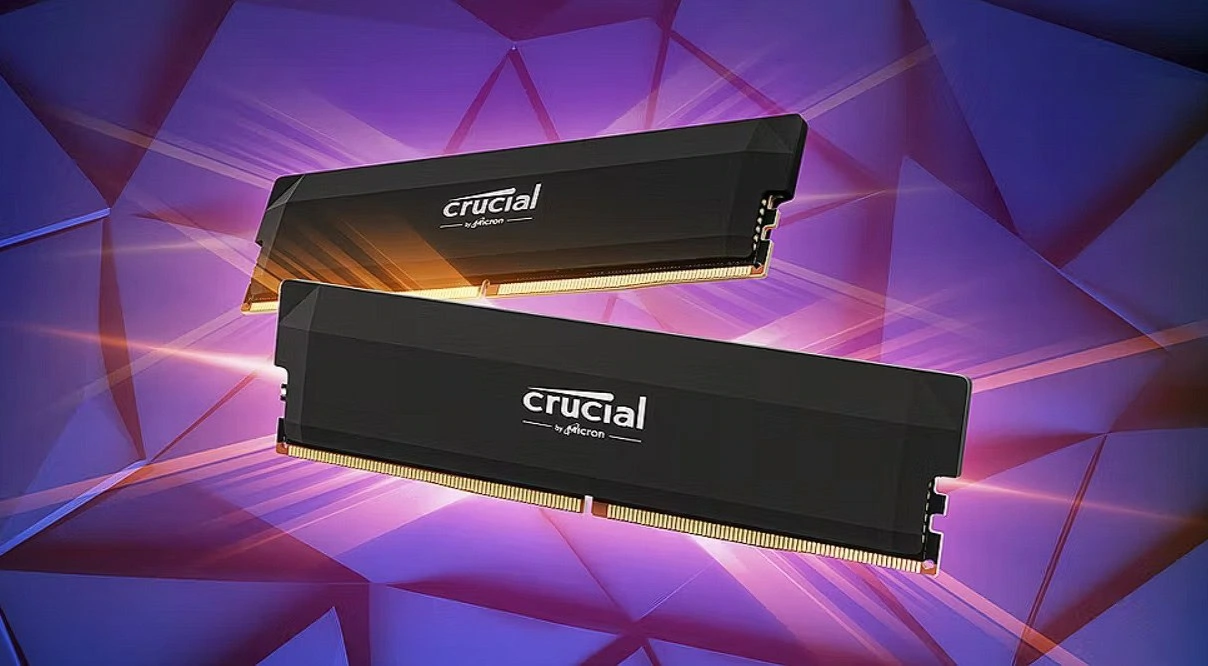
Micron expects the memory shortage affecting HBM, DRAM, and NAND to last beyond 2026, as AI demand continues to grow faster than supply can expand. The warning came through comments shared by JPMorgan after Micron management spoke at the 54th J.P. Morgan Annual Global Technology, Media and Communications Conference in Boston.
This is not repeated news. It connects to the earlier RAM price pressure stories, but this one adds a broader industry view from Micron on why the shortage may continue for more than one year.
AI workloads are using more memory, and Micron says supply cannot grow quickly enough
The pressure is coming from several parts of the memory market at the same time. HBM is in heavy demand because AI accelerators need high bandwidth memory to feed large models. DRAM demand is rising because AI systems need more capacity and faster performance. NAND and SSD demand is also growing as inference workloads and larger context windows require more storage.
| Memory area | Why demand is rising |
|---|---|
| HBM | Used in AI GPUs and accelerators |
| DRAM | Needed for faster and larger AI systems |
| NAND | Needed for AI storage and SSD workloads |
| SSDs | Gaining demand from inference and larger context windows |
JPMorgan said Micron believes supply tightness will continue because expanding memory production is not simple. Newer memory generations are becoming harder to scale, performance improvements are slowing, HBM die sizes are getting larger, and EUV lithography is becoming more important in advanced DRAM production.
Micron also said its 1 gamma node could become the company’s highest volume DRAM node ever by total wafer output, driven by AI demand. That is important because HBM is built from stacked DRAM layers, so demand for AI accelerators directly affects normal DRAM production planning too.
The company also gave an update on HBM4. According to JPMorgan, Micron said HBM4 production is ramping twice as fast as HBM3. The next version, HBM4E, is expected to begin production ramp in 2027, with the first samples using DRAM modules made on the 1 gamma node.

This matters for consumers because AI demand is now competing with many other markets for memory supply. PCs, smartphones, game consoles, graphics cards, servers, and storage products all depend on DRAM or NAND in some form. If AI continues to absorb more advanced memory capacity, prices for everyday hardware could remain under pressure.
The impact is already visible in some areas. Laptop and GPU prices have been affected by higher memory costs, and DDR5 prices have risen sharply in several markets. Micron’s comments suggest this may not be a short term spike that disappears quickly.
There is also a strategic shift happening in SSDs. Micron said AI context windows and inference workloads have helped it gain SSD market share. Instead of only selling standard products, the company is working more closely with customers to build memory and storage products that fit specific AI needs.
That shows how much AI is reshaping the memory business. Memory makers are not only selling more chips. They are also changing production priorities, product roadmaps, and customer relationships around AI infrastructure.
For buyers, the message is simple but not very comforting. Memory supply may stay tight well beyond 2026, especially if AI demand keeps rising. That could mean higher prices or slower price drops for PCs, GPUs, servers, SSDs, and other devices that depend on DRAM, HBM, or NAND.



Discussion (0)
Be the first to comment.