




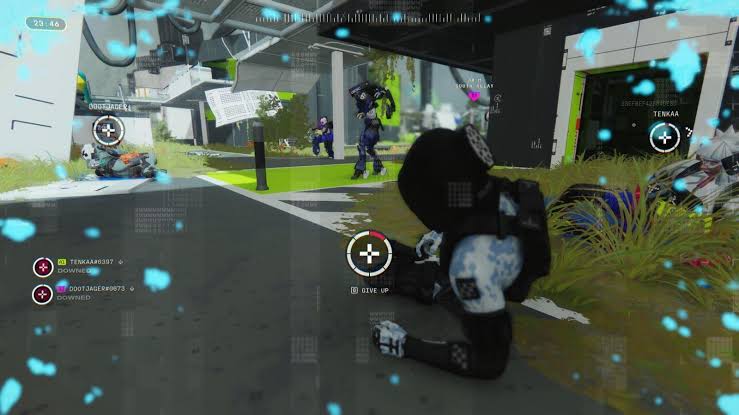
Marathon is struggling to maintain its early audience, raising fresh questions about Bungie’s live service strategy and the studio’s future under Sony.
The extraction shooter reportedly reached around 6,500 concurrent Steam players during a recent daily peak, far below its all time high of more than 88,000. At one point, the game had roughly 2,600 active players on Steam, showing how quickly interest has declined since launch.
The contrast with Destiny 2 is particularly difficult for Bungie. During the same period, Destiny 2 reportedly approached 60,000 concurrent Steam players, giving the older game an audience almost ten times larger than Marathon.
Marathon has also struggled to establish itself on Xbox. It was reportedly absent from the platform’s 100 most played games, placing it behind several older titles originally released during the Xbox 360 generation.
Marathon has lost most of its launch audience
| Player metric | Reported figure |
|---|---|
| Marathon all time Steam peak | 88,337 |
| Recent daily Steam peak | Around 6,551 |
| Recent concurrent Steam players | Around 2,603 |
| Destiny 2 comparison | Nearly 60,000 concurrent players |
| Xbox position | Outside the 100 most played games |
Live service games commonly lose players after launch, but Marathon’s decline appears unusually severe. A game in this category depends on a stable audience to support matchmaking, seasonal updates, cosmetic sales, and long term development.
A smaller player pool can create longer waiting times and less balanced matches, especially in regions with fewer active players. Those problems may encourage more people to leave, making recovery increasingly difficult.
Bungie is preparing a limited time player versus environment mode for Marathon, but it will reportedly remain available for only two weeks. The addition may attract Destiny players who prefer cooperative combat, although a temporary event is unlikely to resolve the game’s broader retention problems on its own.
Bungie moved attention away from Destiny at a difficult time
Marathon’s performance matters because Bungie placed significant importance on the project while reducing its focus on Destiny.
Destiny 2 recently received what was described as its final major update, ending years of regular support. The existing audience has nevertheless remained much larger than Marathon’s, suggesting that Bungie may have shifted resources away from its strongest active community before its replacement had proved itself.
This does not mean Marathon cannot recover. Live service games can improve after weak launches through major updates, revised progression, new modes, lower prices, or broader platform support.
However, Bungie will need to give players clear reasons to return. Temporary content may create brief increases, but long term recovery will require substantial improvements to the core experience and update schedule.
Leadership changes add more uncertainty
Marathon game director Joe Ziegler recently left Bungie after working on the project for several years. His departure came only months after launch and followed wider layoffs across the studio.
Del Chafe III is taking over the director role with support from creative director Julia Nardin. A leadership change at this stage could result in major adjustments to the game’s direction.
Bungie may increase the amount of cooperative content, revise Marathon’s extraction shooter structure, or make progression more accessible to people who do not play competitively. The addition of a PvE event suggests the studio is already testing ways to appeal to a wider audience.
Changing direction after launch carries risks. Large updates require time and money, while existing players may not support changes that move the game away from its original design.
Sony has already reduced Bungie’s valuation
Sony purchased Bungie for $3.6 billion, but the studio is now considered less valuable than it was at the time of the acquisition.
Sony reportedly recorded an impairment loss of approximately $766 million related to Bungie. An impairment charge reflects a reassessment of an asset’s value, suggesting that expected future performance has weakened.
This does not mean Bungie is about to close. The studio still owns valuable expertise in online games, shooting mechanics, networking, and long term content support.
However, weak performance from Marathon, reduced Destiny activity, layoffs, and leadership departures increase the pressure on Bungie to prove it can operate sustainably.
Bungie’s next decisions will shape its future
Bungie now faces several difficult options. It can continue investing heavily in Marathon, redesign parts of the game, restore more support for Destiny, or take on a larger role supporting other Sony projects.
Becoming primarily a support studio would represent a major change for a developer known for creating Halo and Destiny. Yet Sony may see Bungie’s live service knowledge as useful across PlayStation Studios, even if Marathon never reaches its original targets.
The most immediate challenge is rebuilding confidence. Players need a clear development roadmap, meaningful updates, and evidence that the game will remain supported.
Marathon’s current player numbers do not guarantee failure, but they show that its launch momentum has largely disappeared. Bungie still has time to respond, although each month of declining activity will make a successful recovery harder.



Discussion (0)
Be the first to comment.