



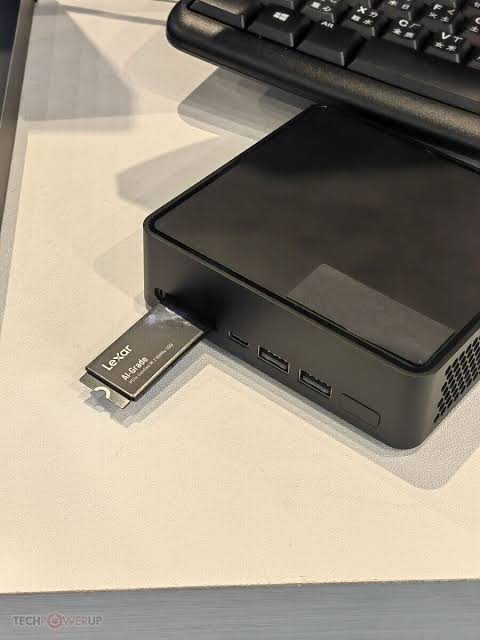
Lexar has introduced a broad range of new storage and memory products aimed at AI workstations, gaming PCs, handheld devices, and Nintendo Switch 2 owners. The company’s latest lineup includes AI focused Gen5 SSDs, high speed PCIe 5.0 drives, ROG Certified DDR5 memory, compact M.2 2230 SSDs for handheld gaming systems, and new microSD Express cards.
The biggest focus is on local AI workloads. As more people run AI models on desktop PCs, mini PCs, and portable workstations, fast storage and efficient memory management are becoming more important. Lexar is trying to address that demand with products designed for higher bandwidth workloads while also keeping portable upgrades simple.
Lexar Brings AI Focused Gen5 Storage to Desktop PCs
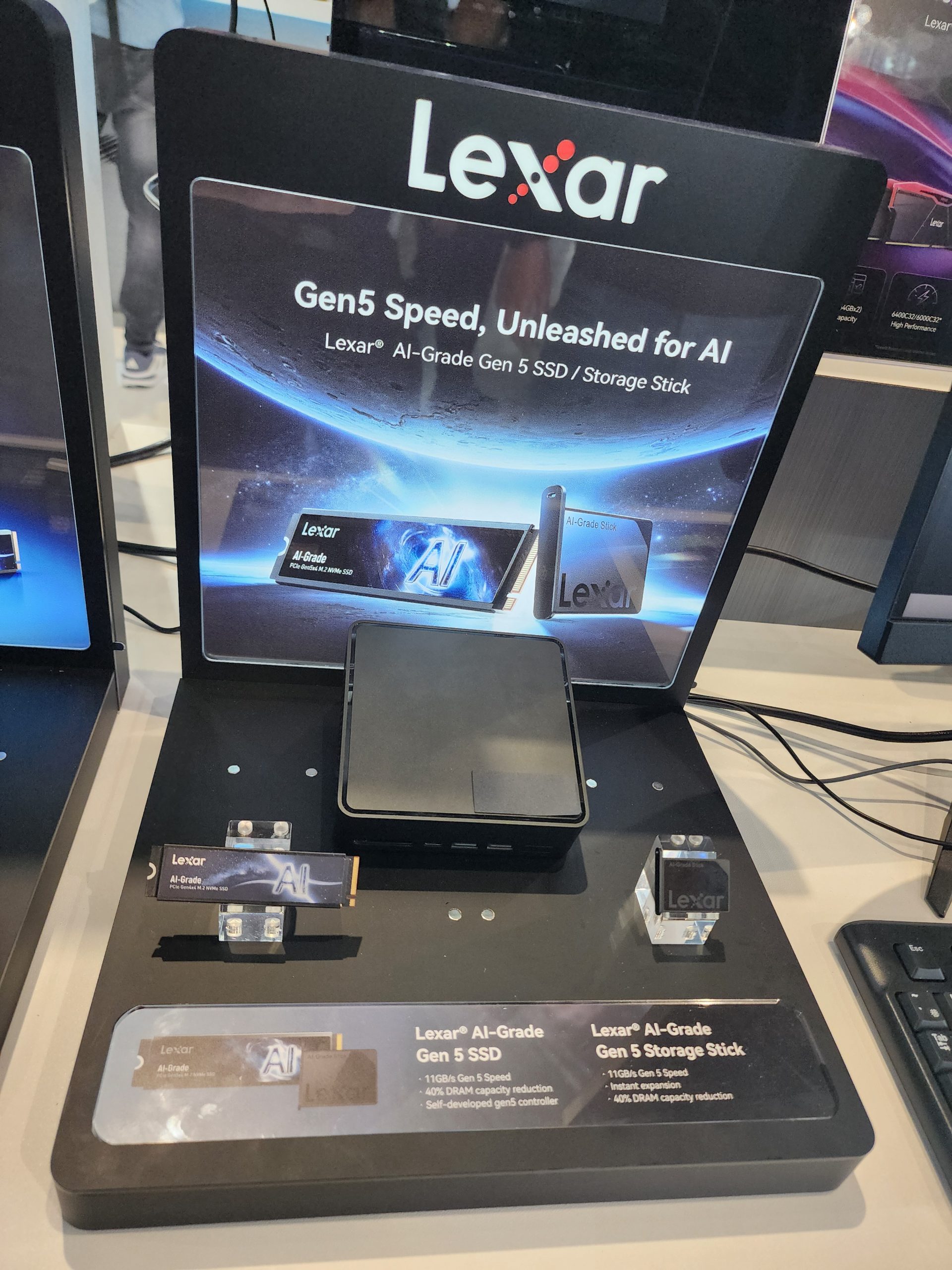
Lexar’s AI Grade Gen5 SSD is designed for systems handling local AI tools, large models, and demanding content creation work. The drive offers read speeds of up to 11 GB/s and uses a self developed PCIe Gen5 controller.
The company also says its Intelligent Distribution Technology can reduce DRAM capacity requirements by up to 40%. That could be useful for AI systems where memory demand is often a major limitation, especially as DDR5 pricing remains high.
Lexar also showed an AI Grade Gen5 Storage Stick, which appears to be aimed at people who need portable high speed storage for AI workstations and compact PCs. Gen4 versions are also planned for entry level systems that need more storage for local AI tools without the cost of a full Gen5 upgrade.
New PCIe Gen5 SSDs Target Different Performance Levels
Lexar is expanding its regular SSD range with three PCIe 5.0 models. The NM1090 PRO is the flagship drive, while the NM990 and NM970 are positioned for more mainstream buyers.
| SSD model | Maximum capacity | Maximum read speed | Main audience |
|---|---|---|---|
| NM1090 PRO | Up to 8TB | Up to 14,400 MB/s | High end gaming, AI and professional PCs |
| NM990 | Up to 4TB | Up to 14,000 MB/s | Enthusiast desktop builds |
| NM970 | Up to 4TB | Up to 11,000 MB/s | Mainstream Gen5 upgrades |
The NM1090 PRO is the most capable drive in the lineup. It offers up to 14,400 MB/s read speeds and 13,400 MB/s write speeds, with capacities reaching 8TB. It also includes DRAM and SLC dynamic cache, which should help maintain performance during heavier workloads.
Lexar says the drive uses a 6nm Silicon Motion controller, which is designed to reduce heat and power use. That matters because early Gen5 SSDs often required large heatsinks and could run hot under sustained loads.
ROG Certified ARES DDR5 Memory Targets ASUS Builds
Lexar also displayed its ARES RGB DDR5 memory, which is ROG Certified for use with ASUS ROG motherboards. The kits support CL28 timings and use a thermal module intended to keep the SK Hynix DDR5 chips cooler during high speed operation.
The ROG branding will likely appeal to builders who want matching components in an ASUS focused gaming setup. However, the real value will depend on final speeds, capacities, pricing, and motherboard compatibility.
Fast DDR5 can help in certain CPU limited workloads, but most gaming PCs should still prioritize enough capacity before chasing extreme memory speeds. A 32GB kit remains the practical target for many modern gaming systems.
Lexar PLAY Drives Offer Easier Handheld Upgrades
Lexar’s PLAY X Gen4 SSD is designed for handheld gaming devices and compact PCs. It supports both M.2 2230 and M.2 2280 form factors, with capacities of up to 2TB.
That makes it useful for devices such as handheld gaming PCs, smaller laptops, and mini desktop systems. The M.2 2230 size is especially important because many portable gaming devices use that shorter SSD format.
The included bracket lets the drive fit into M.2 2280 slots as well, so buyers do not need a separate adapter for larger desktop or laptop slots.
Lexar also introduced PLAY PRO microSD Express cards and USB 3.2 Gen2 card readers for Nintendo Switch 2 owners. These products are designed to make it easier to expand game storage and move large files between devices.
Lexar’s latest launch shows how storage companies are adapting to several changing markets at once. AI workloads need faster drives, gaming PCs need larger SSDs, handheld systems need compact upgrades, and console players need more flexible external storage.



Discussion (0)
Be the first to comment.