



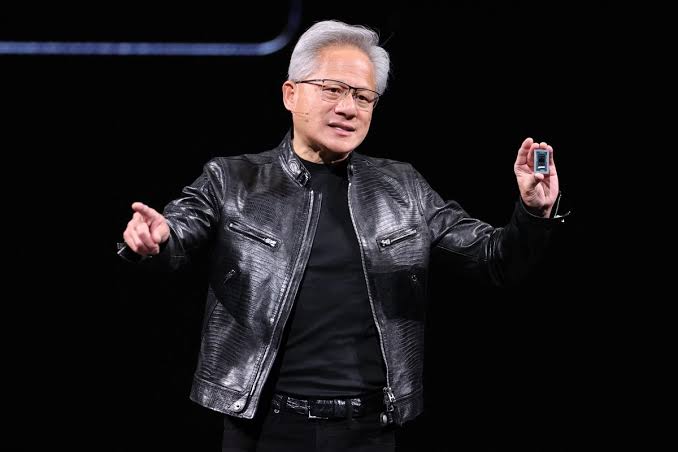
NVIDIA chief executive Jensen Huang used a mid July visit to Japan to strengthen the company’s business ties while also winning praise for the personal style he brought to meetings with Japanese executives.
The trip included discussions about large AI infrastructure projects, robotics, domestic semiconductor opportunities, and NVIDIA’s next generation Vera Rubin platform. It also produced a major agreement involving thousands of Vera CPUs and Rubin GPUs for what is described as Japan’s first national AI factory.
Huang’s behaviour outside formal meetings also attracted attention. During meals with Japanese business leaders, he reportedly tried nearly every dish, served food to others, and repeatedly praised the food. Sumitomo Electric chairman Masayoshi Matsumoto later compared his manner to that of a Japanese business leader from the postwar period.
The comments suggest that Huang’s willingness to participate in local customs helped reinforce NVIDIA’s commercial message. Cultural familiarity cannot replace pricing, performance, or reliable delivery, but it can strengthen relationships during negotiations involving long term national infrastructure.
Japan’s first AI factory will use Vera Rubin systems
The largest business announcement from the visit centres on an AI factory powered by NVIDIA hardware.
The project is expected to include 13,750 Vera CPUs and 27,500 Rubin GPUs. The systems will use Vera Rubin NVL72 racks and Spectrum X networking to connect the processors across the facility.
| Project detail | Reported information |
|---|---|
| Vera CPUs | 13,750 |
| Rubin GPUs | 27,500 |
| Rack platform | Vera Rubin NVL72 |
| Networking | Spectrum X |
| Main purpose | National AI computing infrastructure |
| Country | Japan |
The scale of the order makes it an important early deployment for NVIDIA’s next generation data centre platform. Rubin is intended to provide much higher AI inference and agentic workload performance than Blackwell, while the Vera CPU handles data processing, orchestration, and other host tasks.
A national AI factory could support research organisations, domestic companies, government agencies, and universities. It may also reduce Japan’s dependence on overseas computing capacity for strategically important AI work.
NVIDIA will support Japan’s robotics plans
NVIDIA also agreed to support an initiative connected to Japan’s Ministry of Economy, Trade, and Industry.
The programme is expected to use AI and robotics to address labour shortages linked to Japan’s ageing population. Automotive manufacturers, industrial suppliers, and robotics companies have reportedly expressed interest in participating.
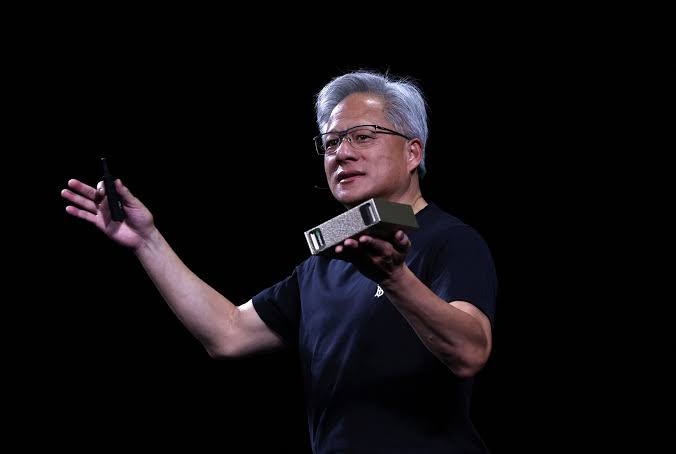
Japan already has a large industrial robotics sector, but the next phase involves combining traditional automation with AI models that can understand environments, respond to changing conditions, and complete less predictable tasks.
NVIDIA can provide several parts of that system, including data centre GPUs, simulation software, robotics development tools, networking, and edge computing platforms.
| Area | Possible NVIDIA role |
|---|---|
| AI training | Large GPU clusters |
| Robotics simulation | Virtual training environments |
| Industrial deployment | Edge AI systems |
| Data centre networking | Spectrum X infrastructure |
| Software development | AI and robotics platforms |
The initiative could create more demand for NVIDIA hardware across factories, warehouses, transport systems, and research facilities. It also gives Japanese companies access to a common computing and software platform while they develop their own robotics applications.
Huang discussed Vera Rubin and a possible Rapidus opportunity
During the visit, Huang made an unexpected appearance at a Build a Claw event in Tokyo and participated in a short question and answer session.
He reportedly said that development of the Vera Rubin platform remained on schedule. This matters because major customers are preparing expensive data centre projects around NVIDIA’s delivery timetable.
Huang also commented on a possible future opportunity involving Rapidus, Japan’s advanced semiconductor manufacturing venture.
No firm partnership was announced, and the supplied information does not explain what form any cooperation could take. Rapidus is attempting to establish leading edge chip production in Japan, while NVIDIA currently depends heavily on established international foundries and packaging partners.
A future relationship could involve manufacturing, packaging, research, or supply chain cooperation. However, it remains speculative until either company provides concrete details.
Informal meetings helped support the commercial visit
Huang’s trip was not limited to conference rooms and formal presentations.
He reportedly visited a pub in Kanda, Tokyo, where he ate yakiton and had drinks. His willingness to take part in ordinary social settings became part of the wider discussion about the visit.
Matsumoto’s praise focused on Huang’s behaviour during a meal. He reportedly ate a wide range of dishes, served food to his companions, and described each new item as delicious.
These actions may sound minor compared with a large AI infrastructure agreement, but relationship building remains important in major corporate negotiations. Executives often spend years developing trust before committing to projects involving national infrastructure and billions of dollars.
Huang’s approach appears to combine technical authority with direct personal engagement. He regularly presents products himself, meets customers, visits local events, and participates in informal gatherings.
That style can make NVIDIA appear more accessible even as the company grows into one of the world’s most influential technology suppliers.
The visit strengthened NVIDIA’s position in Japan
Japan is an important market for NVIDIA because of its automotive industry, robotics expertise, electronics companies, research institutions, and government interest in domestic AI capacity.
The AI factory agreement gives NVIDIA a central role in Japan’s next generation computing infrastructure. The robotics initiative may expand that role beyond data centres and into industrial systems.
The trip also showed how the company’s strategy now extends well beyond selling individual GPUs. NVIDIA is offering complete platforms that include CPUs, accelerators, networking, software, and rack scale systems.
Huang’s personal diplomacy supported that wider strategy. His enthusiasm for local food and customs did not determine the technical or financial value of the deals, but it helped create a favourable impression among influential executives.
The visit combined formal agreements, product discussions, government cooperation, and informal relationship building. For NVIDIA, that mixture may be increasingly important as it asks countries and major companies to build long term AI infrastructure around its technology.



Discussion (0)
Be the first to comment.