



Intel’s decision to mention former SK hynix CEO Seok Hee Lee while discussing its memory strategy has renewed speculation that the company could be considering a deeper relationship with the South Korean memory manufacturer.
The comments came during Intel’s latest earnings call, when management was asked about future memory plans. Intel responded by pointing to its long history in the sector and highlighting Lee’s appointment to the company.
That reference attracted attention because it arrived amid unconfirmed reports that Intel and SK hynix could form a joint venture involving Intel’s Ohio One manufacturing project. The reported facility carries an estimated cost of around $28 billion.
Neither company has confirmed such an agreement. Intel’s remarks therefore do not establish that a partnership exists, but they add another detail to a broader discussion about how the company may combine advanced logic manufacturing with future memory technologies.
| Development | Current status |
|---|---|
| Intel memory expansion | Not formally announced |
| SK hynix joint venture | Rumoured and unconfirmed |
| Facility linked to reports | Intel Ohio One |
| Estimated project cost | Around $28 billion |
| Intel Z-Angle Memory target | Commercial deployment around 2029 |
| Seok Hee Lee’s role | Former SK hynix CEO hired by Intel |
Intel highlighted its new executive when asked about memory
During the earnings call, Intel was questioned about its plans in the memory market.
The company responded by noting that it has a long history in memory development and recently hired Seok Hee Lee, who previously served as chief executive of SK hynix.
That answer was unusual because Intel could have discussed only its existing research programme or avoided addressing potential commercial plans. Instead, it specifically connected its new executive hire to the memory discussion.
Lee has extensive experience in DRAM and semiconductor manufacturing, making his appointment relevant to any future Intel effort involving advanced memory.
However, an executive hire alone is not evidence of a joint venture. Intel may want his expertise for internal research, packaging, manufacturing strategy or customer engagement without forming a production partnership with SK hynix.
The significance of the comment therefore depends on what Intel announces next.
Z-Angle Memory could connect logic and DRAM more closely
Intel is already developing a technology known as Z-Angle Memory, or ZAM.
The design uses three-dimensional stacked DRAM but replaces traditional vertical through-silicon vias with angled connections. These diagonal interconnects are intended to create a central thermal path that can help remove heat from the memory stack.
ZAM also uses copper-to-copper hybrid bonding and removes conventional capacitors to improve density.
Intel appears to be targeting commercial deployment around 2029, which places the technology several years away from large-scale use.
The project could support future systems that place memory closer to processors and accelerators. This is becoming increasingly important as AI and high-performance computing workloads require more bandwidth and capacity.
Traditional memory interfaces can become a bottleneck when large processors need to move data constantly between separate packages.
Closer integration could improve efficiency, reduce latency and allow more memory to fit within a smaller physical area.
The Ohio One rumour remains unconfirmed
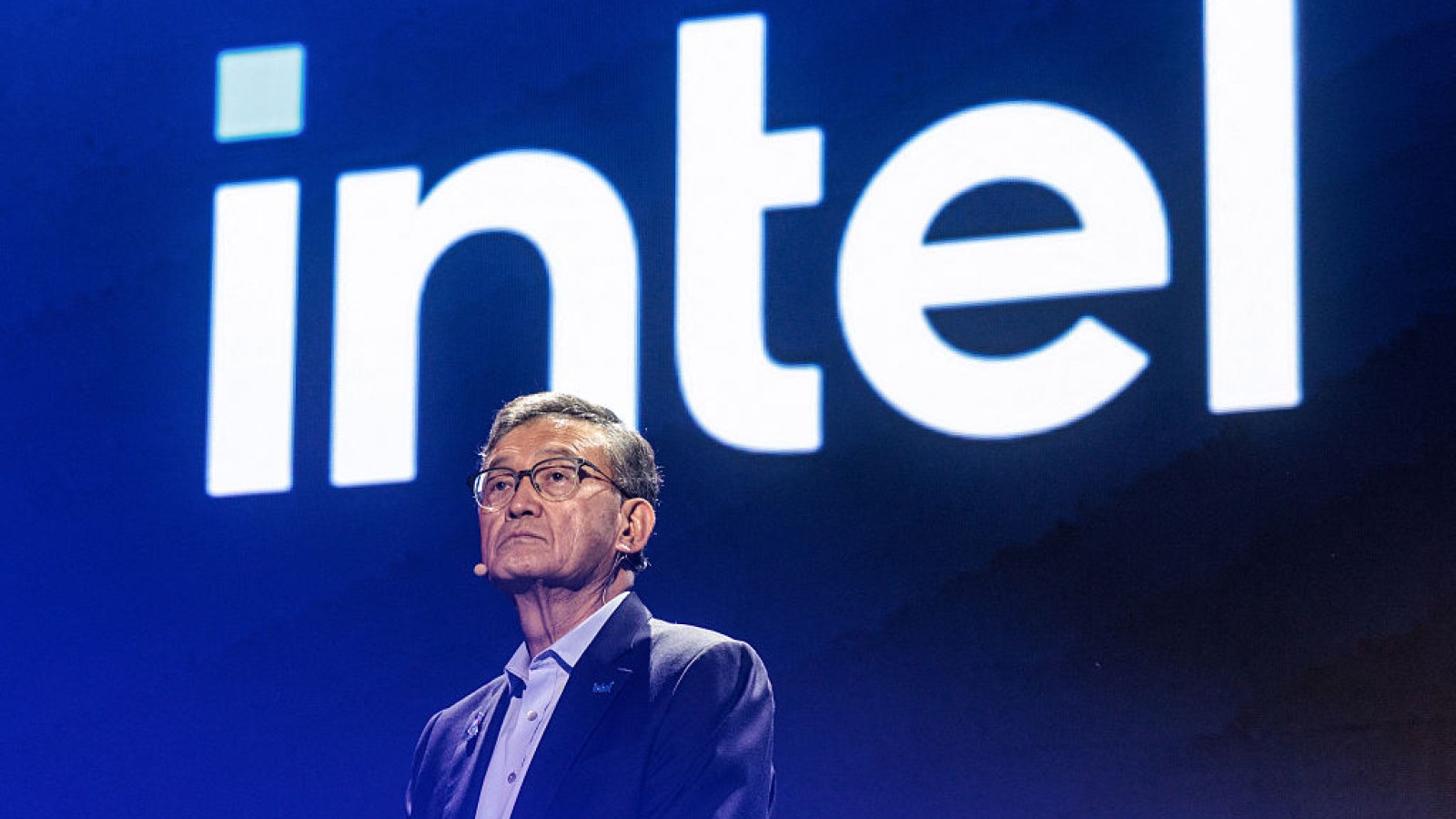
Reports have suggested that Intel and SK hynix might cooperate on Intel’s Ohio One fabrication project.
A joint venture could help Intel share the cost of the facility while giving SK hynix access to additional manufacturing capacity or advanced packaging opportunities in the United States.
The reported $28 billion project represents a major financial commitment. Bringing in a partner could reduce Intel’s capital burden and improve factory utilisation.
SK hynix could also contribute specialised memory knowledge, particularly if the facility supports products that combine logic and memory technologies.
However, the available information does not confirm the structure, size or purpose of any possible agreement.
It is also unclear whether SK hynix would participate directly in manufacturing, provide equipment and intellectual property or simply become a customer.
Until either company announces formal terms, the reported partnership should be treated as speculation.
Intel’s rising capital spending adds to the discussion
Intel also indicated that it expects capital expenditure to increase significantly next year.
The company has said it will not expand spending without confidence in customer commitments. This suggests Intel may have greater visibility into future demand for its manufacturing capacity.
The spending increase could support several projects, including 18A production, 14A development, factory construction and advanced packaging.
It does not necessarily relate to memory.
Intel recently moved its 14A schedule forward, with risk production planned for the second half of 2027 and high volume manufacturing expected in 2028.
Building capacity for that node will require major investment regardless of whether a memory partnership is involved.
Still, the combination of higher spending, customer engagement and Intel’s memory comments has encouraged further speculation about projects beyond its current processor roadmap.
Memory has become an increasingly attractive market
Demand for DRAM and high-bandwidth memory has increased as AI infrastructure expands.
Large accelerator systems require substantial memory capacity to store model parameters, context data and intermediate results. This has improved pricing and margins for major suppliers.
Companies including SK hynix, Samsung and Micron are investing heavily in next-generation memory and packaging technologies.
Intel may see an opportunity to participate through manufacturing, packaging or closer integration rather than returning immediately as a conventional DRAM supplier.
The company left most of the mainstream memory manufacturing business decades ago, although it continued to develop technologies such as flash memory and Optane.
A modern strategy could focus on specialised memory designed for AI processors and advanced computing systems.
That would align more closely with Intel Foundry and its packaging operations than a broad return to commodity memory production.
A partnership could offer benefits to both companies
A collaboration between Intel and SK hynix could provide complementary strengths.
Intel has manufacturing sites, advanced process technology, packaging capabilities and relationships with major computing customers.
SK hynix has extensive expertise in DRAM, HBM and high-volume memory production.
Working together could help them develop systems that combine processors, accelerators and memory more tightly.
It could also strengthen US-based semiconductor manufacturing at a time when governments and customers are seeking more geographically diverse supply chains.
The commercial risks would still be significant.
Memory markets can experience sharp pricing cycles, while major factories require large investments before generating returns. Both companies would need clear demand and a defined technical advantage.
Intel would also need to avoid distracting resources from its core foundry recovery.
Intel has not confirmed a move into memory manufacturing
The strongest fact available is that Intel mentioned its hiring of a former SK hynix chief executive when discussing memory.
Everything beyond that remains an interpretation.
The comment may signal a larger strategy involving Z-Angle Memory, advanced packaging or a possible manufacturing partnership. It may also reflect a simpler effort to strengthen internal technical leadership.
Intel has not announced plans to build DRAM products, create a joint venture with SK hynix or use the Ohio facility for memory production.
Any conclusion about those possibilities would therefore be premature.
The situation is likely to remain closely watched because the timing is notable. Intel is increasing capital spending, advancing its foundry roadmap and developing a new memory architecture while employing an executive with deep experience at one of the world’s largest memory companies.
Those factors create a plausible strategic connection, but formal confirmation is still missing.



Discussion (0)
Be the first to comment.