



Intel’s share of the x86 CPU market has fallen below 70% for the first time in 31 years, according to new market data, while AMD continues to gain ground across servers, desktops and laptops.
Intel reportedly held 69.3% of the x86 CPU market in the second quarter of 2026, down 6.5 percentage points from a year earlier and about one point from the previous quarter.
AMD therefore reached roughly 30.7% of the market under the same measurement.
When semicustom, embedded and IoT processors are also included, Intel’s share falls further to 65.9%, compared with AMD at 34.1%.
AMD continues to gain share across major CPU segments
| Segment | Intel share | AMD share |
|---|---|---|
| Overall x86 CPU market | 69.3% | 30.7% |
| Including semicustom, embedded and IoT | 65.9% | 34.1% |
| Reported server CPU market | 65.5% | 34.5% |
| Adjusted server estimate | 53.6% | 46.4% |
| Desktop CPUs | 65.1% | 34.9% |
| Laptop CPUs | 71.1% | 28.9% |
| Overall PC market | 69.7% | 30.3% |
The strongest shift appears to be taking place in servers.
Under the standard reported figures, Intel still controls 65.5% of the server CPU market while AMD holds 34.5%.
However, the report argues that the comparison changes substantially after adjusting for differences in how the two companies classify embedded processors used in networking and storage.
AMD does not count those products inside its data center segment in the same way Intel does.
After normalizing for that difference, AMD’s estimated share of the server CPU market rises to 46.4%, leaving Intel at 53.6%.
That adjusted AMD share reportedly increased by 9.2 percentage points year over year.
AMD reaches record share in the PC market
AMD also continues to improve its position in consumer PCs.
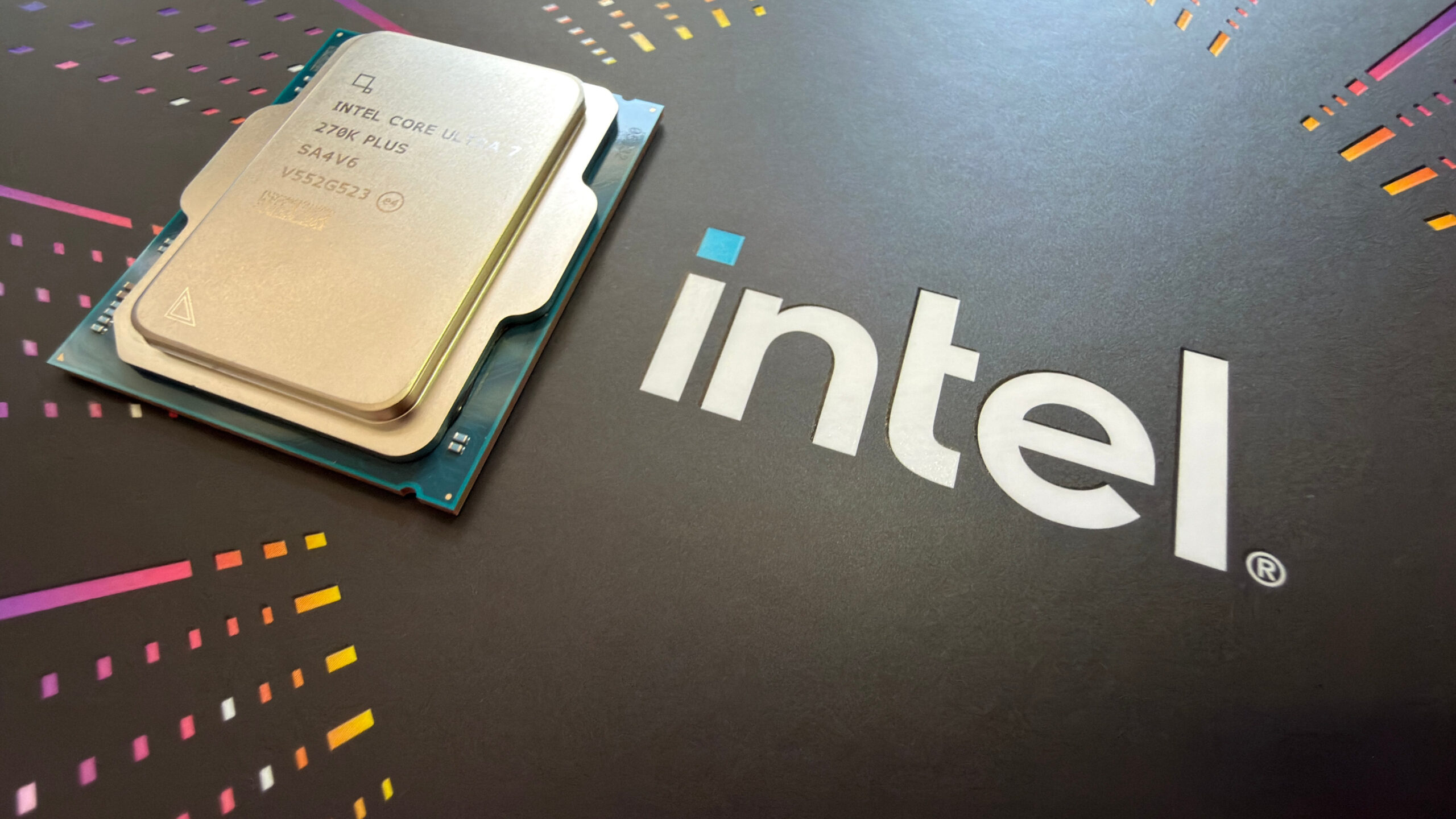
Its overall PC CPU share reached a record 30.3%, representing a 6.4 percentage point increase from the previous year.
Intel retained 69.7%.
Within desktops, AMD reached 34.9%, while Intel held 65.1%.
The laptop market remains more favorable to Intel, but AMD still reached 28.9%, leaving Intel with 71.1%.
These gains came during a difficult period for the wider desktop market, with total desktop PC shipments reportedly falling 20% year over year during the second quarter.
Intel data center revenue still improved sharply
The market share losses do not mean Intel’s business weakened across every measure.
Its data center revenue reportedly increased 59% year over year during the quarter, indicating that revenue growth and unit market share can move in different directions.
Higher average selling prices, product mix and stronger demand for certain server platforms can all support revenue even when a competitor gains share.
Intel is also preparing for future manufacturing transitions.
The company recently indicated that risk production for its 14A process is expected to begin in 2027, while high volume production is targeted for 2028.
Intel has also signaled that capital spending could rise significantly next year, suggesting that it expects stronger manufacturing demand ahead.
AMD is closing the gap most rapidly in servers
The broader trend remains clear.
Intel continues to lead the x86 CPU market overall, but AMD has steadily reduced that advantage across multiple segments.
The adjusted server estimate is particularly notable because it puts AMD much closer to Intel than the standard market share figures suggest.
At 46.4% versus Intel’s 53.6%, the difference would be relatively small compared with the much larger gap seen in previous years.
Intel still holds the majority of desktop, laptop and server shipments, but the latest figures show that AMD’s position is no longer limited to one part of the market.
Its gains now extend from consumer PCs to enterprise servers, while Intel’s overall x86 share has returned to levels not seen since the mid 1990s.
Discussion (0)
Be the first to comment.