



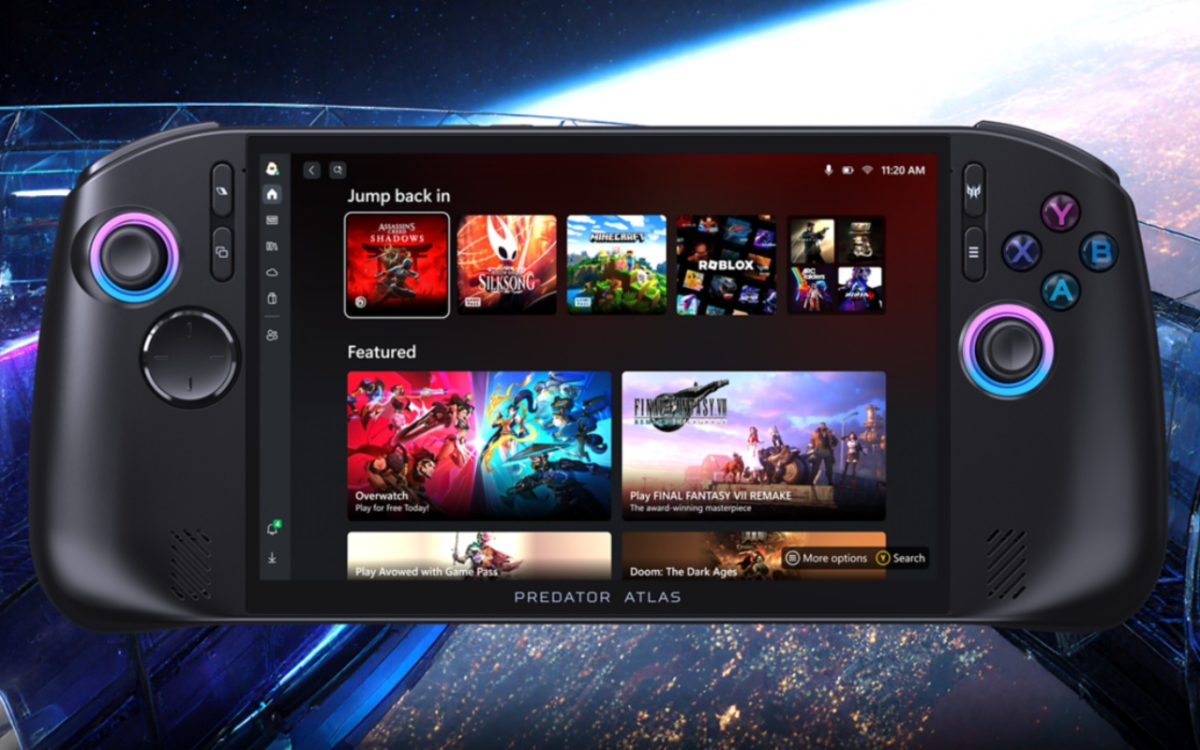
Intel is finally making a serious push into handheld gaming PCs with Arc G3, a new chip family designed to compete more directly with AMD’s Ryzen Z lineup. On paper, this is exactly what the handheld PC market needed. AMD has dominated this space since the Steam Deck arrived, and real competition could push performance forward. The problem is timing. Arc G3 is arriving just as rising memory and storage prices are making handheld gaming PCs much more expensive.
For the last few years, nearly every major handheld gaming PC has used AMD hardware. Valve’s Steam Deck, ASUS ROG Ally, Lenovo Legion Go, MSI Claw A8, and several smaller devices have leaned on AMD because its APUs offered strong integrated graphics for portable gaming. These chips were not as powerful as a gaming laptop with a dedicated GPU, but they were efficient enough to run many PC games at handheld friendly settings.
Intel tried to enter the space earlier through devices such as the original MSI Claw, but AMD still had the stronger handheld identity. Arc G3 is different because Intel is presenting it as a purpose built SoC for gaming handhelds rather than a regular laptop chip being squeezed into a portable device.
Arc G3 Extreme could outperform Ryzen Z2 Extreme, but new handhelds may cost too much
The high end Arc G3 Extreme chip uses a 12 core design with two performance cores, eight efficiency cores, and four low power efficiency cores. Its integrated graphics are said to match Intel’s Arc B390 graphics from Panther Lake chips. A lower version will use B370 graphics.
Early signs are promising. Based on testing of B390 graphics in an early ASUS Panther Lake laptop, Arc G3 Extreme could outperform previous Intel integrated Arc graphics and AMD’s Radeon 890M, which is close to what powers Ryzen Z2 Extreme handhelds. That would make Intel a real challenger in the category.
| Chip or device | Main point |
|---|---|
| Intel Arc G3 Extreme | New high end Intel handheld chip with B390 class graphics |
| Intel Arc G3 | Lower version with B370 graphics |
| AMD Ryzen Z2 Extreme | Current high end AMD handheld chip target |
| Steam Deck OLED | Now starts near $800 after price hike |
| RTX 5050 laptop GPU | Still faster than handheld integrated graphics |
The issue is that better handheld chips do not matter much if the devices become too expensive for normal buyers. RAM and storage costs are rising, and handheld PCs need fast memory because the CPU and integrated GPU share it. That makes these devices vulnerable to component price increases.
PCWorld expects new Intel powered handhelds to land around $1,200, though that is an educated guess rather than confirmed pricing. Acer’s Predator Atlas 8 is expected later this year, but Acer has not committed to a price yet. That hesitation says a lot about how uncertain the market has become.
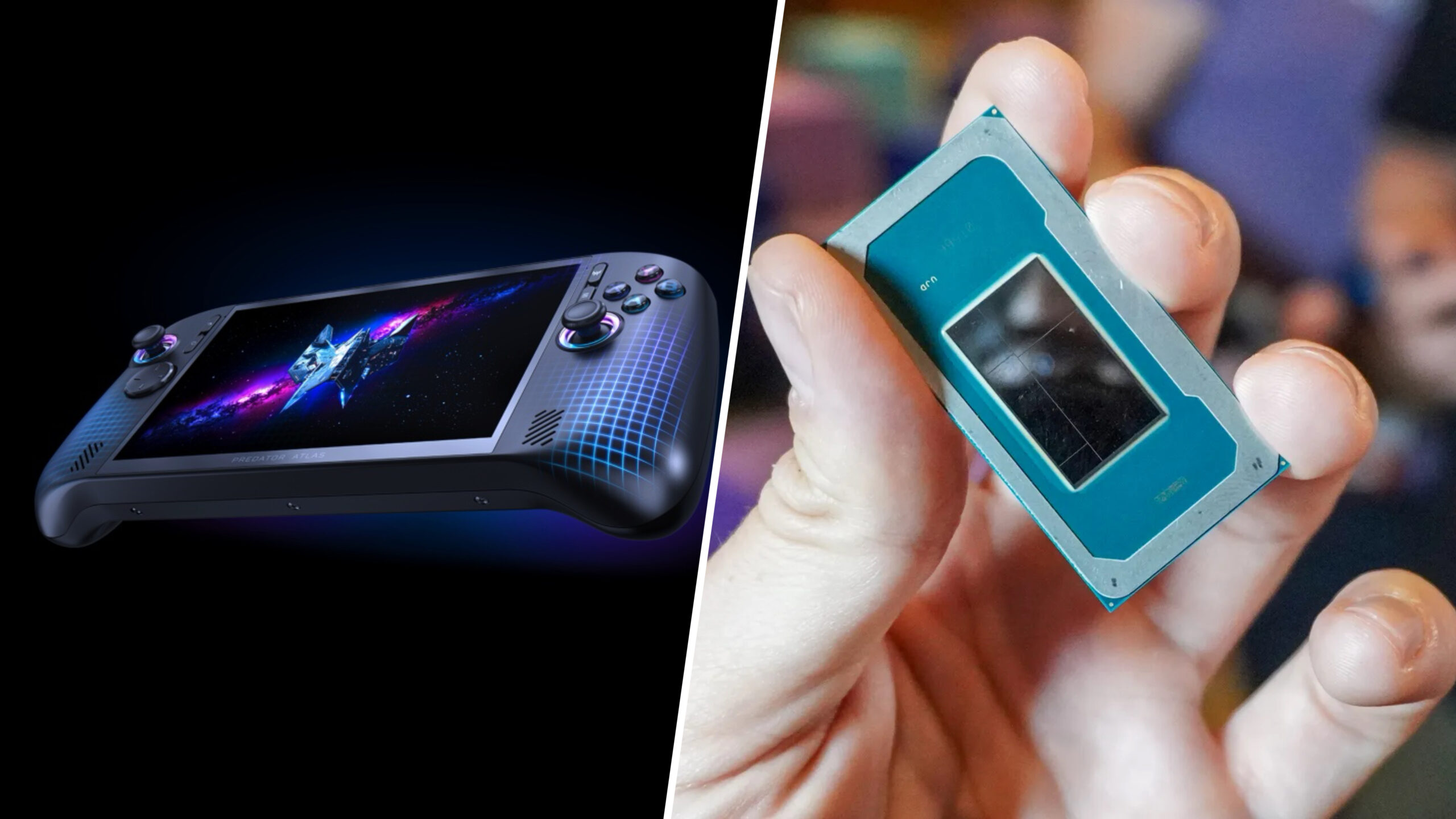
At around $1,200, a handheld gaming PC starts competing with gaming laptops. That is a difficult comparison. A laptop at the same price can include a stronger dedicated GPU, a larger display, a keyboard, more flexible productivity use, and better general value for students or workers. A handheld wins on portability, but that may not be enough for many buyers.
The Steam Deck also shows how quickly the market has changed. Valve’s device was once loved partly because it started at $400. Now the OLED version starts close to $800, reducing one of its biggest advantages. Ryzen Z2 handhelds are not cheap either, except for unusual cases such as the ROG Xbox Ally.
Intel deserves credit for finally bringing stronger competition to AMD in gaming handhelds. Arc G3 could help push performance higher and give manufacturers more choices. But the market around it is becoming less friendly. If new handhelds move into four figure pricing, they may appeal mainly to enthusiasts rather than the wider audience that made the Steam Deck exciting.
Arc G3 may be the chip handheld gaming PCs needed. Sadly, it may be arriving at the moment when fewer people can afford the machines built around it.



Discussion (0)
Be the first to comment.