



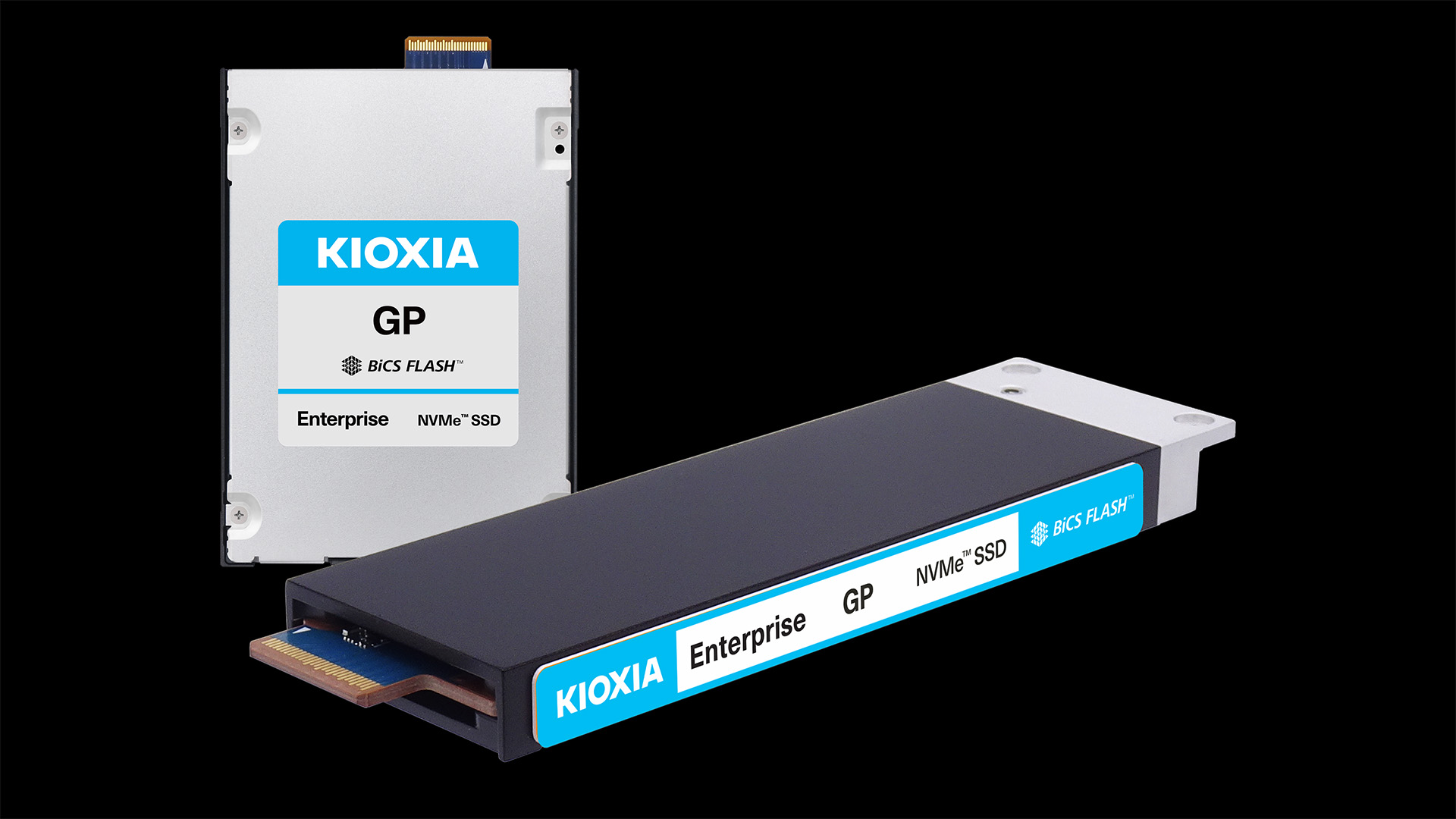
Intel and Phison are working on a new approach that could make local AI easier to run on ordinary laptops. The idea is to use a specialized SSD as an AI cache, allowing larger AI models to work on systems with less RAM than they would normally require.
The technology comes from Phison and is called aiDAPTIV. According to the companies, it can help a 26 billion parameter AI model run on a laptop with 16GB of RAM, even though that kind of model would normally need around 32GB. If it works well in real products, this could make local AI more practical for people who do not want to buy a dedicated high end AI workstation.
Local AI has one major problem: memory. Running an AI model on your own PC requires a lot of fast memory because the system has to process and remember tokens as the conversation or task grows. The longer the context, the more data the model needs to keep available. On many PCs, that memory comes from system RAM or shared graphics memory, which can quickly become a bottleneck.
Phison’s idea is to move some of that burden to storage. Instead of keeping everything in RAM, aiDAPTIV uses high performance NAND flash as a cache for AI data. More specifically, it stores key value data tied to the model’s context. The goal is to move data between RAM and SSD intelligently so the model can keep working without slowing the whole PC too much.
| Technology | What it does |
|---|---|
| Phison aiDAPTIV | Uses SSD storage as AI cache |
| Intel Core Ultra support | Targets Intel AI PC platforms |
| OpenVINO support | Helps software use Intel AI tools |
| Pascari AI100E SSD | Specialized high endurance storage for AI workloads |
| Main goal | Run larger local AI models on PCs with less RAM |
This could help in two ways. A laptop with limited RAM may be able to run a larger AI model than before. A more powerful laptop may be able to run AI while still leaving enough memory for normal work. That matters because local AI can sometimes consume so many resources that the rest of the system becomes difficult to use.
The partnership is focused on Intel AI PCs using Core Ultra processors, with support for Intel’s OpenVINO toolkit. Intel and Phison are also working to demonstrate the system to software vendors. That step matters because the technology will only be useful if apps are designed or optimized to take advantage of it.
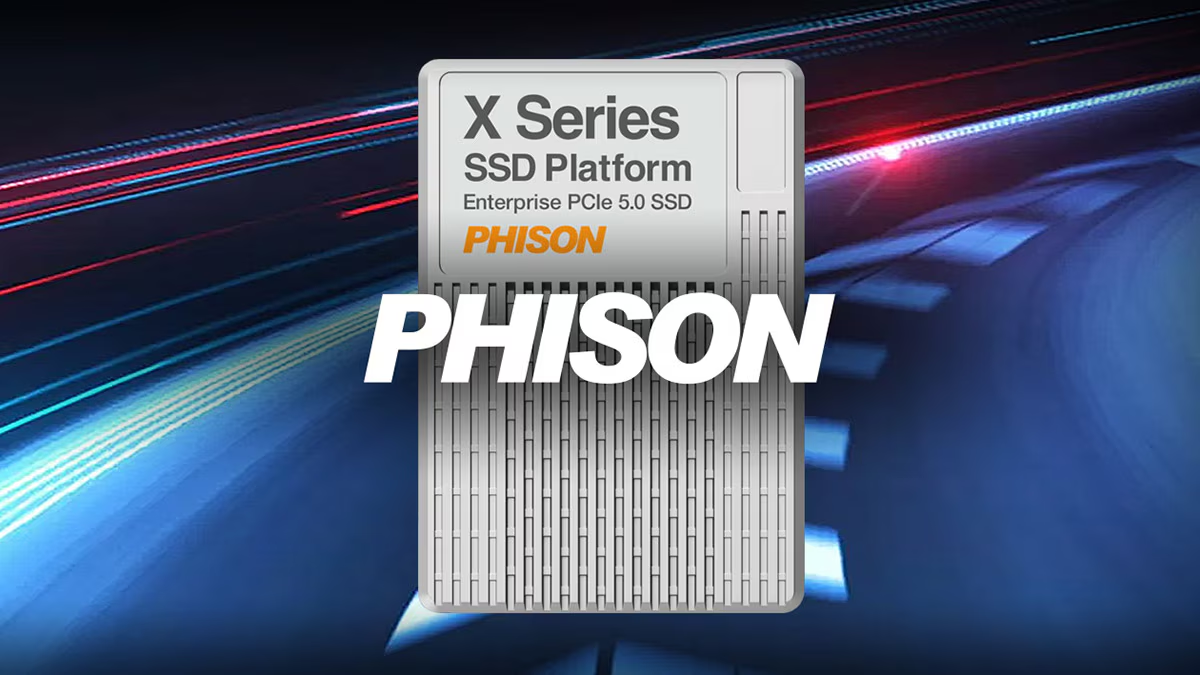
The promise is clear, but the cost may be a problem. The work currently uses Phison’s Pascari AI100E SSDs, which are designed for high endurance and sustained performance. These are not ordinary consumer drives. A 1TB Pascari AI100E M.2 model was listed at $2,516, which makes it far too expensive for mainstream laptops.
That raises a familiar concern. Intel has tried special memory and storage ideas before. Optane was technically interesting, but it never became a mass market success and was eventually discontinued. Direct Rambus DRAM is another old example of a technology that had support on paper but struggled because it depended on specific suppliers, licensing, and industry adoption.
The same risk applies here. Using SSDs as AI cache sounds practical, but PC makers will need to see a clear reason to include expensive specialized drives. Software developers will also need to support the technology. Without broad adoption, aiDAPTIV could remain an interesting demo rather than a standard part of AI PCs.
There is also the question of whether people want to run large AI models locally at all. Many already use cloud tools like ChatGPT or Claude because they are easy and do not require special hardware. Others may prefer smaller quantized models that use less memory and run faster, even if they trade away some accuracy.
Still, local AI has real appeal. It can help with privacy, offline access, lower cloud costs, and faster workflows when data stays on the device. If Intel and Phison can make larger models run smoothly on regular laptops, that could make local AI more useful for developers, creators, researchers, and business users.
For now, aiDAPTIV looks like a clever answer to one of local AI’s biggest limits. The hard part will be making it affordable, widely supported, and useful enough for PC makers to adopt. The technology may work, but its future depends on whether the industry sees it as a practical standard or another expensive niche idea.



Discussion (0)
Be the first to comment.