



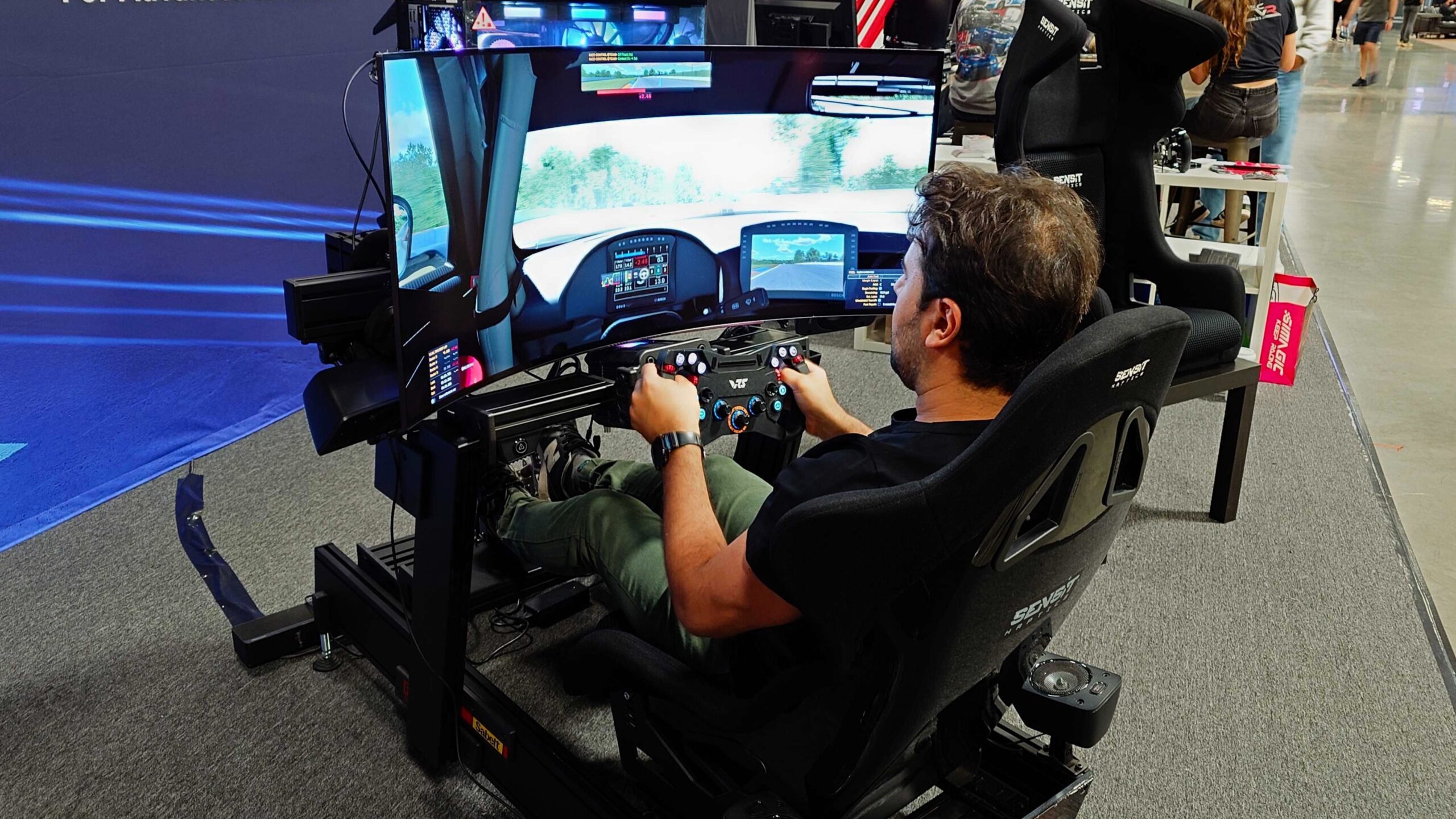
Haptic feedback may become one of the next major upgrades for serious racing game setups, especially for players who want more than a wheel and pedals. Sensit Haptics is showing how much difference a dedicated haptic seat can make, with its MTC P Extreme seat insert designed specifically for sim racing.
The idea is not just to add random vibration. Sensit’s system uses telemetry from supported racing games, which means the seat reacts to what the virtual car is actually doing. You can feel things such as curbs, ABS, traction control, loss of grip, and instability through the seat. That matters because real driving is not only visual. Drivers often feel what a car is doing before they fully see it.
This is where haptics can make a racing setup feel more believable. A good force feedback wheel already tells you a lot through your hands, but the seat adds information through your body. If the rear of the car starts to slide, or if you hit a curb too hard, the feedback can make the moment feel more physical and easier to understand.
The Sensit MTC P Extreme is built for racing games rather than general gaming. Unlike products such as the Razer Freyja, it does not use game audio to generate vibration. It depends on supported racing titles and their telemetry data. That narrower focus limits where you can use it, but it also allows the feedback to feel more precise in the games it does support.
| Feature | What it does |
|---|---|
| Product | Sensit MTC P Extreme haptic seat insert |
| Main use | Sim racing |
| Feedback source | Racing game telemetry |
| Actuators | 14 total, with six in the base and eight in the back |
| Connection | USB to PC |
| Software support | Sensit app and Simhub |
| Supported games | Includes iRacing, Assetto Corsa, Assetto Corsa EVO, F1 25, Le Mans Ultimate, Automobilista 2, and others |
| Not supported | Forza Horizon 6 is not listed |
The seat includes 14 actuators, which is more than double the six found in the Razer Freyja. Six are placed in the base and eight are in the back, giving the system more points to deliver feedback. That helps create the feeling of different events happening around the car instead of one broad vibration.

The setup is also more approachable than a full motion platform. Motion rigs can be expensive, heavy, and difficult to fit into a normal gaming space. A haptic seat insert still costs a serious amount, but it can be added to an existing sim racing seat or bought as part of a full Sensit seat setup. That makes it a more practical upgrade for many dedicated racing players.
The strongest part of this kind of hardware is immersion. When haptics are done well, your brain starts to connect the physical feedback with what you see on screen. Driving over curbs, braking hard, losing grip, or feeling traction control intervene can make the game feel more like a real car and less like a visual simulation.
It is not for everyone. Casual racing fans may be happy with a controller or a basic wheel. But for people who already care about sim racing, cockpit setups, force feedback, and accurate driving feel, haptics could be one of the most meaningful upgrades after a good wheel and pedals.
The bigger point is that gaming realism does not only come from better graphics. Sound, force feedback, and physical response all help sell the illusion. Haptic seats show that the next leap for simulation games may come from what you feel, not just what you see.



Discussion (0)
Be the first to comment.