


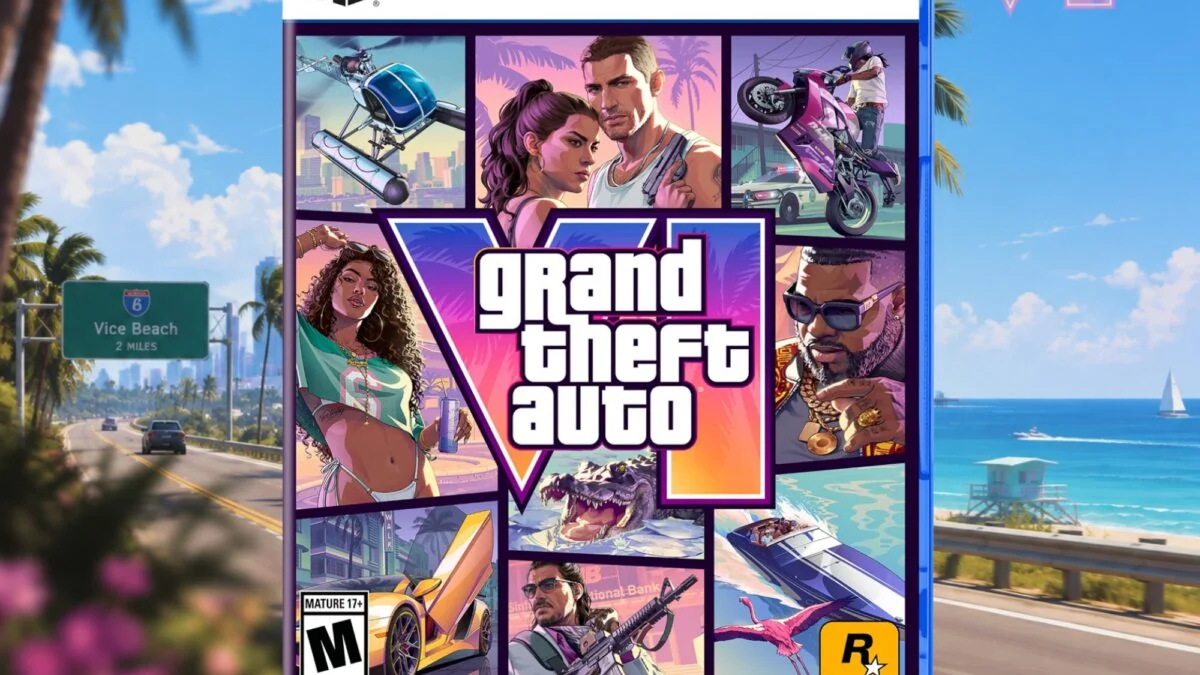
Grand Theft Auto VI has delivered record breaking sales for Rockstar Games, but independent video game retailers are struggling to benefit from its commercial success because the game launched without traditional physical discs.
Despite enormous demand following its November 18, 2026 release, some stores have reported disappointing sales of boxed copies containing digital download codes.
One independent retailer in the United Kingdom revealed that his store had sold only five copies of GTA 6, highlighting the challenges facing physical game shops as publishers increasingly prioritize digital distribution.
The situation has also renewed concerns about game ownership, secondhand sales, and the future of physical media on PlayStation and Xbox consoles.
Meanwhile, GameStop CEO Ryan Cohen has criticized the industry's transition toward digital releases, arguing that it removes important purchasing options from customers.
UK Game Store Sells Only Five Copies of GTA 6
Richard Tewksbury, owner of Super Game Shack in Leicester, described his store's GTA 6 sales as disappointing despite the game's popularity.
Speaking about the launch, he revealed that the store had sold just five copies in total.
Four purchases were for PlayStation 5, while one was for Xbox.
The retailer attributed the poor performance to Rockstar's decision to distribute GTA 6 digitally rather than release traditional physical copies.
Although boxed versions are available, they contain download codes rather than game discs.
Tewksbury explained that customers appear less interested in purchasing digital codes from physical shops when they can download the game directly through their consoles.
The game's substantial download size has also encouraged players to preload it ahead of release, reducing the need to visit stores on launch day.
For independent retailers, this creates a difficult situation because they cannot offer the traditional physical product that previously attracted customers.
However, the experience of one store does not establish how every retailer performed during GTA 6's launch.
GTA 6's Success Highlights the Decline of Physical Game Sales
GTA 6 reportedly generated more than 24 million unit sales through preorders before its official release.
The game has also received widespread critical recognition, making it one of the most commercially significant launches in the industry.
However, strong digital sales do not necessarily translate into increased business for physical retailers.
Previously, major game launches attracted customers to stores through midnight openings, special promotions, and physical collector editions.
These events also provided opportunities for retailers to sell accessories, consoles, and other games.
With digital purchases becoming more common, customers can now preorder and download new releases without visiting a shop.
Physical media collector Rob Spence has expressed concern about this change.
Beyond the ability to own and display physical copies, he believes traditional game stores have played an important role in bringing gaming communities together.
The reduction in physical releases could therefore affect both independent businesses and the shopping experiences associated with major gaming launches.
GameStop CEO Criticizes Digital Games and Loss of Resale Rights
GameStop CEO Ryan Cohen has also questioned the industry's transition toward digital distribution.
Speaking ahead of GTA 6's release, Cohen argued that customers should retain the ability to sell, trade, or lend games after purchasing them.
These activities have traditionally depended on physical copies that can be transferred between people.

Digital games generally operate through licenses tied to individual accounts, limiting the ability to transfer purchases.
Cohen believes removing physical discs reduces consumer flexibility while also weakening the secondhand gaming market.
GameStop has historically relied on customers trading previously purchased games, which can then be resold at lower prices.
Without transferable physical copies, this business model becomes increasingly difficult to maintain.
Cohen also suggested that publishers have a financial incentive to reduce the availability of used games because secondhand purchases compete with new sales.
However, digital distribution offers advantages of its own, including immediate access, convenient installation, and the ability to maintain libraries without storing physical media.
GameStop's Used Game Business Continues to Decline
GameStop's recent financial figures demonstrate the challenges affecting physical game retail.
During the quarter ending August 1, 2026, preowned and refurbished products reportedly accounted for approximately $171 million in revenue.
This represented 22% of the company's total sales for the period.
However, revenue from the category declined by approximately 32% compared with the previous year.
| GameStop Financial Metric | Reported Figure |
|---|---|
| Preowned and refurbished revenue | Approximately $171 million |
| Share of quarterly sales | 22% |
| Annual decline in category revenue | 32% |
| Reporting period ended | August 1, 2026 |
These figures illustrate the pressure facing a business that has historically depended on physical game ownership and trade ins.
However, the decline cannot be attributed entirely to digital distribution because other factors, including purchasing habits and retail market conditions, may also influence sales.
PlayStation's Physical Media Plans Raise Further Concerns
The future of physical gaming has also become a concern for PlayStation owners.
According to the report, Sony announced plans in July 2026 to discontinue production of physical PlayStation game discs by January 2028.
If implemented as described, the decision would represent a major change for a platform that has supported disc based games for several console generations.
It would also affect retailers that depend on new PlayStation releases to attract customers.
The shift could make existing disc collections increasingly important to people who prefer physical ownership.
However, the report does not establish whether all existing discs would stop working or whether Sony would change compatibility with previously purchased games.
Those questions are separate from the production of new physical releases.
Xbox Project Helix Still Has an Uncertain Disc Drive Future
Microsoft has not yet confirmed whether its upcoming Xbox Project Helix hardware will include an optical disc drive.
The uncertainty has created questions about whether the next generation of Xbox hardware will continue supporting physical game collections.
Microsoft has reportedly explored ways to help customers transition from disc based purchases to digital libraries.
The report describes a disc conversion system for eligible Xbox games, although the precise eligibility rules and transfer restrictions would determine how useful such a feature is.
Meanwhile, a recent Microsoft job listing for an Xbox Games Supply Strategist mentioned responsibilities involving physical game launches across platforms.
The listing suggests that physical distribution remains part of Microsoft's operations, but it does not confirm the hardware specifications of Project Helix.
Until Microsoft reveals further details, the console's support for physical discs remains uncertain.
GTA 6 Could Signal a Major Change for Future Game Launches
The contrast between GTA 6's reported commercial success and disappointing sales at some physical stores demonstrates how the gaming market is changing.
Digital distribution allows publishers to deliver games directly to customers while reducing reliance on conventional retail channels.
However, the transition also affects ownership options, secondhand markets, independent retailers, and collectors who prefer physical releases.
For game stores, the challenge is particularly significant when major new titles no longer provide traditional boxed products that customers want to purchase.
GTA 6's launch illustrates this problem through the experience of Super Game Shack, where enormous interest in the game resulted in only five reported sales.
As publishers continue expanding digital distribution, the future of physical games will increasingly depend on whether console manufacturers and developers continue supporting disc based purchases.
The decisions made around future PlayStation and Xbox hardware could determine how much room remains for traditional game retail in the coming years.

Discussion (0)
Be the first to comment.